From idea to market-ready product, our SIGNS solutions make every stage easier, faster. Discover How We Help

Views: 202 Author: Landea Signs Publish Time: 2026-07-25 Origin: Site


Content Menu
● Why 5S Color Standards Matter
● Where 5S Color Standards Work Best
● Expert View From the Shop Floor
● How To Build A 5S Color System
>> Step-by-step implementation
● Why Signage Quality Changes Results
● FAQ
>> 1. What are 5S color standards for businesses?
>> 2. Are 5S color meanings always the same?
>> 3. Where are 5S color standards most useful?
>> 4. Why is signage so important in 5S?
>> 5. What makes a good 5S sign?
>> 6. How can a manufacturer use 5S color standards?
5S color standards for businesses are more than a visual system. They are a practical way to improve safety, speed, and clarity across warehouses, factories, offices, and other work environments. For a signage manufacturer like Landea Signs Co., Ltd., this topic is especially important because the right sign, floor mark, or label can turn an abstract process into an easy-to-follow visual system.

The 5S method is a workplace organization system built around five steps: sort, set in order, shine, standardize, and sustain. It uses visual cues to reduce waste, improve order, and support more consistent operations. The EPA notes that 5S often becomes the first lean method organizations adopt because it creates a foundation for better workflow and continuous improvement.
Color coding makes that system easier to understand at a glance. In busy environments, people do not have time to read long instructions every time they enter a zone or move material. A clear visual standard helps workers recognize raw materials, work in progress, finished goods, hazards, and traffic lanes immediately.
The exact meaning of each color can vary by company, but many 5S programs use a common visual logic. ADA Central's guide highlights several widely used associations, including blue for raw materials or work in progress, green for finished goods, yellow for caution areas or machine guards, red for danger or stopping, and black-and-yellow for hazardous materials or health risks.
| Color | Common use | Why it helps |
|---|---|---|
| Blue | Raw materials, work in progress | Makes material status easy to identify. |
| Green | Finished goods, completed work | Signals that items are ready or approved. |
| Black | Work in progress, raw material areas | Supports strong visual separation. |
| Yellow | Traffic lanes, machine guards, work cells | Communicates caution and movement control. |
| Red | Danger, warning, stop | Draws attention to hazards quickly. |
| Orange | Temporary storage, inspection areas | Helps mark short-term or special-use zones. |
| Red & White | Safety hazard, keep clear | Signals restricted space. |
| Black & Yellow | Hazardous materials | Warns of potential health risk. |
A business should treat these meanings as a working standard, not a decorative choice. Consistency matters more than creativity because the whole system depends on instant recognition.
Many workplaces use color, but not every colored sign is truly a 5S system. A random mix of colors may look organized, yet it can still confuse workers if the meanings are not standardized. The real value of 5S color standards comes from repeating the same color logic across signs, floor tape, placards, labels, racks, and storage areas.
Here is the practical difference:
- Random color use: looks visual, but meanings change from one area to another.
- Standardized 5S color use: creates predictable behavior and faster decisions.
- Integrated signage system: connects color, wording, placement, and workplace flow into one visual language.
For manufacturers, this distinction is critical. A clearly marked aisle, pallet zone, inspection point, or storage rack reduces errors and helps teams move faster with less supervision.
5S color standards are widely used in industrial settings, especially where safety and workflow precision matter. ADA Central notes their use in industrial warehouses, factories, parking areas, medical offices, traffic lanes, and office buildings. The EPA also explains that 5S helps organize tools and materials into labeled and color-coded storage locations.
The strongest applications usually include:
- Floor tape and aisle marking.
- Machine guards and equipment zones.
- Storage racks and inventory areas.
- Inspection and quarantine areas.
- Emergency access and no-entry zones.
For a signage company, these applications open the door to customized products such as directional signs, floor graphics, wall signs, safety labels, and bilingual visual systems. That is where a tailored solution creates real value, because every facility has different traffic patterns, risk levels, and production logic.
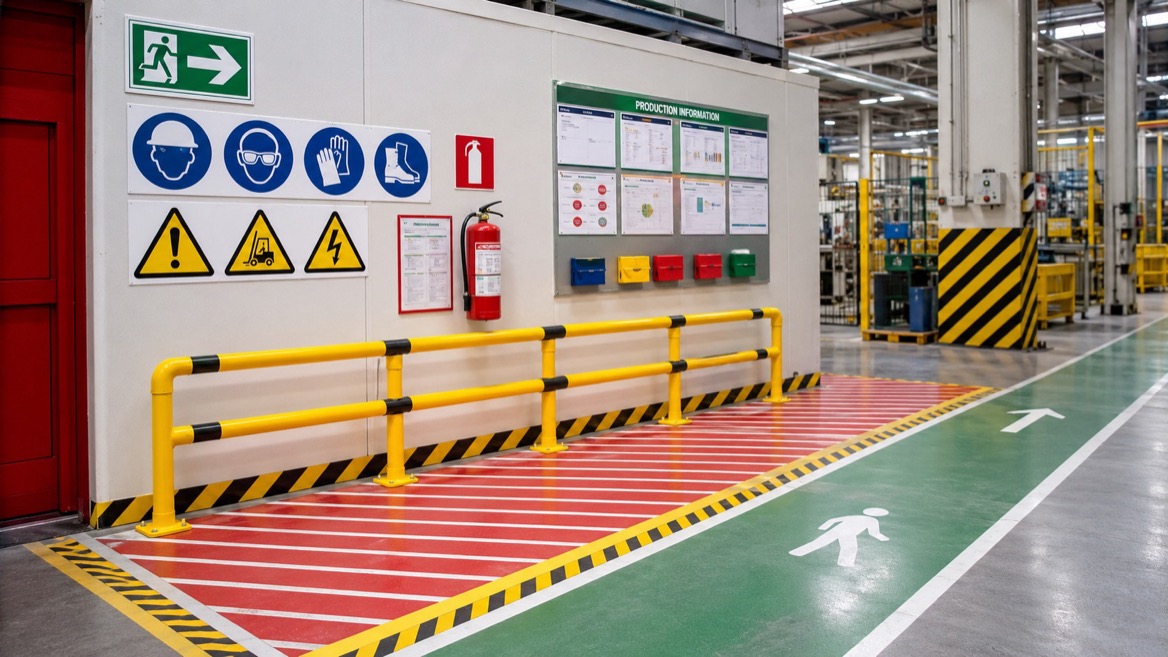
From a workplace design perspective, the best color systems are the ones people can follow without training every time. In real factories, I have seen teams lose time not because they lacked effort, but because storage zones, warning areas, and material states were visually unclear. When signage and color coding are designed well, workers stop asking "Where does this go?" and start acting on instinct.
That shift matters because 5S is not just about tidiness. It is about reducing friction. The EPA describes 5S as a method for reducing waste, unplanned downtime, and in-process inventory while supporting more consistent operational results.
A strong 5S system should be planned before any signage is installed. The goal is to make each color meaningful, repeatable, and easy to maintain across the whole site. The EPA recommends a cycle of sort, set in order, shine, standardize, and sustain, which means the visual system must support ongoing discipline, not just a one-time rollout.
1. Map the workflow. Identify material movement, people movement, and hazard points.
2. Assign one meaning per color. Avoid overlap between zones.
3. Apply the system across surfaces. Use signs, floor tape, labels, and placards together.
4. Document the standard. Create a simple visual guide for workers and supervisors.
5. Train and audit regularly. Confirm that people follow the same rules every day.
This process works best when the company treats signage as an operational tool, not an art project. The more consistent the system, the faster people learn it and the less room there is for error.
For manufacturers, 5S color standards create both operational and commercial value. The most immediate gains usually appear in safety, line clarity, and movement control. Over time, businesses may also benefit from better space usage, fewer mistakes, faster training, and stronger site discipline.
- Faster recognition of zones and materials.
- Lower risk of accidents and cross-contamination.
- Better inventory and space control.
- Improved team discipline across shifts.
- More professional customer and auditor impressions.
The EPA also notes that 5S can reduce square footage needs, improve labeling, and support better waste handling and emergency response procedures. That makes it useful not only for production efficiency, but also for broader environmental and safety performance.
Color standards only work when the signage itself is built for the environment. A weak sign can fade, peel, or become unreadable, which breaks the system and forces people to guess. For that reason, businesses should choose materials, coatings, mounting methods, and placement based on traffic, light exposure, chemical exposure, and cleaning frequency.
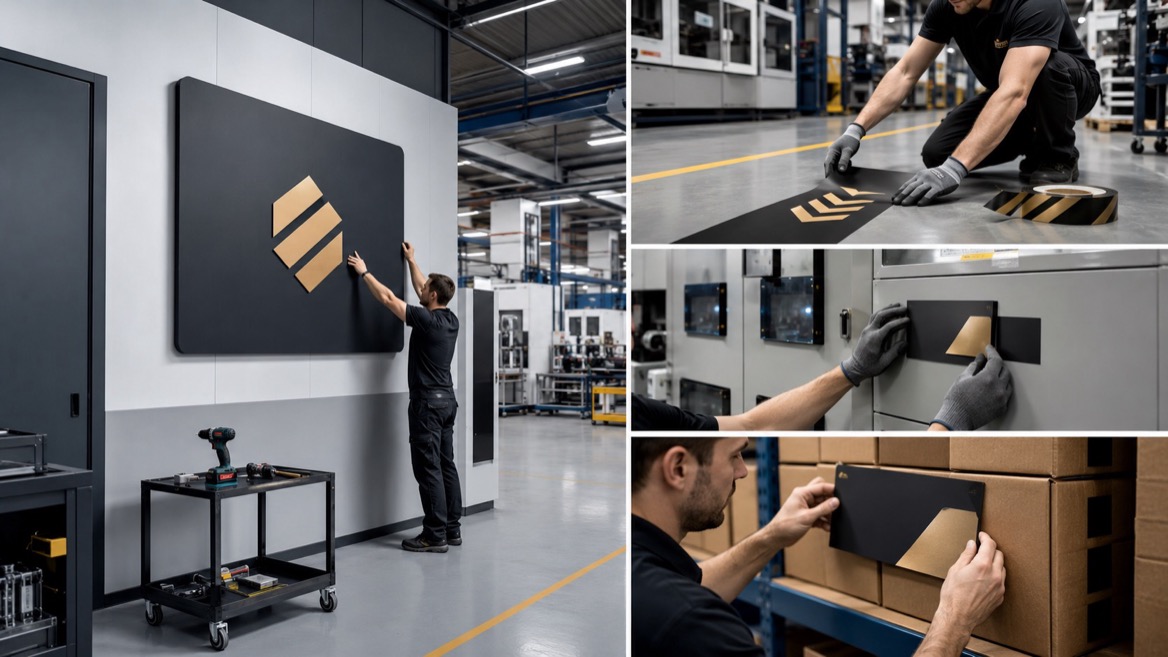
This is where a manufacturer with customization capability can make a strong difference. A facility may need reflective signs, floor-grade graphics, bilingual labels, or corrosion-resistant materials depending on the site. The best outcome happens when the visual standard and the physical product are designed together.
Visual communication is becoming more important as workplaces become more automated and more tightly scheduled. Signage market research published in 2026 shows continued growth, with advertising and promotion playing a major role in demand. At the same time, digital signage trends point to higher expectations for clarity, fast updates, and consistent visual branding.
For industrial users, this means static safety and process signage still matters, but it must now work alongside broader visual communication needs. Businesses want signs that are durable, easy to understand, and aligned with modern workplace standards. That is a strong opportunity for customized signage suppliers that can combine compliance, design, and manufacturing flexibility.
Before ordering 5S signs, buyers should review a few essentials. This helps avoid mismatched visuals, wasted spending, and confusion on the floor. It also makes installation and maintenance much easier.
- Define the purpose of each zone.
- Confirm the color meaning in writing.
- Choose materials that match the environment.
- Check size and visibility from normal viewing distance.
- Use the same style across the entire site.
- Plan for replacement and updates.
A simple checklist like this prevents the most common implementation mistake: treating 5S as a short-term cleanup project instead of a long-term operating standard.
5S color standards for businesses work best when they are clear, consistent, and tied to real workplace behavior. For manufacturers, the right visual system can improve safety, speed, and order while also strengthening the overall look of the site. If your facility needs customized signs, floor markings, or a complete visual communication plan, Landea Signs Co., Ltd. can turn your workplace standard into a durable, professional signage system.
They are a visual code used to organize workplaces, mark hazards, and separate materials or work zones more clearly.
No. Many companies follow common patterns, but each business should document its own standard and apply it consistently.
They are especially useful in factories, warehouses, parking areas, medical offices, traffic lanes, and other high-traffic environments.
Because the system depends on quick visual recognition. Clear signs, tape, and labels help workers act faster with fewer mistakes.
A good sign is durable, readable, correctly placed, and consistent with the company's color standard and workflow.
By applying them to floor markings, storage zones, machine areas, labels, and warning signs to improve flow and safety.
1. [ADA Central - 5S Color Standards for Businesses]
2. [US EPA - Lean Thinking and Methods - 5S]
3. [Brilliant Sign - Five Digital Signage Trends to Watch in 2026]
4. [The Sign Pack - Signage Industry Trends 2026]
5. [Lean 5S Products - A Complete Guide to 5S Color Code Standards]
6. [Compliance Signs - 5S Color-Coding and Visual Standards]


