From idea to market-ready product, our SIGNS solutions make every stage easier, faster. Discover How We Help

Views: 222 Author: Landea Signs Publish Time: 2026-04-16 Origin: Site


The wheelchair symbol of accessibility is more than a graphic; it is a promise that a space welcomes and empowers people with disabilities. As sign manufacturers, designers, and building owners update their facilities, choosing the right accessibility signage has become a strategic decision that affects compliance, brand values, and user experience. [ahifs]
The traditional International Symbol of Access (ISA) is the familiar white wheelchair icon on a blue background used worldwide to mark accessible parking, entrances, restrooms, and routes. It was standardized in the late 1960s and quickly became a universal visual cue for accessibility in public and commercial environments. [safetydecals]
Over time, many advocates have argued that the original ISA feels static and focuses more on the wheelchair than on the person using it. This criticism paved the way for more dynamic, "active style" designs that emphasize independence, movement, and dignity. [adasigndepot]
The now well-known "active style" wheelchair symbol began as a guerrilla design project led by designer Sara Hendren and philosopher Brian Glenney in Boston. They started by placing stickers of their redesigned icon over existing wheelchair signs across the city, technically defacing public property, but powerfully sparking conversation about disability and representation.
In the original ISA, the person appears unnaturally upright and mechanically positioned in the chair. The active style icon leans the figure forward and emphasizes the motion of the wheel, creating a clear sense of movement and self-navigation rather than passivity. For many wheelchair users, this relatively small visual change carries a big emotional impact, shifting the narrative from "confined to a wheelchair" to "moving through the world." [adasigndepot]
A key turning point came when a young man with cerebral palsy, Brendon Hildreth, adopted the symbol as his own, producing T‑shirts and encouraging businesses to adopt the new design. His advocacy helped show that this was not just a design tweak, but a way to affirm lived experience and potential.

After gaining attention through grassroots campaigns, the active style symbol entered mainstream policy discussions. New York State adopted an action-style wheelchair symbol for certain accessibility signs in 2014, followed by Connecticut in 2017, signaling institutional support for a more empowering visual language. [adasigndepot]
Today, this modern wheelchair symbol is increasingly used across the United States and beyond, especially in cities and organizations that want to align their signage with contemporary views on disability rights and inclusion. Many disability advocates prefer the active icon because it focuses on the person rather than the chair and visually encodes agency and motion. [eriecustomsigns]
For global manufacturers and facility managers, this means you may encounter both variants in different jurisdictions. The core requirement remains clear: signage must be recognizable, consistent, and compliant with relevant local codes. [ahifs]
From a UX and brand perspective, accessibility signs are high-impact micro-touchpoints. They guide people to essential services and silently communicate what a brand believes. [eriecustomsigns]
When accessibility symbols are clear and thoughtfully integrated:
- People with disabilities can navigate faster and with less stress, improving overall experience. [ahifs]
- Businesses signal that inclusivity is not an afterthought but part of their core values. [ahifs]
- Staff and visitors benefit from clearer wayfinding, reducing confusion in complex buildings. [eriecustomsigns]
- Property managers reduce complaints and lower the risk of non-compliance issues related to unclear or missing signs. [autusdigital]
In other words, accessible signage is both a compliance requirement and a customer experience strategy. [siteimprove]
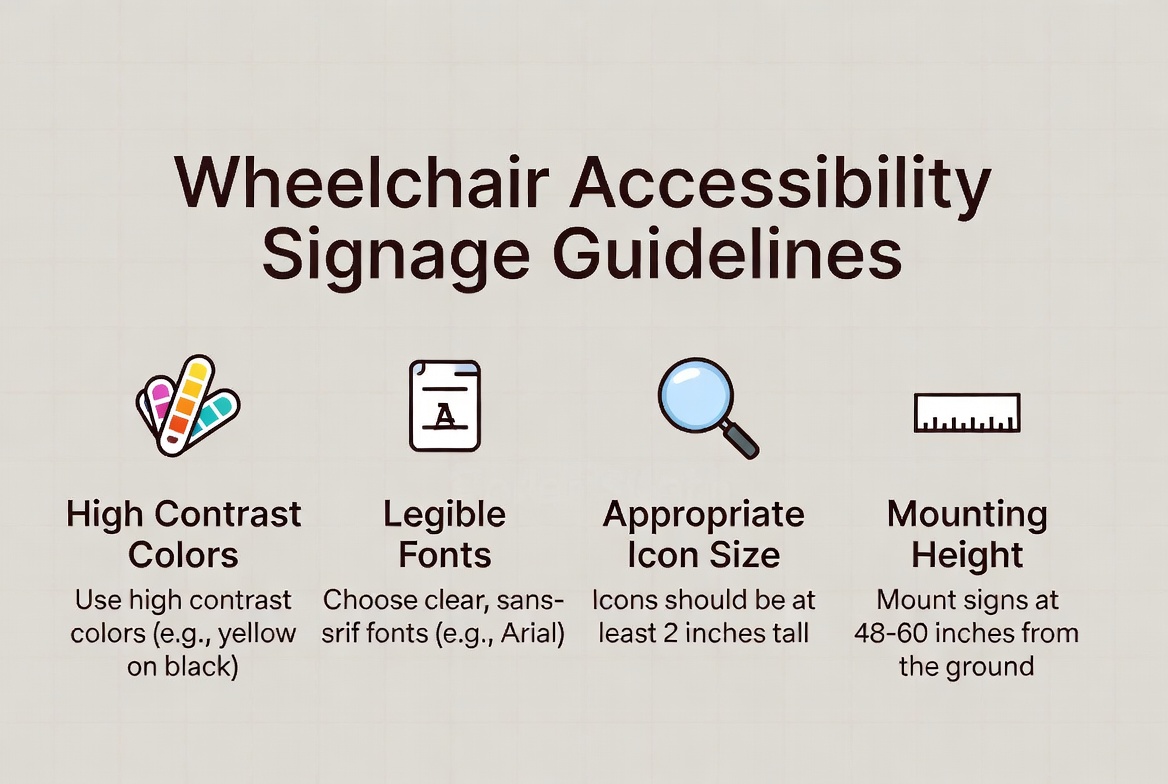
Designing effective wheelchair accessibility signs goes beyond choosing an icon. It requires attention to contrast, typography, placement, and tactile features. [safetydecals]
- Use a high-contrast combination such as white icon on blue or dark background to ensure visibility at a distance. [safetydecals]
- Avoid low-contrast color pairings or busy backgrounds that make the symbol harder to perceive. [eriecustomsigns]
- Ensure the sign surface is non-glare where possible, especially in bright lobbies and parking areas. [ahifs]
When you add directional or explanatory text such as "ACCESSIBLE ENTRANCE" or "RESERVED PARKING," follow these best practices: [safetydecals]
- Choose a simple sans-serif font (e.g., Helvetica, Arial) for maximum readability. [safetydecals]
- Use uppercase lettering with consistent stroke width for clarity at a distance. [safetydecals]
- Respect minimum character height guidelines (e.g., at least 5/8 inch for interior ADA signs) and appropriate stroke thickness. [safetydecals]
- Maintain adequate spacing between letters and between the symbol and text block so the icon remains the focal point. [safetydecals]
For interior signage in many jurisdictions, tactile lettering and Braille are legally required and vital for blind and low-vision users. [powermapper]
- Raised characters and Braille should appear directly below the visual text, aligned and easy to reach. [ahifs]
- Mount signs at consistent heights and positions (e.g., on the latch side of doors) so users know where to find them. [eriecustomsigns]
By combining the appropriate wheelchair symbol with high-contrast colors, readable text, and tactile features, you create signage that is perceivable, operable, and understandable for more people. [a11y-collective]
For many facility owners, the main question is not whether to use accessibility symbols, but which version to standardize on. Both the traditional ISA and the active style symbol have merits and limitations.
| Aspect | Traditional ISA Symbol | Active Style Wheelchair Symbol |
|---|---|---|
| Recognition | Universally recognized across decades of use. (safetydecals) | Growing recognition, especially in regions like New York and Connecticut. (adasigndepot) |
| Regulatory clarity | Often explicitly referenced in older codes and standards. (safetydecals) | May require checking local regulations or guidance before broad adoption. (adasigndepot) |
| Visual message | Can appear static and focused on the chair. (adasigndepot) | Emphasizes motion, independence, and person-first representation. (adasigndepot) |
| Brand signaling | Completely acceptable, but visually conservative. | Conveys a modern, rights-based view of disability and inclusion. |
| Implementation risk | Lowest risk where codes are strictly conservative. | Requires alignment with authorities having jurisdiction to avoid conflicts. |
In many projects, the best path is to confirm regulatory expectations, then deliberately specify a single symbol style across all relevant signs to maintain cohesive design and clear wayfinding. [eriecustomsigns]
The story behind the active style icon offers a powerful example of how design innovation can move from street-level activism to official standards.
- Designers began by placing stickers over existing signs in Boston, intentionally provoking public discussion.
- Media coverage (including a feature by NPR) amplified the conversation beyond local communities.
- Disability advocates like Brendon Hildreth championed the new symbol in everyday life, from T‑shirts to small business signage.
- Municipal leaders, including New York City's commissioner for people with disabilities, evaluated the design and chose to adopt it across the city.
This trajectory shows how symbols can act as seeds for broader cultural and policy shifts, a point frequently echoed by accessibility experts and advocates. [ahifs]
If you are planning to update or install accessibility signage, the following practical steps can help you create a consistent, future-ready system:
1. Audit existing signs
Identify all current accessibility-related signs: parking, entrances, elevators, restrooms, routes, and emergency exits. [ahifs]
2. Clarify regulatory requirements
Confirm which symbols and tactile requirements are mandated in your jurisdiction, especially for life-safety and egress signage. [ahifs]
3. Standardize your iconography
Decide whether you will use the traditional ISA or an approved active style variant, then apply that choice consistently across the site. [adasigndepot]
4. Optimize design details
Verify color contrast, typography, icon size, and mounting location against accessibility and readability best practices. [a11y-collective]
5. Plan for maintenance and updates
Document specifications so replacements and new signs match the established standard, protecting both UX and brand consistency over time. [autusdigital]
Working with a specialized signage manufacturer helps ensure that each of these steps is handled with technical precision and practical insight.
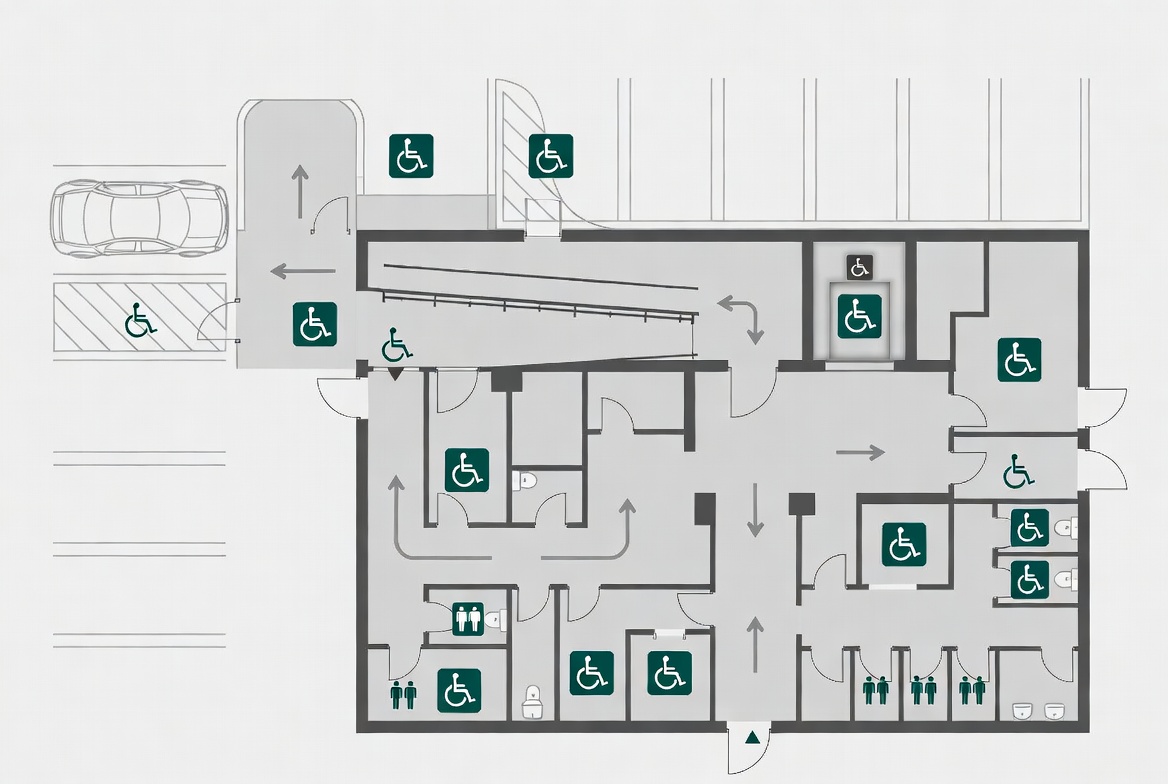
From an industry expert's perspective, wheelchair symbols and other accessibility icons are part of a broader inclusive design ecosystem. [eriecustomsigns]
Professionally designed accessibility signage can:
- Reduce cognitive load in complex environments such as hospitals, airports, campuses, and retail centers by delivering clear wayfinding cues. [eriecustomsigns]
- Support universal design principles, making buildings more usable not just for people with permanent disabilities, but also for older adults, temporary injuries, and parents with strollers. [ahifs]
- Align the physical environment with digital accessibility efforts, such as accessible websites and mobile wayfinding apps, creating a seamless user journey. [powermapper]
As a manufacturer dedicated to advertising signage and custom solutions, a company like Landea Signs Co., Ltd. can bring together regulatory knowledge, material engineering, and design thinking to translate these principles into high-impact, location-specific signage systems. [webfx]
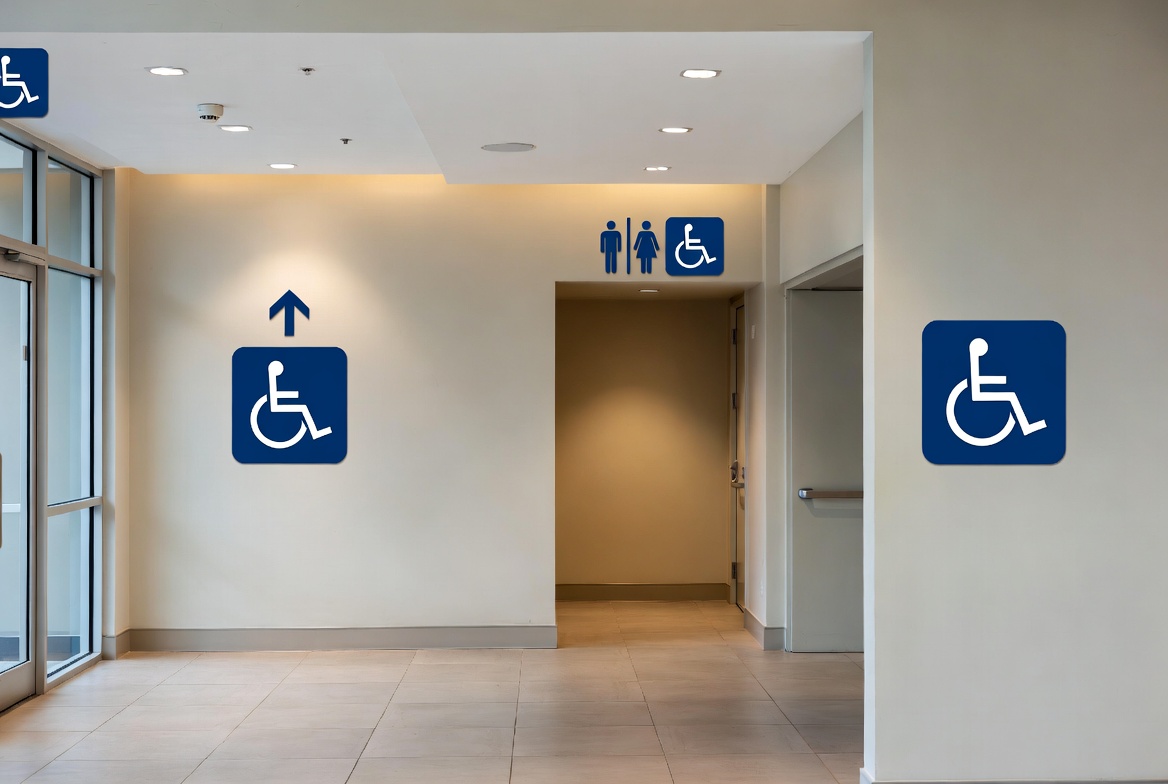
Thoughtful accessibility signage is no longer optional; it is a fundamental part of building trust, complying with regulations, and creating environments where everyone can move with confidence and dignity. [safetydecals]
If you are planning a new project or updating outdated signs, consider partnering with a specialist manufacturer like Landea Signs Co., Ltd. to:
- Audit and standardize your wheelchair accessibility symbols
- Design custom, code-compliant signage that reflects your brand and local regulations
- Implement a complete wayfinding system that integrates parking, entrances, interiors, and emergency routes
Reach out to our team today to discuss your accessibility signage requirements and explore personalized solutions tailored to your building or portfolio.

1. What is the difference between the traditional wheelchair symbol and the active style symbol?
The traditional symbol shows a more static figure, while the active style icon leans the person forward and emphasizes motion, representing independence and self-navigation. [adasigndepot]
2. Is the active style wheelchair symbol legally required?
In most regions, it is not yet legally required but may be permitted or encouraged; building owners should check local codes and guidance before standardizing on the newer icon. [adasigndepot]
3. Do accessibility signs always need Braille and tactile characters?
Interior room identification and certain directional signs often require tactile lettering and Braille under accessibility regulations, while exterior parking and traffic signs typically do not. [safetydecals]
4. What colors are best for wheelchair accessibility signs?
High-contrast combinations, such as white symbols and text on a blue or dark background, are recommended to maximize visibility, especially in low-light areas or at a distance. [ahifs]
5. How can I make sure my accessibility signage also supports SEO?
Use clear, descriptive language in your online product and project pages, add alt text to symbol images, and organize content with keyword-informed headings and internal links. [powermapper]
- ADA Sign Depot / NPR feature: "Putting Motion into the Wheelchair Symbol of Accessibility."
https://www.adasigndepot.com/blogs/news/active-style-international-wheelchair-symbol-of-accessibility
- New York State Action-Style Wheelchair Symbol of Accessibility Sign – ADA Sign Depot product page.
https://www.adasigndepot.com/products/wheelchair-symbol-of-accessibility-active-style [adasigndepot]
- SafetyDecals: "What Is a Disabled Sign? Design, Meaning, Use & Buying Guide."
https://www.safetydecals.com/blogs/news/disabled-sign [safetydecals]
- AHIFS: "Creating an Accessible and Inclusive Environment in Commercial Buildings."
https://ahifs.com/creating-an-accessible-and-inclusive-environment-in-commercial-buildings [ahifs]
- PowerMapper: "Content Creators Guide – Accessible Blogging."
https://www.powermapper.com/resources/guides/content-creators-guide-accessible-blogging/ [powermapper]
- Level Access: "Alt text for Accessibility – Examples, Tips & Best Practices."
https://www.levelaccess.com/blog/alt-text-for-accessibility/ [levelaccess]
- Erie Custom Signs: "How to Ensure Cohesive Design with Commercial Signage."
https://eriecustomsigns.com/blog/cohesive-design-with-signage.html [eriecustomsigns]
- Siteimprove: "A Creator's Guide to SEO Content Strategy."
https://www.siteimprove.com/blog/seo-content-strategies/ [siteimprove]
- WebFX: "3 SEO Best Practices for Sign Companies."
https://www.webfx.com/industries/professional-services/sign-companies/seo/ [webfx]
- Autus Digital: "SEO for Sign Companies."
https://www.autusdigital.com/industries-served/seo-for-sign-companies/ [autusdigital]
- The A11Y Collective: "Accessible Writing Techniques for Web Content."
https://www.a11y-collective.com/blog/accessible-writing/ [a11y-collective]


