From idea to market-ready product, our SIGNS solutions make every stage easier, faster. Discover How We Help

Views: 222 Author: Landea Signs Publish Time: 2026-04-10 Origin: Site


Content Menu
● Why Chemical Resistance Matters for Braille Signage
● Common Braille Sign Materials and Their Chemical Resistance
>> Polycarbonate Braille Signs
>> Metals (Stainless Steel, Zinc, Aluminum)
>> Photopolymer, Resin, and Raster Braille Systems
● How Cleaning Chemicals Affect Braille Performance
>> Typical Cleaning Agents Used on Braille Signs
● Recommended Cleaning Protocols for Braille Signs
>> Step‑by‑Step Cleaning Procedure (Operator View)
● How to Specify Chemically Resistant Braille Signage (Designer & Buyer Guide)
>> Matching Materials to Cleaning Regimes
● Accessibility Standards and Long‑Term Durability
>> Industry Trend – From "Compliant at Installation" to "Compliant in Use"
● Expert Tips from a Braille Sign Manufacturer
>> Design & Material Selection Tips
>> Communicating Maintenance to End Users
● Call to Action: Get Chemically Optimized Braille Signage from Landea
● FAQ: Cleaning Braille and Chemical Resistance
Keeping Braille signage clean is no longer just a maintenance task – it is now a critical part of hygiene protocols in hospitals, transit hubs, schools, and retail environments where aggressive disinfectants are used daily. As a manufacturer working with architects, facility managers, and accessibility consultants worldwide, I have seen first-hand that chemical resistance has become one of the most overlooked – yet decisive – factors in Braille material selection and long‑term performance. [novapolymers]

In high‑touch environments, Braille signs are exposed to a combination of mechanical wear (finger contact) and chemical stress (cleaners and disinfectants). When the material is not compatible with these chemicals, you quickly see yellowing, clouding, softening, loss of adhesion, or even raised Braille dots falling out. [braillesignsinc]
From my experience with signage projects in healthcare and public transit, three trends are driving stricter requirements:
- Routine use of bleach, quaternary ammonium compounds, and peroxide‑based disinfectants after Covid‑19. [novapolymers]
- Increased enforcement of ADA and global accessibility standards that expect signs to remain legible and tactilely readable for years. [novapolymers]
- Facility managers demanding low‑maintenance, "wipe‑and‑go" signs that survive daily cleaning without special treatment. [inprocorp]
For sign specifiers, this means chemical resistance is now as important as color contrast, legibility, and correct Braille layout. [taylor]
As a manufacturer, you typically choose between several base materials and Braille construction methods. Each behaves differently under cleaning chemicals.
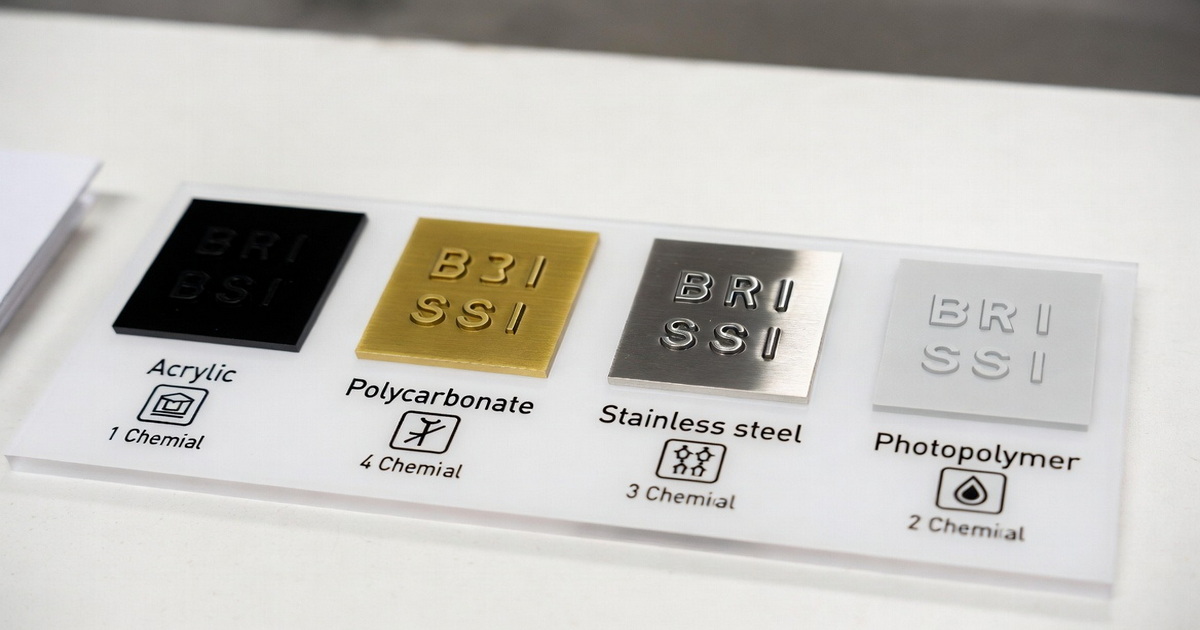
Acrylic is widely used for interior ADA Braille signs because it offers good clarity, durability, and a premium look. However, its chemical resistance is only moderate. [ftsignage]
- Generally compatible with mild detergents, soap solutions, and water‑based cleaners. [calpaclab]
- Sensitive to strong solvents such as acetone, MEK, and some high‑concentration alcohols, which can cause crazing, softening, or clouding. [panniergraphics]
- Repeated exposure to aggressive disinfectants may dull the surface over time if no protective topcoat is used. [adasigns]
In practice, acrylic is a strong choice for offices, schools, and commercial interiors where cleaning is regular but not overly harsh, provided you publish clear cleaning instructions to end users.
Polycarbonate is mechanically tougher than acrylic and can perform well under impact and elevated temperatures. Chemically, it shows excellent resistance to many acids, detergents, and alcohols, but can be vulnerable to certain solvents and strong alkalis. [blog.darwin-microfluidics]
- Resistant to many detergents, oxidizing agents, and alcohol‑based cleaners in moderate concentrations. [calpaclab]
- Shows limited resistance to some organic solvents and concentrated caustic soda; prolonged exposure may cause stress cracking. [blog.darwin-microfluidics]
- Performs well in environments where alcohol‑based surface disinfection is routine, as long as harsh solvents are avoided. [blog.darwin-microfluidics]
For hospitals and laboratories, polycarbonate can be a very robust choice when paired with compatible cleaners specified in the maintenance manual.
Metal Braille signs – particularly stainless steel and zinc – are often chosen for their durability and premium appearance. Industrial specifications typically require that the finish show no effect after repeated use of water‑based cleaners. [braillesignsinc]
- Stainless steel and zinc with architectural coatings can withstand frequent cleaning with neutral or mildly alkaline products. [braillesignsinc]
- Painted or powder‑coated metal systems are tested for gloss retention, weatherability, and resistance to water‑based maintenance products. [braillesignsinc]
- Harsh acidic cleaners, chloride‑rich products, or abrasive agents can damage coatings or promote corrosion if misused. [panniergraphics]
For transport hubs, exterior façades, and prestige interiors, metal Braille signs provide a long‑lived, highly resilient option when cleaning products are controlled.
Photopolymer and resin‑based Braille systems bond tactile elements into or onto a carrier panel. They can offer excellent detail and durability, but cleaning guidance must be followed carefully.
- Some manufacturers explicitly recommend only mild soap and water, or glass cleaners without alcohol, and warn against harsh or abrasive chemicals. [jpplus]
- Over‑aggressive cleaning can attack the bond line between Braille dots and substrate, leading to loss of tactile elements. [jpplus]
- Well‑designed systems tested for antimicrobial protocols can be compatible with quats, dilute bleach, and peroxide cleaners when manufactured with chemical‑resistant resins. [arcat]
If you specify photopolymer or raster Braille, always obtain the chemical compatibility list from the manufacturer and include it in the maintenance documentation.
To design truly durable Braille signage, you need to understand what's actually in the cleaners touching your signs every day.
Most facilities rely on a mix of the following:
- Mild detergents and soap solutions – safe for almost all sign materials when used with soft cloths. [inprocorp]
- Alcohol‑based sprays – convenient for quick disinfection but can stress acrylic and certain resins over time. [novapolymers]
- Quaternary ammonium disinfectants – widely used in healthcare and hospitality antimicrobial protocols. [novapolymers]
- Dilute bleach (sodium hypochlorite) solutions – effective, low‑cost disinfection; some plastics, including polycarbonate, can tolerate appropriate dilutions. [calpaclab]
- Hydrogen peroxide‑based disinfectants – common in modern infection‑control routines, generally compatible with chemically resistant plastics and coated metals. [novapolymers]
From an industry perspective, the problem is not one single cleaner; it is cumulative exposure and the combination of chemicals, contact time, and mechanical wiping.
Based on field feedback from facility managers and installers, the most common chemical‑related failures include:
- Surface hazing or clouding on acrylic or polycarbonate after repeated solvent or ammonia exposure. [panniergraphics]
- Loss of gloss and color shift on coated metal surfaces due to inappropriate alkaline or acidic cleaners. [panniergraphics]
- Softening and swelling of resin or photopolymer layers when exposed to incompatible solvents. [adasigns]
- Braille dots loosening or falling out because of chemical attack at the adhesive or resin bond. [jpplus]
Once a Braille sign becomes visually degraded or tactilely unreadable, it is no longer effectively ADA‑compliant, even if the original design met all dimensional requirements. [greendotsign]
From both manufacturer testing and end‑user experience, a conservative, standardized cleaning routine gives the longest service life without sacrificing hygiene.
- Use a soft, lint‑free cloth or microfiber pad to avoid scratching tactile surfaces. [inprocorp]
- Start with mild soap and water, then only move to stronger products if necessary. [jpplus]
- Avoid abrasive scrub pads, scouring powders, and strong solvent‑based cleaners on plastics. [calpaclab]
- Always wipe off cleaner residue with clean water and dry the surface afterwards. [inprocorp]
- Test any new disinfectant on a small, inconspicuous area before wide use.
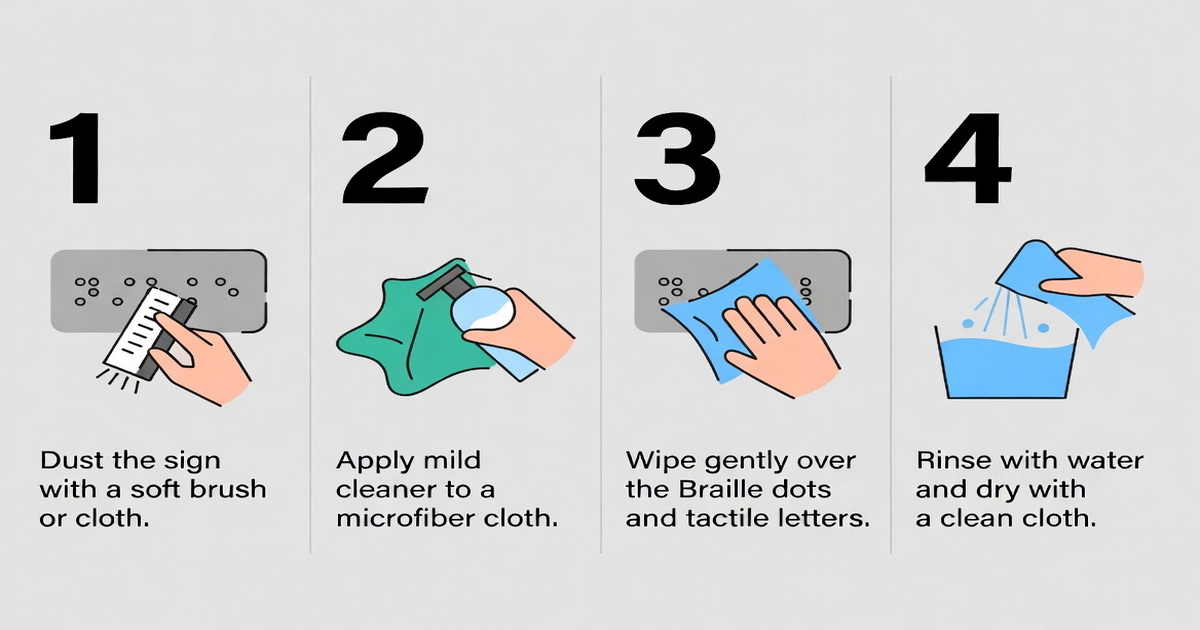
1. Prepare materials: soft cloths, mild detergent or approved disinfectant, clean water, and disposable gloves. [panniergraphics]
2. Dust the sign with a dry microfiber cloth to remove loose particles that could scratch the surface.
3. Apply cleaner to the cloth, not directly to the sign, to prevent liquid from pooling around Braille dots and edges. [jpplus]
4. Wipe gently in one direction, paying attention to raised characters and Braille so as not to chip or dislodge them.
5. Rinse with a damp cloth using clean water to remove any chemical residue. [inprocorp]
6. Dry completely with a soft towel, ensuring no moisture remains around fasteners or panel edges. [inprocorp]
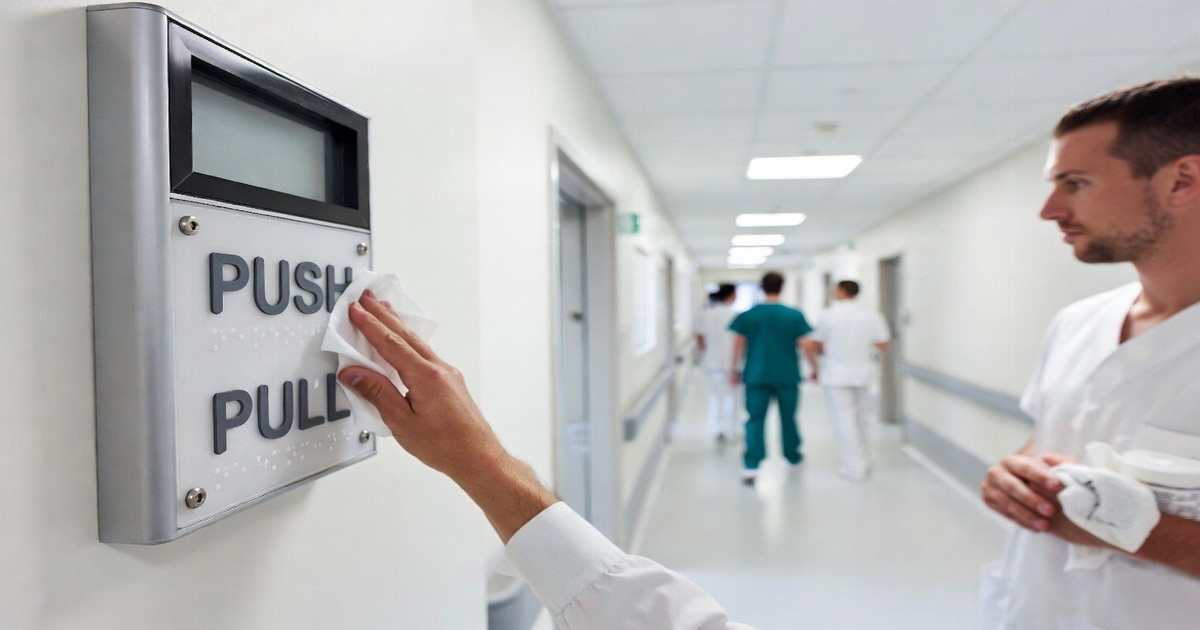
For high‑risk zones like hospital isolation rooms, follow the facility's infection‑control protocol but verify that the chosen disinfectant appears on the sign supplier's approved chemical list. [arcat]
From the perspective of architects, general contractors, and procurement teams, most long‑term problems start at the specification stage.
When drafting your Braille signage spec, include:
- Base material (e.g., acrylic, polycarbonate, stainless steel, zinc, aluminum, photopolymer) and expected environment (interior, exterior, healthcare, transit).
- Chemical resistance requirements, such as "no visible effect after repeated exposure to water‑based cleaners" and compatibility with quats, bleach, and alcohol‑based products as applicable. [adasigns]
- Testing standards if available, or manufacturer test reports documenting performance after exposure to common disinfectants. [adasigns]
- Cleaning and maintenance instructions that must be forwarded to the facility operations team. [panniergraphics]
By treating chemical resistance as a formal performance requirement, not an assumption, you significantly extend the service life and compliance of installed Braille signage.
The table below offers a practical overview of which materials generally align with typical cleaning protocols (actual compatibility should always be confirmed with the manufacturer).
| Environment / Cleaning Pattern | Suitable Materials (Typical) | Notes |
|---|---|---|
| Offices & schools, mild detergent 1–2× weekly | Acrylic, polycarbonate, coated metals, photopolymer | Focus on ease of cleaning and appearance. (inprocorp) |
| Hospitals, daily quats / alcohol / peroxide | Polycarbonate, high‑performance photopolymer, coated metals | Require documented resistance to disinfectants. (novapolymers) |
| Transit hubs, frequent graffiti removal | Stainless steel, zinc, robust coatings | Specify resistance to selected solvents and cleaners. (braillesignsinc) |
| Exterior façades, periodic neutral cleaning | Metals with architectural coatings, exterior‑grade plastics | Emphasize UV, weatherability, and neutral cleaner resistance. (braillesignsinc) |
Accessibility regulations such as the ADA Standards for Accessible Design in the U.S. and similar international requirements focus on tactile legibility, contrast, and placement of Braille signs. However, they implicitly assume that signs remain readable throughout their lifecycle. [brailleauthority]
Key points often referenced by designers include:
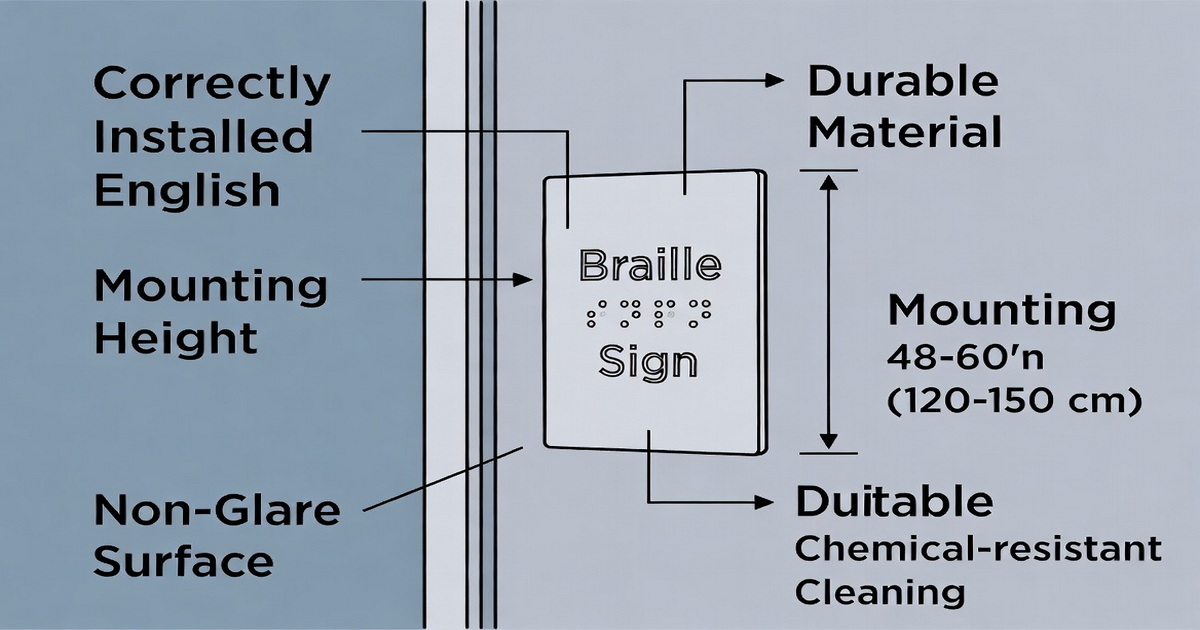
- Braille must be properly formatted (typically Grade 2 in the U.S.) and positioned below the corresponding text. [novapolymers]
- Tactile characters must be raised, with sufficient spacing and installed at regulated heights for easy reach. [taylor]
- Signs should use non‑glare finishes and high contrast backgrounds for users with low vision. [greendotsign]
If heavy cleaning causes gloss change, discoloration, or loss of tactile detail, then the sign effectively fails to meet the spirit of these standards, even if the original layout was correct. [adasigns]
Recent industry guidance stresses that material selection must consider lifetime performance, including UV stability, mechanical wear, and chemical cleaning. Braille signage materials are increasingly expected to demonstrate resistance to: [adasigns]
- UV degradation outdoors.
- Mechanical wear from frequent finger contact.
- Chemical exposure from regular cleaning and disinfection. [adasigns]
This holistic view is where chemically resistant Braille systems deliver a clear advantage for owners and operators.
Drawing on project experience with hospitals, transportation hubs, and multinational corporate campuses, here are practical recommendations when you work with a manufacturer like Landea Signs Co., Ltd.
- Tell your manufacturer how your client cleans: daily disinfection vs light weekly cleaning leads to different material choices.
- For healthcare and lab environments, prioritize polycarbonate or tested photopolymer systems with documented compatibility to quats, bleach, and alcohol. [arcat]
- For harsh public environments, consider stainless steel or zinc signs with durable coatings tested for repeated cleaning and weather exposure. [braillesignsinc]
- Where visual branding is critical, specify non‑glare finishes that maintain contrast even after years of maintenance. [novapolymers]
As a manufacturer, we see fewer failures when the final customer receives clear, concise maintenance guidelines. Effective approaches include:
- Printing simple cleaning icons or QR codes linking to care instructions on the back of sign packs.
- Including a one‑page "Approved Cleaners List" in operation manuals or closeout documentation. [arcat]
- Training facility staff at handover on what not to use (abrasives, strong solvents, undiluted bleach). [calpaclab]
This small investment in education significantly increases the real‑world lifespan of Braille systems.
If you are designing or managing spaces where cleaning intensity is high – from hospitals and cleanrooms to busy airports and metro systems – choosing chemically resistant Braille signage is essential to maintain accessibility and brand image over time.
Landea Signs Co., Ltd. can work with your team to:
- Evaluate your current cleaning and disinfection protocols.
- Recommend material and construction combinations tailored to your environment.
- Provide tested, documented chemical resistance data and maintenance instructions.
Contact our engineering and project team to define a Braille signage package that stays clean, legible, and compliant – even under the toughest cleaning regimes.
Q1. Can I use alcohol wipes on all Braille signs?
A1. Not always. Some acrylic and resin‑based systems can craze or dull with repeated alcohol exposure; you should confirm compatibility with the sign manufacturer and follow their approved cleaner list. [novapolymers]
Q2. What is the safest "universal" cleaner for Braille signs?
A2. For most materials, a mild detergent or soap solution applied with a soft cloth, followed by clean water rinse and drying, is the safest routine option. [jpplus]
Q3. How often should Braille signs be cleaned in public buildings?
A3. Frequency depends on touch volume and hygiene policies, but many facilities clean Braille and door signs at least weekly, with daily disinfection in high‑traffic or healthcare areas. [novapolymers]
Q4. Does chemical damage affect ADA compliance?
A4. Yes. If cleaning causes clouding, color loss, or Braille deformation that makes the sign hard to see or feel, it may no longer effectively meet ADA signage requirements. [taylor]
Q5. What information should be in a Braille sign maintenance guide?
A5. It should list compatible cleaners and disinfectants, step‑by‑step cleaning instructions, prohibited products (abrasives and harsh solvents), and guidance on inspection and replacement intervals. [inprocorp]
1. CLEANING RASTER® BRAILLE SIGNS – Johnson Plastics Plus.
https://www.jpplus.com/mwdownloads/download/link/id/4731/ [jpplus]
2. Nova Polymers – How to Produce Chemical‑Resistant Braille Signs for Antimicrobial Cleaning Protocols.
https://novapolymers.com/chemical-resistant-braille-signs-ada-compliance/ [novapolymers]
3. InPro – Signscape Clean‑Up and Maintenance Instructions.
https://www.inprocorp.com/globalassets/resource-documents/signscape-clean-up-and-maintenance-instructions.pdf [inprocorp]
4. ARCAT – How to Produce Chemical‑Resistant Braille Signs for Antimicrobial Cleaning Protocols.
https://www.arcat.com/product/how-to-produce-chemical-resistant-braille-signs-for-antimicrobial-cleaning-protocols-237507 [arcat]
5. Braille Signs Inc – Zinc Sign Performance Requirements.
https://www.braillesignsinc.com/wp-content/uploads/2022/03/BSI_Zinc_Specs.pdf [braillesignsinc]
6. Nova Polymers – ADA Braille Signage Requirements.
https://novapolymers.com/ada-braille-signage-requirements/ [novapolymers]
7. Darwin Microfluidics – PC (Polycarbonate) Chemical Resistance Chart.
https://blog.darwin-microfluidics.com/pc-polycarbonate-chemical-resistance-chart/ [blog.darwin-microfluidics]
8. Pannier Graphics – Sign Maintenance Guide: How to Clean and Protect Outdoor Signs.
https://www.panniergraphics.com/blog/sign-maintenance-guide-how-to-clean-outdoor-signs [panniergraphics]
9. Taylor – ADA‑Compliant Braille and Wayfinding Signage Explained.
https://www.taylor.com/blog/ada-compliant-braille-and-wayfinding-signage-explained [taylor]
10. CP Lab Safety – Polycarbonate Chemical Compatibility Chart.
https://www.calpaclab.com/polycarbonate-chemical-compatibility-chart/ [calpaclab]
11. Excelsior Marking – ADA/Braille Sign Guidelines.
https://www.excelsiormarking.com/ada-braille-sign-guidelines [excelsiormarking]
12. Green Dot Sign – ADA Braille Signs Requirements.
https://greendotsign.com/braille-signage/ [greendotsign]
13. FT Signage – Top Concerns for Custom Acrylic ADA Braille Signs.
https://ftsignage.com/3-top-concerns-for-custom-acrylic-ada-braille-signs/ [ftsignage]
14. ADA Signs – Braille Signs: Technical Specifications and Implementation Guide.
https://www.adasigns.org/blogs/news/braille-signs-ada-specifications [adasigns]
15. Braille Authority of North America – Braille Signage Guidelines.
https://www.brailleauthority.org/signage/Braille%20Signage%20Guidelines_final.pdf [brailleauthority]


