From idea to market-ready product, our SIGNS solutions make every stage easier, faster. Discover How We Help

Views: 282 Author: Landea Signs Publish Time: 2026-08-22 Origin: Site


Content Menu
● Why Export Sign Packaging Requires More Than a Standard Carton
● The Four-Layer Export Packaging System
>> 1. CNC-Cut Foam Inserts Keep Every Sign Component Immobilized
>> 2. Internal Support Posts Prevent Stacking Compression
● Why 12 mm Wooden Crates Matter for Export Signs
>> What Buyers Should Check Before Shipment
● Metal Corner Protectors and Strapping Reinforce the Crate
● Packaging Design Should Begin During Sign Engineering
>> A Practical Pre-Shipment Checklist
● Selecting Packaging by Shipping Method
● Common Packaging Errors That Put Signs at Risk
>> Unprotected Finished Surfaces
>> Missing Hardware Organization
● Our Packaging Commitment for Custom Sign Exports
● Request a Custom Export Packaging Plan
● FAQ
>> 1. What is the best export packaging for illuminated signs?
>> 2. Why are foam inserts important for custom signs?
>> 3. When should a wooden crate include internal support posts?
>> 4. Does a 12 mm wooden crate guarantee that a sign will not be damaged?
>> 5. What is an IPPC mark on export wooden packaging?
>> 6. Can plywood crates be used for international sign shipments?
For an export sign manufacturer, product quality does not end at fabrication. It ends when your custom sign arrives at its destination clean, structurally intact, illuminated correctly, and ready for installation. That is why export packaging for sign products must be engineered for vibration, stacked loads, moisture exposure, repeated handling, and the occasional impact that can occur during international shipping.
At Landea Signs Co., Ltd., we treat packaging as part of the product solution—not as an afterthought. For custom illuminated signs, metal signs, oversized sign systems, and delicate mirror-finish letters, our approach combines precision foam fixing, internal support posts, 12 mm wooden crates, and metal reinforcement. These four protective layers are designed to reduce movement inside the crate and preserve the condition of every sign throughout sea, air, and multimodal transport.

A custom sign is rarely a simple, uniform product. It may include thin metal returns, acrylic faces, internal LED modules, welded sections, polished surfaces, removable panels, or irregular shapes. Each feature creates a different transport risk.
During a typical export journey, a crate may be:
- Lifted by forklift several times
- Loaded into and removed from a container
- Exposed to sustained vibration during road and sea transit
- Stacked beneath other cargo
- Moved through warehouses with varying humidity levels
- Subjected to accidental drops, side impacts, or rough handling
Global maritime trade reached 12.3 billion tons in 2023, illustrating the scale and complexity of the logistics system through which export cargo travels. A strong sign product still needs a packaging system that can manage real-world handling conditions.
A carton with loose foam chips may be adequate for a small, low-value item. It is not a responsible solution for a custom channel sign, a polished metal sign, or a large freestanding sign structure. The main objective is simple: keep the sign fixed, supported, separated, dry, and protected from external force.
The first and most important protection layer is internal fixing. A sign can be damaged even when its wooden crate looks perfect from the outside. If it moves inside the crate, repeated vibration can create scratches, loosen components, crack acrylic edges, or stress welded areas.
We use high-density EPS or EPE foam that is cut to match the outer profile of each sign component. Rather than filling empty space randomly, the foam creates a dedicated recess for the product.
This process includes:
- Measuring each sign's shape, depth, and vulnerable points
- Creating foam slots that closely match the component profile
- Seating the sign securely in the foam recess
- Adding top, bottom, and side cushioning where required
- Separating individual letters and components to prevent contact
For a mirror-polished stainless-steel sign, for example, the greatest concern may be surface abrasion. For an illuminated sign, the priority may be protecting acrylic edges and internal electrical components. CNC-cut foam allows the packaging design to address these different risks individually.
What this solves:
| Packaging risk | Foam-insert solution | Benefit |
|---|---|---|
| Component collision | Separate recessed cavities | Prevents signs from striking one another |
| Surface scratching | Soft protective contact points | Helps protect polished or painted finishes |
| Vibration movement | Tight, custom-fit restraint | Reduces lateral and vertical movement |
| LED-related damage | Shock-absorbing foam layers | Helps reduce impact transferred to internal parts |
| Irregular shapes | Custom-cut cavities | Provides support beyond standard rectangular packing |
The goal is not to pack the crate tightly at random. The goal is to ensure that the sign is unable to move in a damaging way.
Large wooden crates face a different problem: top-load compression. In containers, crates may be stacked. If a large crate has no internal load path, pressure on the lid can cause deflection. That deformation may then press directly onto the sign inside.
For crates containing signs larger than approximately 1.5 meters in length or weighing more than 50 kg, we add internal wooden support posts. These posts are typically positioned at the four corners and, where needed, through the center of the crate.
The posts connect the crate base to the top panel, creating an internal structural frame. Instead of allowing stacking weight to transfer through the lid and onto the packaged sign, the posts channel the load downward to the base.
This feature is particularly valuable for:
- Large illuminated signs
- Long letter sets
- Freestanding sign cabinets
- Heavy metal signs
- Tall, narrow sign structures
- Multi-part signs packed in oversized crates
A crate should carry the load—not the sign inside it.
In practical terms, support posts help maintain lid clearance. They also reduce the risk of diagonal distortion if a crate is tilted, pushed sideways, or placed under uneven pressure.
Not all wooden crates provide the same protection. Thin boards may look acceptable when new, but their performance can decline when exposed to humidity, handling shock, or prolonged stacking pressure.
For export sign packaging, we use wooden crate panels with a thickness of at least 12 mm, using quality plywood or compliant solid wood where appropriate. Compared with thinner panels, 12 mm material provides more resistance to bending, puncture, and splitting during transport.
The exact crate design should still depend on:
- Total packed weight
- Sign dimensions
- Product fragility
- Shipping method
- Whether the shipment is full-container load or less-than-container load
- Forklift handling requirements
- Destination-country import requirements
A 12 mm crate is not a universal engineering specification for every shipment. However, it is a practical baseline for many large, high-value, or fragile sign products because it provides a more robust external shell than lightweight crate panels.
For export shipments using solid-wood packaging materials, phytosanitary compliance also matters. Under ISPM 15, eligible wood packaging material must receive an approved treatment and display an official, permanent mark identifying the treatment and responsible party. U.S. Customs and Border Protection similarly explains that compliant wood packaging material must be treated and visibly marked with an IPPC-approved mark.
Before approving a wooden crate, ask the supplier these questions:
1. Is the crate designed around the sign's real dimensions and weight?
2. What is the thickness and type of crate panel?
3. Are internal support posts used for large or heavy crates?
4. Is every sign component immobilized with fitted foam?
5. Are finished surfaces protected from direct contact with hard materials?
6. Is the crate suitable for forklift handling?
7. If solid wood is used, does the packaging carry the required IPPC mark?
8. Will the supplier provide packing photos before dispatch?
These questions help buyers evaluate packaging quality before the goods are already in transit.
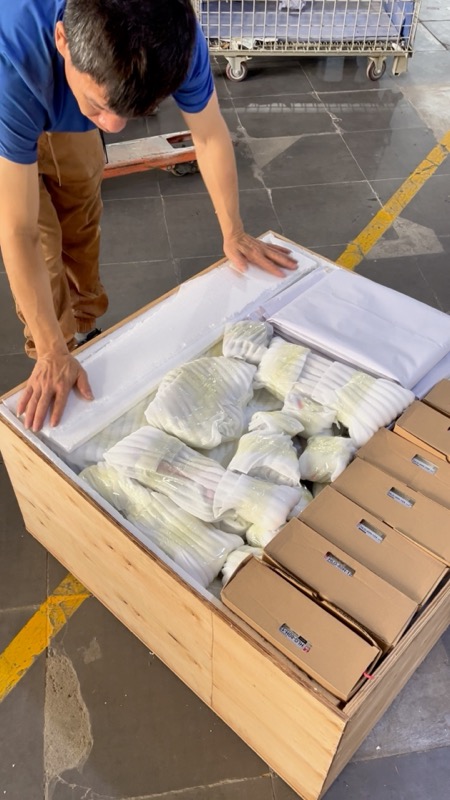
The corners and joints of a wooden crate are often the most exposed areas. A corner impact can open a seam, loosen nails, crack a panel, or reduce the crate's overall rigidity. This is why external reinforcement is essential for export-grade sign packaging.
Our reinforced-crate approach can include metal corner protectors and high-strength strapping around the crate body. The corner protectors strengthen impact-prone areas, while strapping adds continuous tension around the crate.
Depending on the shipment, we may use:
- Galvanized metal corner protectors
- Bolt-fixed reinforcement hardware
- PET or steel strapping
- Reinforced base structures
- Forklift-entry clearance where required
- Additional bracing for long crates
The role of these components is not cosmetic. They help the crate remain intact when it is lifted, stacked, or exposed to side pressure.
Packaging performance testing standards provide a useful framework for this thinking. ASTM D4169 outlines a uniform method for evaluating shipping units against distribution hazards, including handling, impact, and other conditions encountered in transit. Although every custom export crate does not require formal laboratory certification, the underlying principle is relevant: packaging should be designed around the actual hazards of distribution, not only around the product's appearance in the factory.
One common mistake is treating packaging as the final task after production is complete. For complex custom signs, packaging should be considered during the engineering stage.
This is especially important when a sign has:
- Very thin edges or narrow strokes
- Large acrylic faces
- A mirror, brushed, painted, or plated finish
- Long welded sections
- Detachable mounting systems
- Fragile lighting components
- Multiple pieces that must arrive in installation order
A packaging review before fabrication can identify risks early. For example, if a large sign face is highly flexible, the team may decide to add a temporary protective board or modify how the product is divided into transportable sections. If a sign includes detachable components, labeling and compartmentalized packaging can reduce installation confusion at the destination.
Before a crate leaves our facility, the packing team should verify the following:
- Every sign part matches the packing list.
- Surfaces are covered with suitable protective film or soft material.
- Foam cavities hold components securely without excessive pressure.
- No signs touch one another directly.
- Electrical leads, mounting hardware, and spare parts are separately labeled.
- Internal support posts are installed where required.
- The crate lid closes without contacting the product.
- External strapping and corner reinforcement are secure.
- Handling labels are visible.
- Packing photos and, when appropriate, a packing video are recorded.
This documented process gives buyers greater visibility before loading. It also creates a clear reference if customs, logistics teams, or installation crews need to confirm what was shipped.
The ideal packaging configuration depends partly on the transport route. Sea freight, air freight, and courier-based delivery place different demands on the crate.
| Shipping method | Primary risks | Recommended focus |
|---|---|---|
| Sea freight | Humidity, stacking, extended vibration, container handling | Moisture-aware protection, strong crates, support posts, external reinforcement |
| Less-than-container load | More transfers and cargo interaction | Higher impact resistance, secure strapping, clear labels, no internal movement |
| Air freight | Weight restrictions, frequent handling | Lightweight but rigid protection, fitted foam, reinforced edges |
| Express courier | Drops, sorting impacts, repeated handling | Compact protective layers, strong outer shell, secure component separation |
For less-than-container-load shipments, packaging becomes even more important because crates are typically handled more frequently and stored alongside unrelated cargo. The crate should be engineered for uncertainty—not for perfect conditions.
Buyers often encounter packaging failures that could have been prevented with basic planning.
Loose foam pieces do not reliably stop a sign from moving. They can shift during transport and leave vulnerable corners unsupported.
A large crate without support posts may look strong, yet still allow its top panel to bend under stacked weight.
Lightweight panels may reduce upfront cost, but they increase the risk of puncture, cracking, and structural failure.
A polished metal sign can be permanently damaged if it rubs against another component, hardware bag, or rough wooden surface.
Mounting parts, transformers, templates, and installation drawings should be labeled and packed logically. A sign that arrives undamaged but cannot be installed efficiently still creates a poor customer experience.
At Landea Signs Co., Ltd., our export packaging is designed around the specific sign—not a generic carton size. We review the product's dimensions, weight, finish, structure, shipping method, and handling risks before deciding on the right protective system.
Our standard approach for demanding export orders combines:
- Custom-cut foam fixing to prevent internal movement
- Internal support posts to manage stacking loads
- 12 mm wooden crates for a durable protective shell
- Metal corner protection and strapping for stronger joints and crate integrity
For solid-wood packaging, we can arrange compliant treatment and appropriate marking documentation based on destination requirements. ISPM 15 marks are intended to identify wood packaging materials that have undergone approved phytosanitary measures.
A well-made sign deserves packaging that protects its finish, performance, and arrival experience. The cost of proper export packaging is usually small compared with the cost of replacement production, urgent air freight, installation delays, claim disputes, and damaged buyer confidence.
If you are sourcing illuminated signs, metal signs, large-format signs, or custom sign projects for international delivery, share your drawings, dimensions, destination, and preferred shipping method with Landea Signs Co., Ltd.
We can recommend a packaging configuration tailored to your sign project and provide pre-shipment packing photos or video for review. Contact our team for a custom sign packaging assessment before production and shipment are finalized.
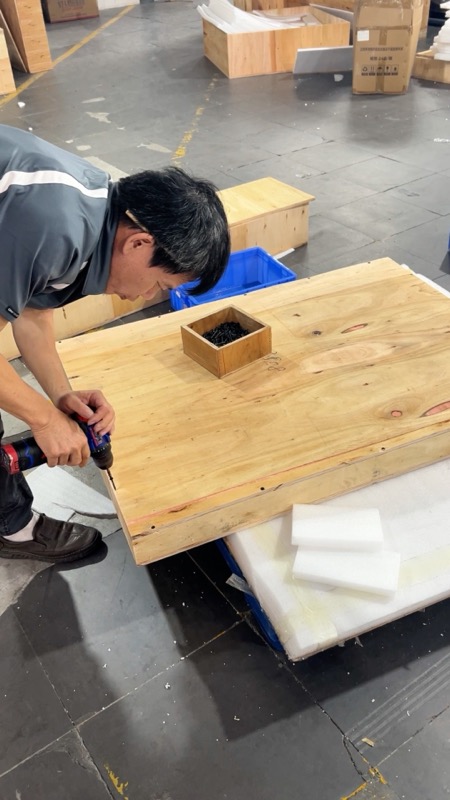
The best export packaging uses a layered system: custom-cut foam to immobilize components, a rigid wooden crate, internal support posts for large crates, and external corner or strapping reinforcement. The correct design depends on the sign's dimensions, weight, surface finish, and transport route.
Foam inserts hold each sign component in position. This reduces vibration, collision, rubbing, and impact transfer during handling and transit. Custom-cut foam is especially useful for irregular shapes, polished metal surfaces, and illuminated sign components.
Internal support posts are recommended for large, long, or heavy crates, particularly when stacked cargo could cause the crate lid to deflect. They create a load path between the top and base, helping prevent pressure from reaching the sign inside.
No packaging material can guarantee zero damage in every logistics situation. However, a properly designed 12 mm crate can provide a stronger outer shell than thinner materials. It should be combined with internal fixing, support posts, surface protection, and external reinforcement.
An IPPC mark identifies wood packaging material treated under ISPM 15 requirements. It typically includes the IPPC symbol, country code, producer or treatment-provider code, and treatment code. Import requirements vary, so buyers should confirm destination-specific rules before shipping.
Yes. Plywood is commonly used for export crates. The packaging design should still match the shipment's weight, dimensions, handling risks, and destination requirements. If solid wood components are included, ISPM 15 rules may apply to those materials.
1. Food and Agriculture Organization of the United Nations. "[ISPM 15: Regulation of Wood Packaging Material in International Trade]." Details official marking and treatment requirements for regulated wood packaging material. [openknowledge.fao]
2. U.S. Customs and Border Protection. "[Wood Packaging Materials]." Explains approved treatments and IPPC marking expectations for regulated wood packaging entering the United States. [cbp]
3. ASTM International. "[ASTM D4169: Standard Practice for Performance Testing of Shipping Containers and Systems]." Provides a framework for evaluating shipping units under representative distribution hazards. [astm]
4. United Nations Conference on Trade and Development. "[Review of Maritime Transport 2024]." Reports that global maritime trade reached 12.3 billion tons in 2023. [unctad]
5. Tektronix. "[ASTM D4169 Testing]." Summarizes distribution-test hazard elements, including handling, drop, impact, and stability. [tek]


