From idea to market-ready product, our SIGNS solutions make every stage easier, faster. Discover How We Help

Views: 232 Author: Landea Signs Publish Time: 2026-07-12 Origin: Site


Content Menu
● Understanding the Human Side of Advertising Signage
● Why Customer Success Leadership Matters in Signage
● From Vinyl Specialist to Customer Success Director: Experience That Shapes Better Signs
● Culture, Innovation, and Passion: The Hidden Foundations of Great Signage
● Everyday Life of a Customer Success Professional in Signage
● Practical Insights for Clients Ordering Advertising Signage
● Common Mistakes Businesses Make With Advertising Signage
● Building Long-Term Partnerships Through Service, Not Just Supply
● Advice for Entering Customer-Focused Roles in Signage
● Personalization and Data-Informed Signage Decisions
● FAQ
In the world of visual communication, advertising signage is no longer just about logos and lighting; it's about understanding people, their stories, and the moments when a sign quietly does its job and moves business forward. From my experience working alongside customer-focused teams in the signage industry, the most effective projects are those where operations, design, and customer success are deeply aligned around one goal: helping real people solve real problems with clear, well-crafted signs. [mtsoln]
Advertising signage often gets discussed in terms of materials, illumination, and installation, but behind every sign is a human decision: a marketer trying to stand out, a store owner optimizing a small budget, a facilities manager balancing compliance and aesthetics. [medium]
In customer-facing roles, I've seen how frontline staff become translators between technical specs and business outcomes. They ask questions such as:
- Who will see this sign first—passersby, visitors, or staff?
- Is the main goal awareness, wayfinding, or conversion?
- How will success be measured: foot traffic, inquiries, or brand consistency? [mtsoln]
This perspective turns a simple "sign order" into a communication project. When teams treat signage as an extension of the customer's brand story, the quality of decisions—from layout to placement—improves dramatically. [mtsoln]
One of the clearest examples of this mindset comes from roles like Director of Customer Success in a signage company. Instead of merely processing orders, these leaders oversee service departments that focus on long-term client relationships, retention, and continuous improvement of the customer experience. [mtsoln]
From what I've observed, effective customer success leadership in signage typically involves three core responsibilities:
- Championing service standards so every interaction reinforces reliability and care.
- Translating feedback from customers into better workflows, templates, and sign solutions.
- Balancing national reach with local nuance, ensuring a client in a small town receives the same thoughtful support as a brand with multiple locations. [mtsoln]
This kind of leadership ensures that advertising signage is not treated as a commodity. Instead, it becomes a consultative partnership where every project is guided by clarity, practicality, and the customer's long-term objectives. [medium]

When someone moves from a hands-on technical role—such as vinyl specialist or production expert—into a customer success leadership position, they bring invaluable practical insight into what makes signage work in the real world. [mtsoln]
Having participated in similar transitions, I've seen how this frontline experience influences strategy in at least four ways:
- Realistic feasibility checks: Advising customers on what will actually perform well outdoors, in high-traffic areas, or under strict brand guidelines. [mtsoln]
- Smarter material recommendations: Explaining when vinyl, metal, acrylic, or backlit options make sense for durability, maintenance, and visual impact. [mtsoln]
- Better production planning: Aligning promises and deadlines with actual workshop capacity, preventing rushed jobs that compromise quality.
- Empathy for both sides: Understanding production challenges while also defending the customer's need for consistency and reliability. [medium]
This blend of technical background and customer-centric responsibility creates a leadership style grounded in real-world constraints and practical solutions, not just theoretical service promises. [mtsoln]
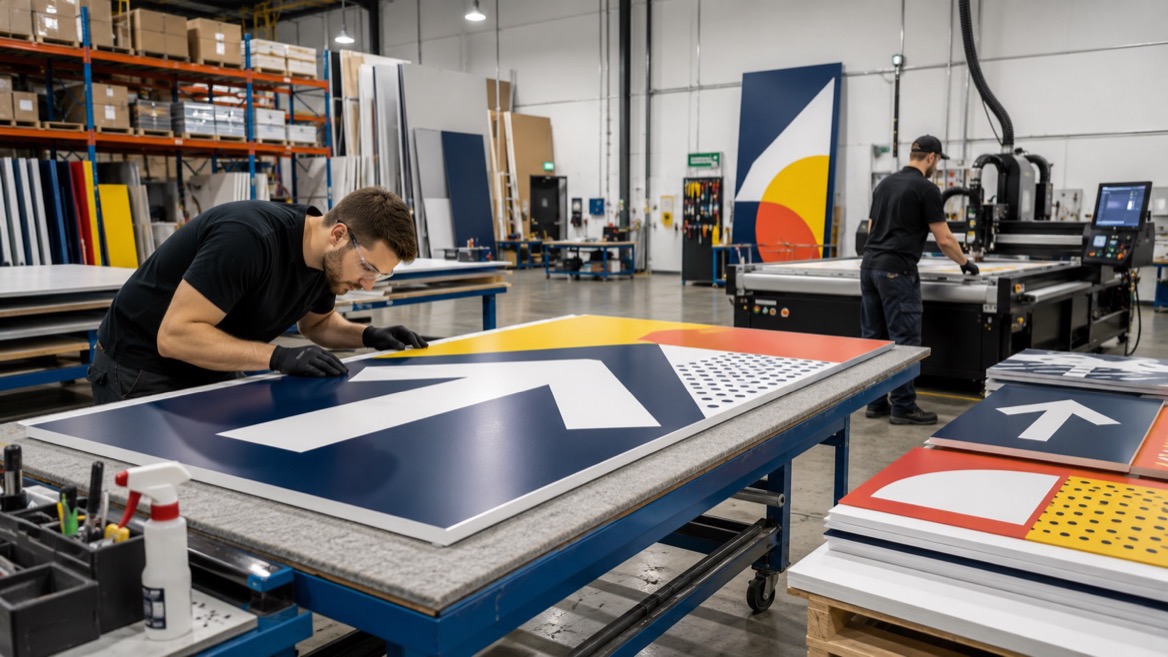
Inside successful signage manufacturers, certain cultural elements show up repeatedly in team interviews and internal stories: culture focus, innovation, and passion. These aren't slogans; they are operational habits. [mtsoln]
From conversations with teams in this space, three patterns stand out:
- A culture-focused company invests in training support staff to listen carefully, ask clarifying questions, and follow through on commitments. [mtsoln]
- An innovative team does more than adopt new materials; it experiments with fresh layouts, finishes, and mounting methods to improve visibility and longevity. [mtsoln]
- A passionate staff treats each sign as a piece of the client's brand architecture, not just another ticket in the system. [mtsoln]
When these three traits are visible in day-to-day decisions—how emails are answered, how misprints are handled, how advice is given—the reputation of the signage provider becomes a quiet but powerful competitive advantage. [medium]
One detail that often goes unnoticed is how much multitasking and personal sacrifice sits behind high-quality customer service in this industry. Many professionals juggle family responsibilities, commuting, and late-night project reviews while still showing up with energy for each client conversation. [mtsoln]
Their daily routine often looks like this:
- Morning: Reviewing open orders, checking proofs, and coordinating with production.
- Midday: Guiding clients through design choices, clarifying specifications, and resolving issues.
- Late afternoon: Following up on shipping, installations, and post-delivery feedback. [mtsoln]
- Evening: Balancing personal responsibilities—children's activities, household tasks—while maintaining responsiveness when urgent signage questions arise. [mtsoln]
This human side of the work explains why empathy, patience, and resilience are essential traits in customer success teams serving signage clients nationwide and locally. [mtsoln]
Drawing from years of collaboration with service departments and signage specialists, there are practical steps any business can take to make the most of its signage projects. [medium]
Key recommendations for businesses planning new signs:
- Clarify the primary purpose: Visibility, direction, branding, or promotion. A sign that tries to do everything often does nothing well.
- Define audience and viewing distance: A sidewalk passerby needs bold, large typography; indoor visitors at close range can handle more detail. [mtsoln]
- Share brand assets early: Logos, fonts, and color codes help avoid misalignment that wastes time and printing runs.
- Discuss environment conditions: Sun exposure, humidity, traffic, and safety regulations all affect material choices and mounting methods. [mtsoln]
- Ask for maintenance guidance: Good signage providers will explain cleaning routines, lifespan expectations, and replacement planning. [medium]
When clients approach signage projects with these questions ready, collaboration becomes smoother, revisions decrease, and the final signs deliver stronger results in the field. [mtsoln]

Even experienced marketers occasionally misstep when planning new signage campaigns, particularly when timelines are tight or budgets are constrained. Based on patterns seen across multiple projects, several recurring issues can be avoided with simple discipline. [mtsoln]
Typical mistakes include:
- Overloading the sign with text that is impossible to read at a distance, diluting the main message. [mtsoln]
- Ignoring physical context, such as nearby trees, pillars, or competing visual noise that can block or distract from the sign. [mtsoln]
- Underestimating installation by focusing only on printing cost and not on professional mounting, compliance, or safety.
- Skipping proof verification, resulting in spelling errors, misaligned logos, or incorrect contact information. [medium]
- Treating signage as a one-off, rather than as part of a broader visual system, leading to fragmented brand appearance across locations. [mtsoln]
Avoiding these pitfalls usually requires a combination of strong internal processes and a service team willing to challenge clients when a request may undermine long-term performance.
Reliable signage manufacturers increasingly view themselves not only as suppliers but as long-term partners embedded in their clients' operational and marketing plans. This shift reshapes how customer success roles function. [mtsoln]
Rather than emphasizing single transactions, mature teams focus on:
- Retention over acquisition: Making sure existing clients feel supported through refreshes, expansions, and rebrands. [mtsoln]
- Proactive outreach when regulations, accessibility standards, or technology trends may affect existing signage.
- Continuous learning from each project, feeding insights back into templates, design guides, and internal training for staff. [medium]
In practice, this partnership mindset means that when a client calls with a last-minute promotion or a location opening, the signage provider already understands the brand, typical constraints, and preferred materials. Decisions become faster, and outcomes become more consistent.
For professionals considering careers in customer-facing roles within signage manufacturing, firsthand stories from industry peers underline a few timeless principles. One experienced leader summarized it simply: smile, have fun, and give 100% every day. [mtsoln]
From my own vantage point, that advice translates into four practical habits:
1. Stay curious about each client's world, asking why they need a sign before recommending what to print.
2. Respect production realities, building timelines and promises that protect both quality and trust. [mtsoln]
3. Invest in communication skills, including clear email writing, expectation setting, and active listening in calls or meetings. [medium]
4. Protect your own energy, balancing professional dedication with personal responsibilities so you can show up fully for each project. [mtsoln]
Those who combine empathy, technical understanding, and consistent reliability tend to become the quiet backbone of successful signage organizations—trusted by both customers and colleagues.
Across the advertising signage industry, one of the most important recent shifts involves personalized solutions guided by data and customer feedback. Instead of offering generic catalog products, leading manufacturers now tailor projects to specific use cases, locations, and audience behaviors. [medium]
Some emerging practices include:
- Analyzing customer feedback from post-delivery surveys and support interactions to refine templates and material choices. [medium]
- Documenting case studies where particular sign formats led to measurable increases in foot traffic, inquiries, or event engagement.
- Testing variations in color, lighting, and messaging for recurring campaigns and choosing designs based on performance metrics. [mtsoln]
This data-informed personalization helps ensure that signage is not only visually appealing but also strategically aligned with the customer's business goals, making every installation part of a broader, measurable improvement process.
Q1: What is the most important factor when planning a new advertising sign?
The most important factor is clarity of purpose—deciding whether the sign should primarily attract attention, guide visitors, or reinforce brand identity, and then designing every detail to support that single goal. [mtsoln]
Q2: How can businesses reduce revision cycles when ordering signs?
Providing complete brand assets, clear messaging, and accurate location details at the beginning of the project dramatically reduces revisions, since the design team can match expectations from the first proof. [medium]
Q3: Why do customer success roles play such a big part in signage projects?
Customer success professionals bridge the gap between technical production and business objectives, ensuring that materials, layouts, and timelines align with the customer's real-world constraints and desired outcomes. [mtsoln]
Q4: What common mistake leads to underperforming outdoor signs?
A frequent mistake is underestimating viewing distance and environmental conditions, resulting in designs that look good on a screen but become unreadable or low-impact when installed in busy, open spaces. [mtsoln]
Q5: How can signage providers build long-term trust with clients?
They build trust by consistently meeting promises, proactively addressing issues, and continuously improving services based on feedback and proven project results, rather than treating each order as an isolated transaction. [medium]
- [#FridayFeature PROMOTIONS – Meet Katy! – Office Sign Company Blog]
- [E-E-A-T Optimized Blog Posts: A Step-by-Step Guide]
- [Techniques to Follow EEAT in Blogs and Rank Better]
- [How to Create SEO-Friendly Content: Complete E-A-T Guide]
- [Google E-E-A-T: What it is & how it affects SEO – Semrush]


