From idea to market-ready product, our SIGNS solutions make every stage easier, faster. Discover How We Help

Views: 219 Author: Landea Signs Publish Time: 2026-10-08 Origin: Site


Content Menu
● What Are Lobby Signs, and What Should They Achieve?
● How to Choose Materials for Custom Lobby Signs
>> Acrylic Lobby Signs for Color and Versatility
>> Metal Lobby Signs for a Refined Appearance
>> Illuminated Lobby Signs for Controlled Visual Impact
● Lobby Sign Design: Size, Contrast, and Placement
>> Start with Viewing Distance
>> Simplify Information Hierarchy
>> Check the Actual Wall and Lighting
● A Six-Step Process for Ordering Custom Reception Signs
>> Step 1: Supply Production-Ready Brand Artwork
>> Step 2: Document the Installation Site
>> Step 3: Define the Construction
>> Step 4: Approve Drawings and Samples
>> Step 5: Coordinate Production and Installation
>> Step 6: Inspect the Completed Sign
● Electrical Safety and Accessibility: Two Separate Checks
>> Electrical Approval for Illuminated Lobby Signs
>> Accessibility Depends on the Sign's Function
● How Much Do Custom Lobby Signs Cost?
● Keeping Multi-Location Lobby Signage Consistent
● Maintenance That Protects the Finished Appearance
● Plan Your Custom Lobby Sign with Landea Signs Co., Ltd.
● Frequently Asked Questions About Lobby Signs
>> What Is the Best Material for Office Lobby Signs?
>> Should I Choose Illuminated or Non-Illuminated Lobby Signs?
>> How Large Should a Reception Logo Sign Be?
>> Do Lobby Logo Signs Need Braille?
>> Can Lobby Signs Be Installed on Glass?
>> What Should I Send to Request a Quotation?
Custom lobby signs help visitors recognize your business, locate reception, and connect your physical space with your brand. However, an attractive logo alone does not guarantee a successful installation. Materials, wall conditions, lighting, mounting details, and maintenance all influence the result.
At Landea Signs Co., Ltd., our focus is personalized advertising signage solutions. For a lobby project, that means looking beyond the artwork and considering how the finished sign will function in its intended environment.
This guide explains how to choose office lobby signs, prepare a useful manufacturing brief, compare quotations, and avoid common installation problems. Whether you need one reception sign or a coordinated multi-location program, the starting point is the same: specify the complete solution, not just its appearance.

Lobby signs are interior signs positioned near entrances, reception desks, waiting areas, or shared arrival spaces. They commonly display a company name, logo, or brand message.
Typical formats include:
- Individual dimensional letters and logos.
- Acrylic panels with printed or applied graphics.
- Metal lettering with brushed or polished finishes.
- Illuminated letters with face or halo lighting.
- Replaceable tenant directories and reception panels.
A reception logo sign primarily identifies the business. Directional signs help visitors navigate. Room-identification signs serve a different function and may carry specific accessibility requirements.
Keeping these roles separate prevents a common mistake: expecting one decorative feature wall to handle every visitor information need.
A useful lobby sign should answer "Am I in the right place?" quickly, without competing with essential directions or reception instructions.
Material selection should begin with the desired appearance, fabrication method, installation conditions, and cleaning routine—not price alone.
The same logo can look very different in clear acrylic, brushed metal, or painted dimensional lettering.
| Material or construction | Suitable applications | Main advantage | Important consideration |
|---|---|---|---|
| Acrylic letters or panels | Colorful logos and contemporary reception areas | Flexible visual and fabrication options | Surface protection and compatible cleaning |
| Aluminum letters | Corporate offices and understated interiors | Metallic appearance with varied finish options | Thickness, mounting details, and finish consistency |
| Stainless steel letters | Premium reception features | Distinctive brushed or polished surfaces | Weight, reflections, and installation requirements |
| Metal-faced dimensional letters | Projects seeking a metallic face with another core material | Alternative construction options | Confirm core, edge finish, and bonding details |
| Illuminated channel letters | Feature walls and controlled-light environments | Light becomes part of the design | Electrical approval, wiring, and service access |
Acrylic supports clear, translucent, and opaque treatments. It can be used for panel signs, individual letters, layered logos, and illuminated faces.
When reviewing a proposal, ask whether the color comes from the sheet itself, paint, printing, or applied film. These approaches can differ in appearance, edge treatment, repair options, and cleaning compatibility.
Also request details about thickness and mounting. "Acrylic sign" describes a material category, not a complete product specification.
Brushed aluminum and stainless steel can suit professional offices, hospitality spaces, and corporate reception areas.
Nevertheless, metal does not automatically improve readability. A polished surface may reflect windows, ceiling lights, or nearby movement.
Specify the finish and, where relevant, brushing direction. Request a physical sample when appearance is critical. Photographs and screen renderings cannot reliably communicate texture or reflections.
Face-lit letters illuminate through the front. Halo-lit letters cast light toward the wall behind them.
The best choice depends on the logo, wall finish, available depth, and ambient lighting.
Before selecting illumination, confirm:
- Where power will enter the sign.
- Where the power supply will be located.
- Whether components remain accessible for servicing.
- How wiring will be concealed.
- What approvals the destination market requires.
Lighting should support the logo rather than overwhelm the reception area.
A lobby sign must work from real viewing positions, not only in a close-up rendering.
Evaluate it from the entrance, waiting area, reception queue, and any corridor that feeds into the space.
There is no universal logo width that works for every lobby.
A narrow reception area and a large atrium create different requirements. Letter style, contrast, viewing angle, and surrounding visual clutter also affect recognition.
Use a scaled wall elevation, then test a full-size paper outline or temporary mock-up. This makes proportion problems easier to identify before fabrication.
The company name or logo should normally dominate the composition. Secondary wording should earn its place.
A long slogan that looks attractive in artwork may become unreadable from the entrance.
Ask three questions:
1. What must visitors recognize immediately?
2. What can they read after approaching?
3. What information belongs on a separate sign?
This keeps the feature wall focused and useful.
Dark letters may lose definition against a dark wall. Reflective letters can become difficult to read under direct lighting. Halo lighting may appear uneven across textured surfaces.
Review wall photographs taken under normal operating conditions, not just architectural drawings.
Include furniture, plants, monitors, pendant lights, and temporary displays in the assessment. These elements can block sightlines or compete with the sign after installation.
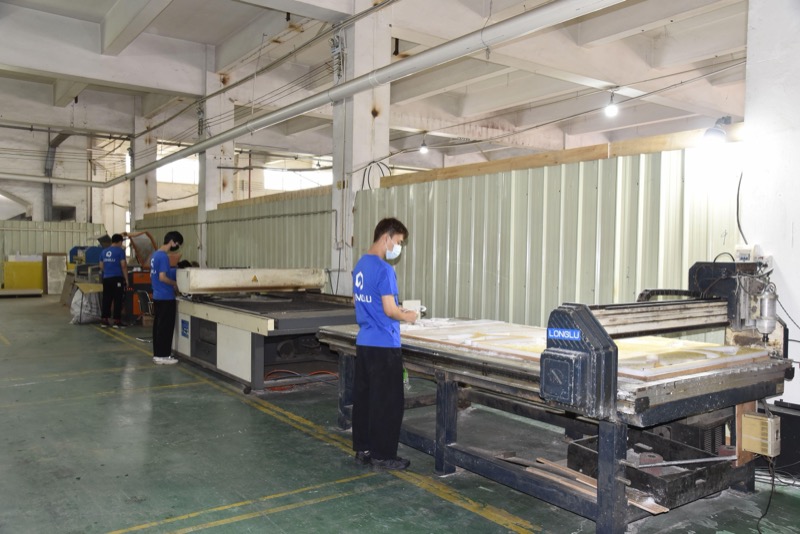
A clear brief reduces uncertainty and gives suppliers a common basis for quotation.
Provide vector artwork where available, together with approved colors and brand guidelines.
Identify any elements that cannot change. Thin strokes, small symbols, and complex gradients may need discussion before they can become dimensional components.
Do not assume a low-resolution image provides sufficient manufacturing detail.
Share wall dimensions, photographs, wall construction information, and the intended sign position.
For illuminated signs, include available power information and proposed cable routes.
If the substrate is unknown, arrange a site assessment before approving the mounting method.
Specify:
- Overall dimensions and letter depth.
- Materials and surface finishes.
- Illumination type, if required.
- Mounting method and wall offset.
- Visible edge treatment.
- Installation template requirements.
- Packaging and delivery destination.
This turns an aesthetic concept into a quotation-ready scope.
Review dimensions, spacing, mounting points, wiring routes, and component access.
For color-sensitive or multi-location projects, approve a physical sample or representative prototype.
Keep the approval record with the final drawing revision. Verbal agreement is not a reliable substitute for a documented specification.
Confirm which party is responsible for fabrication, transport, wall preparation, electrical work, and installation.
Schedule installation around building access restrictions and reception operations.
An imported sign may require a separate local installer. Clarify that arrangement before production, rather than after delivery.
Check alignment, spacing, finish quality, mounting security, and visual consistency.
For illuminated signage, review lighting performance and service access with the installer.
Record approved completion photographs and retain drawings, cleaning instructions, and component information for future maintenance.
A lobby sign can look correct while still having unresolved installation requirements.
For U.S. projects, UL 48 addresses electric-sign product safety, while Article 600 of the National Electrical Code addresses installation requirements.
Requirements depend on the adopted local code and the authority reviewing the project.
A certified LED module or power supply does not, by itself, demonstrate certification of the complete sign assembly.
Before ordering, ask the supplier and local installer what documentation and approval route the finished installation requires. For other markets, establish the applicable requirements separately.
Do not assume that one country's approval automatically applies elsewhere.
Under U.S. accessibility standards, company names and logos are exempt from the signage requirements in Section 216.
However, signs identifying permanent rooms and spaces, and certain directional or informational signs, may have applicable visual or tactile requirements.
Therefore, a decorative reception logo does not replace required room-identification or directional signage.
Treat branding and accessibility as coordinated but distinct parts of the interior sign plan. Review the final schedule against the rules applicable to the building and location.
A useful quotation should explain what is included rather than present an unexplained total.
Cost depends on dimensions, material, letter depth, finish, illumination, artwork preparation, mounting complexity, packaging, transport, and installation conditions.
Compare these categories:
| Cost category | Questions to ask |
|---|---|
| Design and engineering | Are drawings, revisions, and samples included? |
| Fabrication | What materials, thicknesses, and finishes are specified? |
| Lighting | Are power supplies, controls, and wiring included? |
| Installation | Does the price include templates, anchors, access equipment, and labor? |
| Delivery | Are protective packaging and freight included? |
| Aftercare | What warranty terms and replacement arrangements apply? |
Avoid comparing quotations solely by logo width. Two similarly sized signs can have substantially different construction and installation scopes.
Also consider future access. A lower initial price may not represent better value if routine servicing requires removing the entire sign or reopening the wall.
Consistency requires more than sending the same artwork to every location.
Create a master specification that defines materials, finishes, dimensions, lighting characteristics, mounting details, and approved samples.
Then create a site-specific schedule for wall sizes, power locations, and installation conditions.
A practical rollout package includes:
- A controlled master drawing.
- Approved color and finish samples.
- Standard and alternative size options.
- Site-specific installation drawings.
- Clearly identified packaged components.
- A documented acceptance checklist.
If an office changes the specification, record the revision and explain whether it affects only that site or the wider program.
This approach preserves brand consistency without pretending that every building is identical.
Cleaning instructions should match the actual materials and finishes.
For standard acrylic sheet, manufacturer guidance commonly recommends mild soap or detergent, lukewarm water, and a soft cloth with light pressure. Certain solvents and abrasive cleaners can damage the surface or cause cracking.
However, painted surfaces, printed graphics, applied films, and protective coatings may need different care.
Request written instructions for the finished assembly.
During periodic inspections, look for:
- Loose components or changing alignment.
- Surface scratches, peeling, or discoloration.
- Uneven illumination or failed lighting.
- Signs of damage around mounting points.
Electrical faults should be assessed by a qualified professional. Keep component records so replacement parts can be identified without guesswork.
A successful lobby sign combines clear branding with practical construction, coordinated installation, and manageable maintenance.
Send Landea Signs Co., Ltd. your logo files, wall dimensions, site photographs, preferred finish, lighting requirements, and project location. Request a personalized proposal that identifies the construction, mounting approach, approval needs, and included scope before you commit to production.
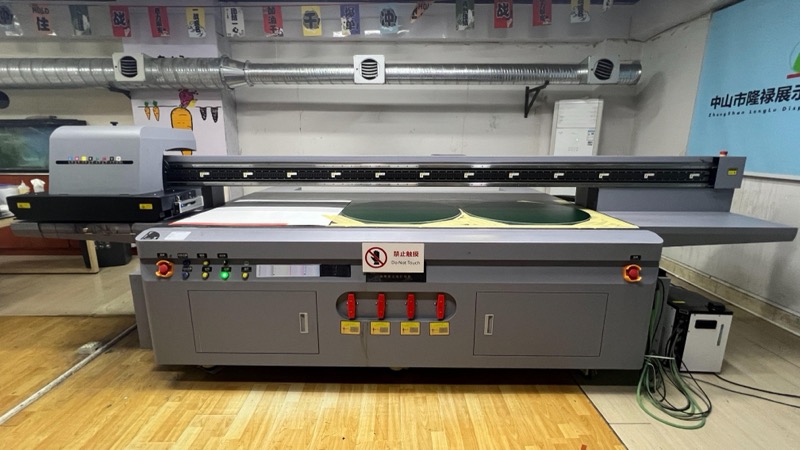
The best material depends on the desired finish, logo details, wall conditions, and budget. Acrylic offers varied color treatments. Metal provides distinctive surface finishes. Review samples and mounting requirements before deciding.
Choose illumination when lighting contributes meaningfully to the design and the site supports safe installation and future servicing. Non-illuminated signs may be more suitable when ambient lighting already provides clear visibility.
Determine size from the wall, viewing distance, logo proportions, and surrounding furniture. A full-size mock-up is more useful than choosing a standard width without evaluating the space.
A company name or logo is exempt from Section 216 signage requirements under U.S. accessibility standards. Other signs in the same lobby may require accessible features depending on their function.
Glass installations require a mounting approach appropriate to the glass type, sign weight, and building conditions. Obtain approval for the proposed method before fabrication. Do not assume a drywall mounting detail can be reused.
Send vector artwork, desired dimensions, wall photographs, material preferences, illumination requirements, delivery location, and the intended completion date. Identify whether installation is included or handled locally.
1. [Dave's Signs — Lobby Signs 101: What You Need to Know]
Background on lobby signage, branding, sign types, design, installation, and maintenance.
2. [U.S. Access Board — Chapter 7: Signs]
Official guidance on accessible signage, including company name and logo exemptions and requirements for room-identification and directional signs.
3. [U.S. Access Board — ADA Accessibility Standards]
Official standards, including Sections 216 and 703, addressing signage scope, visual characters, tactile characters, and Braille.
4. [UL Solutions — Electric Sign Certification and Sign Component Solutions]
Information on electrical sign certification, component evaluation, and product safety requirements.
5. [International Sign Association — UL 48 Standard for Electric Signs]
Industry guidance explaining the relationship between UL 48 product safety requirements and Article 600 of the National Electrical Code.
6. [ACRYLITE — Care & Maintenance]
Manufacturer guidance on cleaning acrylic sheet, selecting suitable cleaning materials, and avoiding surface damage.


