From idea to market-ready product, our SIGNS solutions make every stage easier, faster. Discover How We Help

Views: 259 Author: Landea Signs Publish Time: 2026-10-15 Origin: Site


Content Menu
● What Makes a Business Logo Sign Effective?
● Start With Location and Viewing Conditions
>> Indoor Lobby and Reception Logo Signs
>> Outdoor Storefront and Building Logo Signs
● How to Choose Materials for Custom Logo Signs
>> Look Beyond the Material Name
>> Approve Physical Samples When Appearance Matters
● Illuminated Logo Signs: Choose the Effect Before the Hardware
>> Non-Illuminated Dimensional Signs
● Preserve Brand Identity Without Sacrificing Readability
>> Adapt Production Details, Not the Brand Without Approval
>> Test the Sign at Its Intended Distance
● A Seven-Step Approval Process Before Manufacturing
● How to Compare Sign Quotes Beyond the Purchase Price
● Electrical Safety and Accessibility: Keep the Requirements Distinct
● Plan Maintenance Before the Sign Is Installed
● Build a Logo Sign Around Your Business
>> What Is the Best Material for a Business Logo Sign?
>> Can an Existing Logo Be Made Into a 3D Sign?
>> Should My Logo Sign Be Illuminated?
>> What Files Should I Send to a Sign Manufacturer?
>> How Can I Check Whether a Sign Will Be Readable?
>> What Should I Check Before Approving a Quotation?
Custom logo signs turn a brand identity into something customers can see, recognize, and remember. Whether installed above a storefront, behind a reception desk, or inside a showroom, the right sign connects your visual identity with the physical customer experience.
However, a logo that looks excellent on a screen does not automatically become an effective sign. Viewing distance, wall conditions, fabrication limits, lighting, and installation details all influence the result.
At Landea Signs Co., Ltd., our focus is personalized advertising signage. Our approach starts with a practical question: how should your logo work in its intended environment?
This guide explains how to select custom logo signs that balance appearance, readability, manufacturing requirements, and long-term usability.

An effective logo sign does more than reproduce artwork. It helps people identify your business without unnecessary effort.
Consider three essential functions:
- Recognition: Does the sign preserve the distinctive features of your brand?
- Readability: Can customers understand it from the intended viewing position?
- Suitability: Does its construction match the location and operating conditions?
These functions should work together. A highly polished sign may look impressive up close but become difficult to read when it reflects strong lighting. A detailed emblem may reproduce accurately yet lose definition across a large lobby.
From a manufacturing perspective, the strongest starting point is not the most expensive material. It is a clear understanding of the sign's purpose.
A reception logo sign usually works at relatively short viewing distances. This creates opportunities for dimensional lettering, layered finishes, and carefully controlled illumination.
Evaluate the wall before selecting a design:
- Is the surface flat, textured, tiled, or curved?
- Can the wall support the proposed sign?
- Will visitors approach directly or from an angle?
- Are electrical connections available?
- Will nearby lights create glare or distracting shadows?
For example, brushed metal letters may suit a restrained corporate interior. Layered acrylic may better support a colorful identity. Neither choice is automatically superior; the surrounding architecture should guide the decision.
Exterior signs face a different set of challenges. Customers may view them from moving vehicles, across parking areas, or through visual clutter.
Assess the actual approach route rather than reviewing the artwork only at a desk.
Trees, neighboring signs, façade projections, and parked vehicles may obstruct an otherwise attractive installation. Sunlight and nighttime conditions can also change its appearance.
Local sign rules, landlord requirements, structural conditions, and electrical provisions should be checked before production begins.
Material selection should reflect the environment, desired finish, fabrication method, and maintenance expectations.
| Material | Typical applications | Main considerations |
|---|---|---|
| Acrylic | Reception logos, illuminated faces, layered graphics | Specify thickness, finish, lighting compatibility, and environmental suitability |
| Aluminum | Exterior lettering, cabinets, backing panels | Confirm alloy, coating system, fixing method, and exposure conditions |
| Stainless steel | Dimensional letters and architectural branding | Select an appropriate grade and finish for the installation environment |
| Fabricated combinations | Channel letters, illuminated logos, mixed-material displays | Check how faces, returns, backs, lighting, and fixings work together |
"Metal letters" is not a complete specification. Two signs described this way may differ substantially in construction and performance.
Ask suppliers to identify:
- Material type and thickness.
- Surface preparation and finish.
- Letter depth and edge treatment.
- Mounting hardware.
- Cleaning instructions.
- Relevant limitations and warranty terms.
For exterior work, discuss moisture exposure, sunlight, coastal conditions, and contact between dissimilar metals. Avoid treating "weatherproof" as a substitute for a documented construction specification.
Digital renderings help communicate design intent, but they cannot reliably show every surface reflection or lighting effect.
Request a finish sample when color, texture, or sheen is important. For illuminated signs, a representative lighting sample can help reveal uneven brightness, visible light points, or unexpected color differences.
A small approval step can resolve uncertainty before full production.
Illumination should support the identity and setting rather than simply make the sign brighter.
Front-lit signs illuminate the visible face of the lettering or emblem. They are an option when nighttime identification and a clearly illuminated brand shape are priorities.
Ask how the proposed construction will provide consistent illumination across wide sections, narrow strokes, and small details.
Halo-lit signs direct light toward the mounting surface, creating a glow behind the letters.
The final effect depends on more than the lighting components. Wall color, texture, letter spacing, and the distance between the sign and wall influence the result.
A rendering should therefore show the actual background whenever possible.
Lighting is not necessary for every application. Dimensional letters can create a strong architectural presence through depth, contrast, and shadow.
Where ambient lighting already provides adequate visibility, a non-illuminated design may simplify wiring and servicing.
However, confirm visibility during the hours when customers actually visit. Daytime appearance alone is not enough for a business operating after dark.
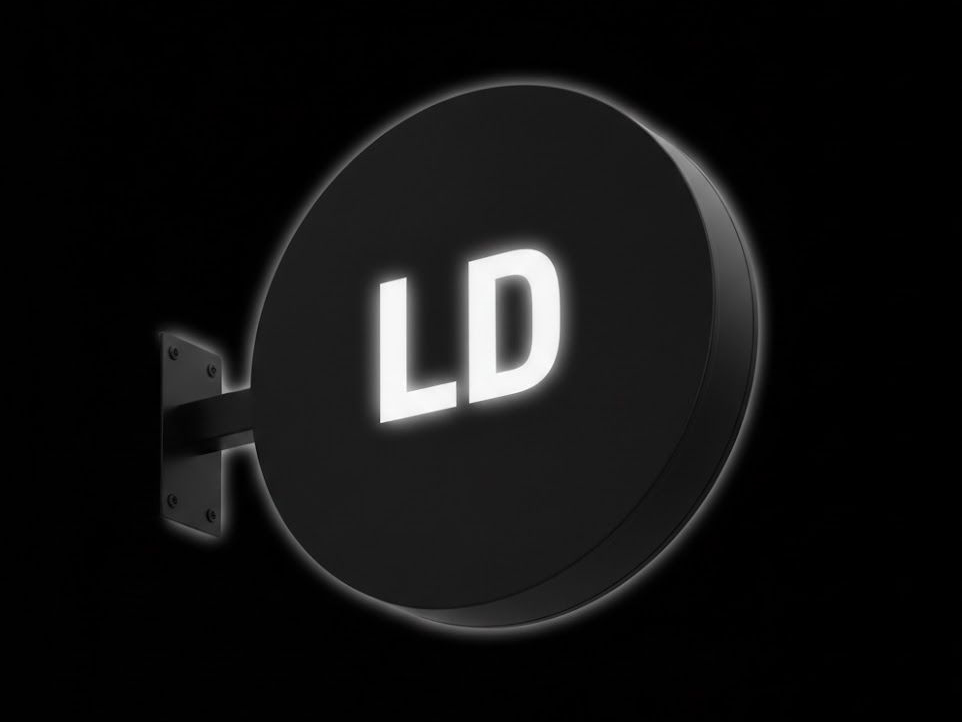
Logos often contain thin strokes, tight spaces, small text, or complex gradients. These features may require production adjustments.
A responsible review should identify which details can be reproduced faithfully and which need discussion.
Possible solutions include:
- Increasing the overall sign size.
- Using a backing panel.
- Separating a small tagline from the main emblem.
- Selecting a different manufacturing process.
- Developing an approved signage-specific artwork version.
Do not allow a supplier to change fonts, proportions, or spacing without authorization.
There is no single letter-height rule that guarantees readability in every setting. Viewing angle, travel speed, contrast, typography, and surrounding distractions all matter.
Use a scaled elevation to assess the composition. When practical, place a full-size paper template on the wall and review it from realistic approach points.
Check the primary brand name first. Secondary wording should not force the main identity to become too small.
For illuminated signage, review nighttime appearance as a separate design condition.
A structured approval process helps turn an attractive concept into a buildable sign.
1. Define the objective. Identify whether the sign primarily supports storefront recognition, reception branding, visitor orientation, or another purpose.
2. Supply usable artwork. Provide vector files where available, together with approved colors and brand guidelines.
3. Document the site. Share dimensions, photographs, wall construction, access restrictions, and electrical information.
4. Review construction drawings. Confirm overall dimensions, letter depth, mounting positions, and visible components.
5. Approve finishes and lighting. Record the accepted samples or specifications rather than relying on informal descriptions.
6. Confirm installation responsibilities. Establish who handles permits, site preparation, electrical connections, lifting equipment, and final installation.
7. Agree on acceptance criteria. Define how appearance, dimensions, lighting, packaging, and documentation will be checked.
Keep approvals in a controlled record. If artwork or dimensions change, update the relevant drawings before fabrication proceeds.
Two quotations can look similar while covering very different deliverables.
One may include mounting templates, installation hardware, and protective packaging. Another may cover only the fabricated letters.
Compare the following items side by side:
- Materials, dimensions, and construction.
- Finish and color approval requirements.
- Lighting components and power arrangements.
- Mounting system and installation documentation.
- Packaging and transport protection.
- Installation scope and exclusions.
- Warranty coverage and service procedures.
For international projects, clarify the delivery terms, import responsibilities, and destination requirements before placing an order.
A useful comparison is total ownership cost: purchase, shipping, installation, electricity where applicable, cleaning, servicing, and eventual replacement. This does not mean choosing the highest-priced offer. It means understanding what each offer includes.
Illuminated signs introduce electrical safety considerations that non-illuminated signs do not.
For projects in the United States, UL 48 addresses electric signs, while UL 879 addresses sign components. Installation requirements also involve the applicable electrical code and local approval process.
A component's certification does not, by itself, establish certification of the complete sign. Ask what documentation applies to the finished product and its intended installation location.
Accessibility requires a separate review. Under the U.S. accessibility standards, company names and logos are exempt from the signage requirements in Section 216. However, permanent room identification and other functional signs may have specific obligations.
Do not assume that a decorative logo can replace required room, exit, or directional signage. Confirm project-specific requirements with the appropriate local professionals.
A sign should remain accessible for reasonable cleaning and servicing.
Before approving the design, ask:
- Can lighting components be reached without unnecessary dismantling?
- Where will power supplies be located?
- What cleaning products are suitable for the finish?
- How will replacement parts be identified?
- Who will perform maintenance at height?
Maintain a handover file containing approved drawings, material details, electrical information where applicable, cleaning instructions, and warranty terms.
For multi-location businesses, this record also supports more consistent future orders. A defined specification is more useful than asking another supplier to "match the photograph."
The best logo sign is not necessarily the largest, brightest, or most elaborate. It is the one that fits the brand, site, audience, and practical requirements.
At Landea Signs Co., Ltd., we focus on personalized advertising signage solutions. Share your logo artwork, installation photographs, approximate dimensions, destination, and preferred lighting effect.
These details provide a stronger starting point for discussing construction options and developing a quotation suited to your project.
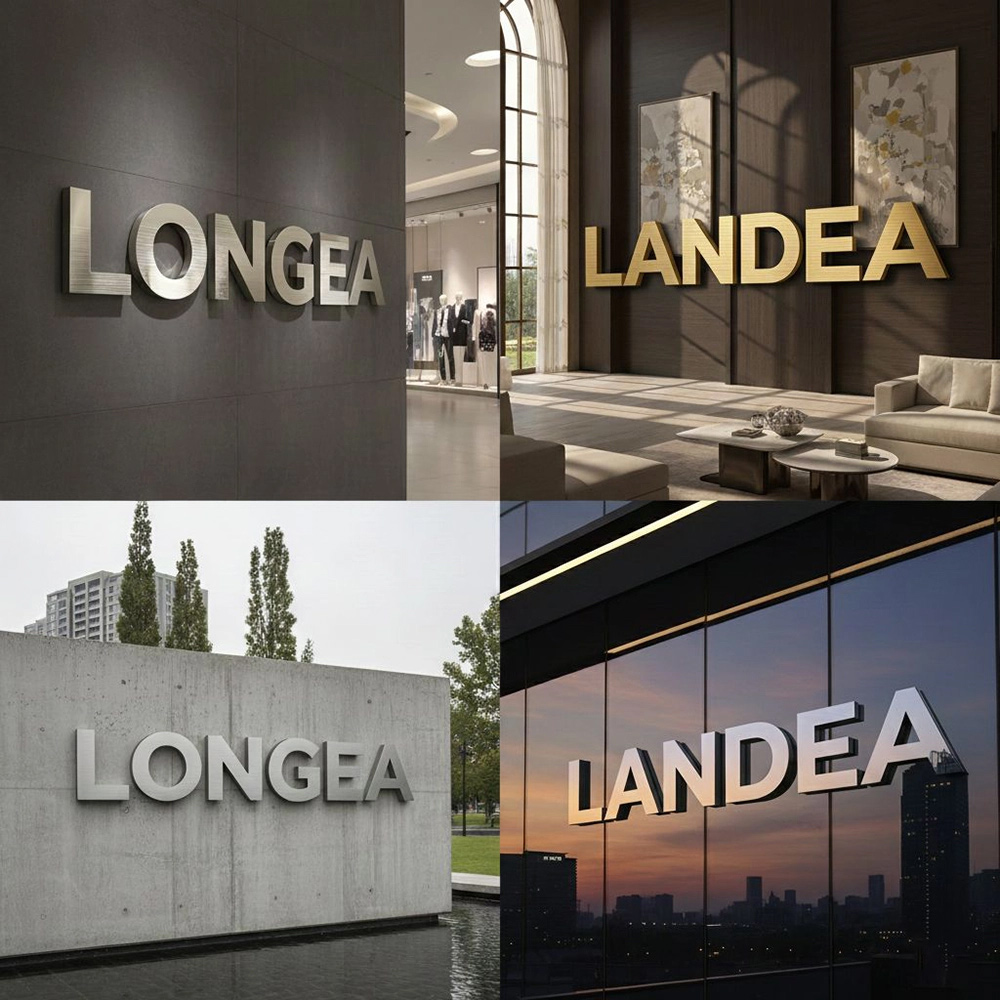
There is no universal best material. Acrylic, aluminum, stainless steel, and combined constructions serve different purposes. Choose according to location, visual requirements, mounting conditions, maintenance expectations, and the approved budget.
Often, yes. However, thin lines, small lettering, gradients, and closely spaced details may require a different fabrication method or an approved adaptation. Review production drawings before accepting changes to the original identity.
Consider illumination when customers need to identify the business after dark or when lighting forms part of the intended interior effect. First assess ambient light, operating hours, electrical access, servicing requirements, and applicable restrictions.
Provide vector artwork when available, along with brand colors, dimensions, photographs, and installation information. If only a raster image is available, ask whether artwork reconstruction is required and approve the reconstructed version before manufacturing.
Review a scaled design and, where practical, a full-size template from realistic viewing positions. Consider contrast, letter size, viewing angle, obstructions, and lighting. Exterior signs should also be assessed along the customer's approach route.
Confirm materials, dimensions, finishes, illumination, mounting, packaging, delivery terms, installation responsibilities, documentation, and warranty exclusions. Make sure the quotation corresponds to the latest approved drawings rather than an earlier concept.
1. [Dave's Signs — "Logo Signs – You Are What You Display"]
Original article used as the thematic starting point for logo presentation, lobby branding, and dimensional signage. The rewritten article expands these themes into a practical purchasing and manufacturing guide. [davessigns]
2. [International Sign Association — "Design & Placement of Signs"]
Industry guidance supporting the discussion of detectability, readability, viewing distance, typography, placement, and lighting. Numerical sizing rules were intentionally not presented as universal guarantees. [signs]
3. [UL Solutions — "Electric Sign Certification and Sign Component Solutions"]
Source for the distinction between electric signs and sign components, relevant standards, certification pathways, and dry, damp, or wet installation locations. [ul]
4. [U.S. Department of Justice — "2010 ADA Standards for Accessible Design"]
Primary regulatory source for the company-name and logo exception under Section 216 and the separate requirements applying to covered functional signage. [ada]
5. [U.S. Access Board — "Chapter 7: Communication Elements and Features"]
Technical reference for covered signs, including visual contrast, non-glare finishes, raised characters, and related accessibility requirements. [access-board]
6. [International Sign Association — "UL 48 Standard for Electric Signs"]
Industry explanation of the relationship between electric-sign product safety requirements and electrical installation requirements. [signs]


