From idea to market-ready product, our SIGNS solutions make every stage easier, faster. Discover How We Help

Views: 213 Author: Landea Signs Publish Time: 2026-06-30 Origin: Site


Content Menu
● What Are Formed Plastic Letters in Advertising Signage?
● Why Formed Plastic Remains a Go‑To Choice
● How Formed Plastic Letters Are Manufactured
● Key Specifications: Sizes, Depths, and Fonts
>> Dimensions and Depth Options
>> Font Choices and Custom Tooling
● Color Systems: Standard, Custom, and Textured Finishes
>> Textured Paint for High-Touch Areas
● Lighting Options: Turning Plastic Letters into Night-Time Landmarks
● Installation and Mounting Considerations
● When Formed Plastic Beats Other Letter Types
● Practical Specification Checklist for Buyers and Designers
● OEM/ODM Advantages with a Specialized Signage Factory
● Case-Style Scenarios: How Brands Use Formed Plastic Letters
● How Landea Signs Supports International OEM Signage Programs
● Discuss Your Formed Plastic Signage Brief
● FAQs About Formed Plastic Letters for OEM Buyers
As a signage manufacturer who has spent years helping overseas brands and wholesalers turn sketches into durable outdoor signs, I see formed plastic letters as one of the most underrated tools in modern advertising signage. They sit at the sweet spot of cost, flexibility, and long-term performance, especially for brands that need consistent roll‑outs across multiple locations.
In this guide, I'll walk you through how formed plastic letters are made, when they outperform other materials, how to specify them correctly, and how a specialized OEM factory like Landea Signs can help you scale your signage program with fewer risks and better margins. [developers.google]

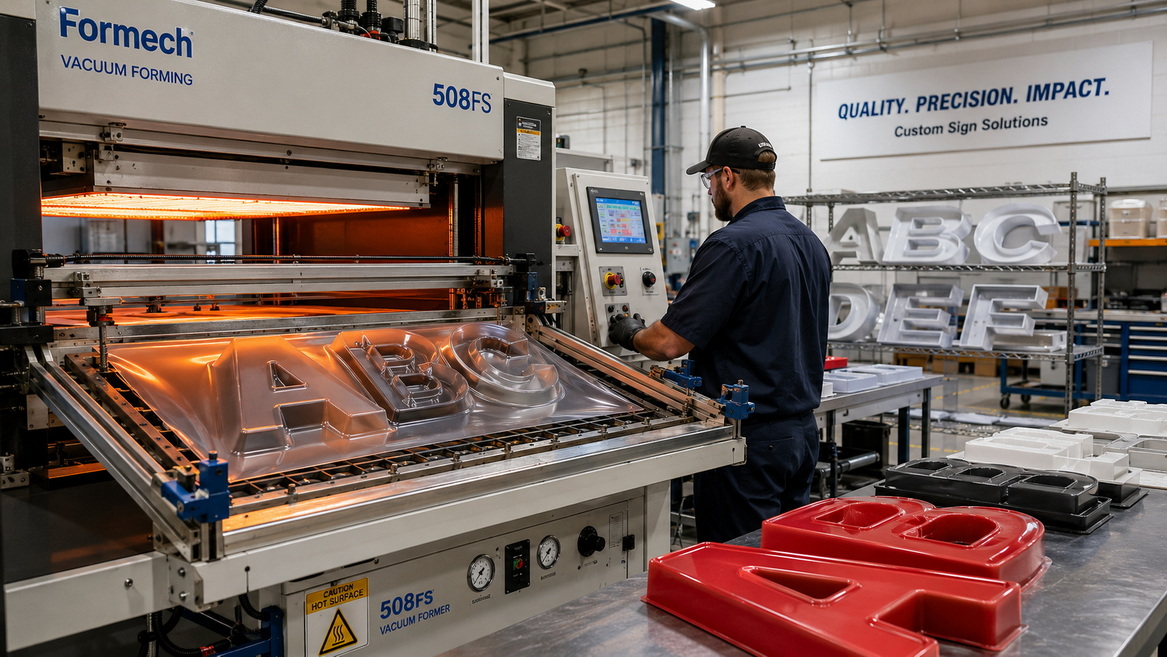
Formed plastic letters are dimensional letters and logos made by heating plastic sheets—typically CAB (cellulose acetate butyrate) or acrylic—to their forming temperature and then shaping them over a mold using pressure and vacuum. This process creates sculpted details and clean edges in a wide range of standard or fully custom shapes.
Because the material is tough and UV-stable, formed plastic letters are widely used for storefront signs, building identification, wayfinding, and branded interiors that require depth without the price of metal or thick-cut acrylic. [webfx]
From an industry perspective, formed plastic has stayed popular for three main reasons: cost efficiency, visual impact, and durability. [webfx]
- Cost-effective depth and dimension
Formed plastic gives you 3D depth at a lower cost than many solid acrylic or metal alternatives, especially at larger letter sizes.
- High customization range
You can specify size, depth, fonts, colors, lighting, and mounting to match brand and site requirements across multiple locations.
- Long service life
The material is impact-resistant and UV-stable, and top-tier manufacturers back it with long-term or even lifetime warranties on the letter bodies.
In practice, this makes formed plastic a strong fit for OEM/ODM programs where overseas buyers need predictable quality and repeatable specifications over many orders. [webfx]
From a technical standpoint, the formed plastic process is straightforward but precise. [developers.google]
1. Material selection
Sheets of CAB or acrylic are chosen based on the required durability, finish, and forming behavior.
2. Heating to forming temperature
Sheets are evenly heated until they reach a temperature at which they can be shaped without cracking or surface defects.
3. Vacuum and pressure forming
The soft sheet is pulled over a mold (tooling) and shaped using vacuum and pressure to capture sculpted details, curves, and edges.
4. Cooling and trimming
Once cooled, the letters or logos are trimmed, edges are finished, and surfaces prepped for painting (if required).
5. Painting, texturing, and finishing
Standard or custom colors are applied, and optional textured paint can be added for high-touch surfaces to hide fingerprints and minor imperfections.
For OEM buyers, the key takeaway is that once a mold exists, the factory can reproduce your letters and logos consistently across batches—critical for chain stores and franchise programs. [webfx]
When you brief a factory for formed plastic letters, size and depth are your starting points.
Top manufacturers allow single-piece letters from 4 inches up to 84 inches in height, with the possibility of larger signs assembled from multiple pieces. Depth typically ranges from 0.5 inch to 3 inches, depending on artwork and structural requirements.
These depth options are often more cost-effective than achieving the same depth in flat-cut acrylic, especially for larger characters. This matters if you are managing a multi-store roll‑out where small cost differences compound quickly across dozens or hundreds of sites. [webfx]
Most formed plastic programs offer standard font sets such as Arial Bold, Futura Bold, Helvetica and Helvetica Bold, Times Bold, and Times New Roman. Using standard fonts keeps tooling simple and costs lower.
For brand-specific typography, custom fonts and logo shapes can be made to order, typically available in flat, round, prismatic, or sculpted forms. These may involve additional tooling charges, but they ensure brand consistency, especially for global retailers and manufacturers. [developers.google]
Color accuracy is one of the most common concerns from international buyers, particularly when matching existing brand standards. [developers.google]
Quality formed plastic programs offer:
- A palette of standard pigmented colors for quick quoting and lead times.
- Custom painted colors, including color matching based on a paint brand name and number, often without extra formula fees.
- Physical color matching using a 3 x 3 inch sample when no reference code is available, with a lab process to create an exact match.
This flexibility makes it realistic to maintain strict brand color guidelines across different regions and production runs. [developers.google]
For eye-level, high-traffic, or interactive signs, textured paint is a practical option. It:
- Adds subtle surface character.
- Conceals fingerprints, smudges, and minor handling marks more effectively than a smooth gloss finish.
- Creates a satin sheen that performs well under varied lighting conditions.
In our own projects for retail and hospitality clients, we usually recommend textured finishes in reception areas, touchable directory signs, and kid-focused environments where maintenance needs to stay low.
Adding lighting transforms formed plastic from a daytime branding asset into a 24/7 visibility tool.
Lit formed plastic letters integrate internal lighting with the formed plastic shell, offering:
- A trimless build that looks cleaner than traditional trim cap channel letters.
- A range of lighting colors and configurations to align with brand ambiance.
- A 10-year warranty on electrical components from leading suppliers, reducing life-cycle risk for multi-year signage programs.
For OEM buyers and distributors, this combination of aesthetics and warranty support is crucial—it reduces after-sales friction and helps justify premium pricing to end clients. [webfx]
Formed plastic letters are versatile in installation and can go on many substrates, indoors or outdoors.
- Multiple mounting methods
Well-developed product lines offer around six mounting options so installers can work with concrete, brick, metal cladding, drywall, and other surfaces.
- Supplied mounting patterns
Professional signage factories ship letters with mounting patterns, simplifying spacing and alignment on-site, which saves time and reduces installation errors.
From a project management standpoint, standardized mounting documentation is one of the biggest quality-of-life improvements for international projects, especially when local installation teams vary in experience.
As an OEM-oriented factory, we often help customers choose between formed plastic, flat-cut acrylic, and metal. Each has its place, but formed plastic stands out in several scenarios. [webfx]
| Use case | Best choice | Why formed plastic works well |
|---|---|---|
| Large-format exterior letters | Formed plastic | Deep profiles at lower cost than thick acrylic or metal |
| Brand roll‑outs across many locations | Formed plastic or metal | Repeatable molds and consistent color matching |
| Budget-conscious retail signage | Formed plastic | Strong visual presence with lower material and fabrication costs |
| High-touch interior wayfinding | Formed plastic (textured) | Textured coatings hide marks and simplify cleaning |
| Premium, small-format plaques/logos | Metal or acrylic | Fine edges and luxurious surface feel (webfx) |
When weighing these options, we guide clients based on environment, budget, and brand positioning, not on material hype. That is the practical approach that leads to fewer replacements and better long-term ROI.
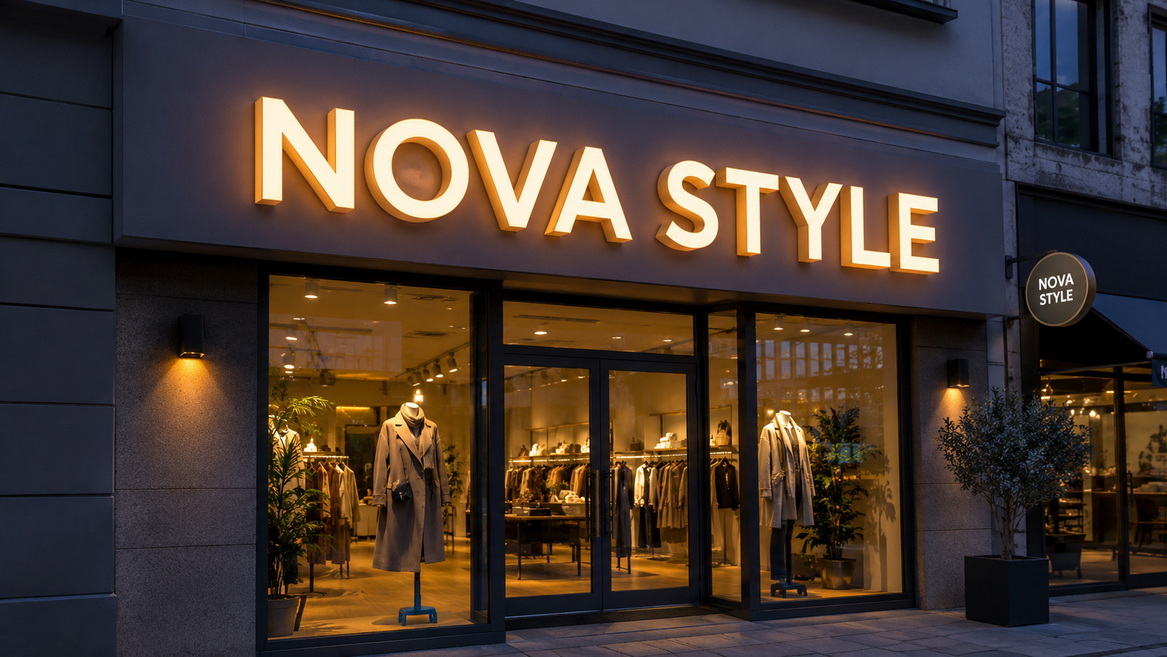
If you are a brand owner, wholesaler, or production manager briefing a signage project, use this 7-step checklist for formed plastic letters:
1. Confirm installation environment
Indoor or outdoor, wall type, exposure to sun, wind, and vandalism.
2. Define size and viewing distance
Decide letter height based on how far away the sign needs to be readable.
3. Select depth and style
Choose from flat, round, prismatic, or sculpted forms and depth between 0.5 and 3 inches.
4. Lock down fonts and artwork
Use standard fonts when possible, or provide vector files (AI, EPS, SVG) for customs.
5. Specify color system
Provide brand color codes or send physical samples for precise color matching.
6. Decide on lighting
Choose non-lit or lit formed plastic, define color temperature or LED colors, and confirm electrical standards for your market.
7. Clarify mounting requirements
Share site photos or drawings so the factory can recommend the most suitable mounting method and provide matching templates. [developers.google]
Using a structured brief like this dramatically reduces back-and-forth with your OEM partner and leads to more consistent, on-time deliveries.
For overseas brands, wholesalers, and producers, working with a dedicated signage factory rather than a general plastic shop offers several concrete benefits. [webfx]
- Process experience
A specialist team has handled hundreds of signage projects, from single flagship stores to full franchise programs, and can advise on material, mounting, and compliance early.
- Stable quality system
Dedicated molds, color recipes, and QC procedures ensure that a "reorder" really looks like a reorder—not a different shade or slightly different shape.
- Scalable production
Once your designs and specs are locked, the factory can ramp up production for new locations without reinventing the process each time.
At Landea Signs Co., Ltd., we combine formed plastic production with other materials (metal, acrylic, light boxes) so our OEM partners can consolidate more of their signage portfolio under one roof. This reduces supplier management overhead and improves overall aesthetic consistency across programs.
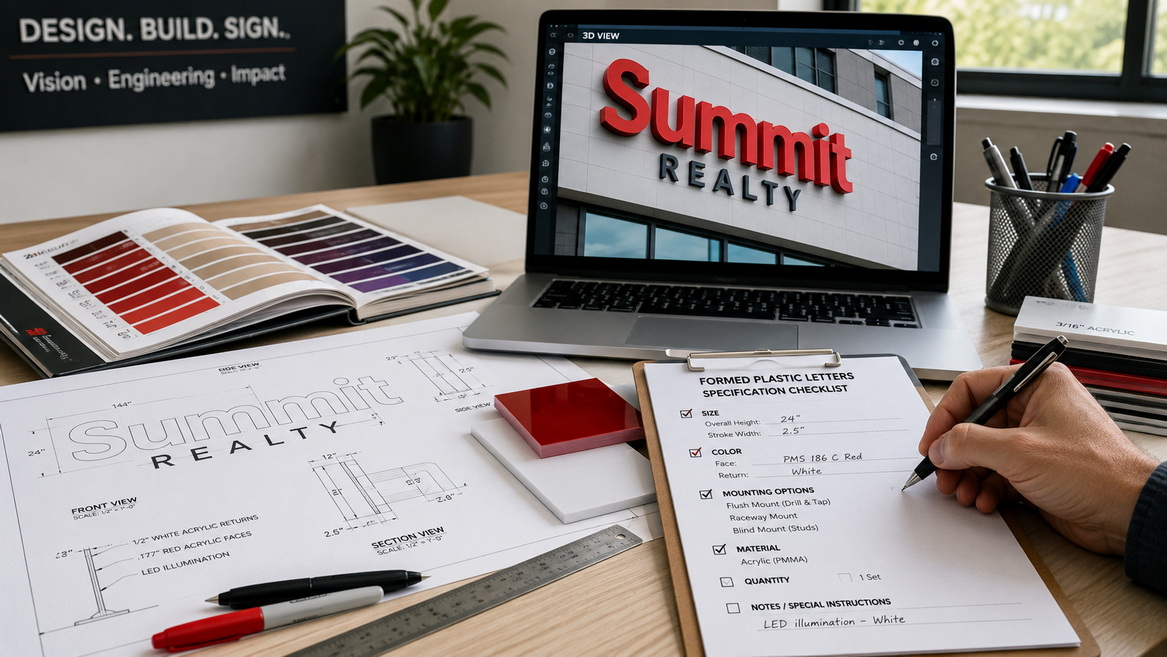
While many client details are under NDA, there are recurring patterns in how international brands leverage formed plastic signage. [internete]
- Scenario 1: Multi-location retail expansion
A European retail brand needs storefront letters in different countries, each with slightly different facade structures. By standardizing formed plastic letters with flexible mounting options and clear installation patterns, they keep brand consistency while giving local installers enough freedom to adapt on-site.
- Scenario 2: Industrial manufacturer rebranding
A global manufacturer upgrades its image from purely functional to more design-forward. Formed plastic letters, combined with backplates and selective lighting, provide a modern look at scale without the cost of full metal signage everywhere.
- Scenario 3: Hospitality and leisure environments
A resort group wants playful yet durable signage for outdoor pools and children's zones. UV-stable formed plastic with textured finishes delivers color, depth, and safety, while remaining easy to clean and maintain in humid environments.
These scenarios illustrate a key point: formed plastic is not a low-end compromise, but a strategic choice when you balance aesthetics, budget, and long-term maintenance.
As a China-based signage design and manufacturing factory focused on advertising signage and OEM services, Landea Signs Co., Ltd. works closely with overseas brands, wholesalers, and producers to deliver formed plastic letters and other sign types that are ready for direct installation or local resale.
Our support model typically includes:
- Technical co-design at the early stage, helping refine dimensions, mounting, and material choices for local conditions.
- Standardization of SKUs across locations, so procurement and logistics teams can manage signage more like a product line than a one-off project.
- Flexible packaging and documentation, including labeled parts, mounting patterns, and optional multilingual instructions to support local installers.
For B2B partners, this combination of engineering support, predictable quality, and OEM/ODM flexibility is often more valuable than simply finding the lowest unit price.
If you are planning a new signage program—or standardizing an existing one—and need a reliable OEM partner for formed plastic letters and related advertising signage, we recommend starting with a clear brief and a test project.
Share your design files, environment photos, and basic specifications with our engineering team at Landea Signs Co., Ltd. We will help you optimize materials, structure, and finishing, then provide samples or pilot batches so you can verify quality and performance before scaling to a full roll‑out.
1. Are formed plastic letters suitable for harsh outdoor environments?
High-quality formed plastic letters made from UV-stable materials like CAB and properly painted are well suited for outdoor use, including strong sunlight and varied weather. Many manufacturers back them with long-term or lifetime guarantees against fading and cracking.
2. How do formed plastic letters compare to metal in terms of cost?
Formed plastic typically offers lower material and fabrication costs than metal, especially at larger sizes and deeper profiles. It provides a similar three-dimensional effect at a fraction of the weight, which can also reduce mounting and structural requirements. [webfx]
3. Can I match my brand colors exactly with formed plastic letters?
Yes. You can usually choose from standard pigmented colors, specify a paint name and number from a recognized brand, or send a physical color sample for lab matching. This process allows very close alignment with existing brand guidelines.
4. What lead times should I expect for OEM orders?
Standard font and color combinations generally have faster lead times, while custom molds and special colors add time for tooling and testing. Once your tooling and specs are in place, reorders of formed plastic letters are typically among the quickest signage products to produce.
5. Is it difficult to install formed plastic letters on different surfaces?
Most formed plastic systems come with multiple mounting options and pre-made patterns, making installation straightforward on surfaces like concrete, brick, panel cladding, and interior walls. With clear instructions from your OEM partner, local installation teams can handle them efficiently.
- Google Search Central – Creating helpful, reliable, people-first content (E‑E‑A‑T guidelines). [Link] [developers.google]
- WebFX – 3 SEO Best Practices for Sign Companies. [Link] [webfx]
- Gemini – 4 Great Features of Formed Plastic Letters by Gemini* (product overview and specifications). [Link]
- Internete.net – Mastering Google E-E-A-T Guidelines for Bloggers. [Link] [internete]
- Siftly – How to Optimize Content for Google AI Overviews. [Link] [siftly]


