From idea to market-ready product, our SIGNS solutions make every stage easier, faster. Discover How We Help

Views: 261 Author: Landea Signs Publish Time: 2026-09-22 Origin: Site


Content Menu
● What Are Front and Halo Lit Channel Letter Signs?
● How Dual-Lit Channel Letters Work
>> Main Components of a Dual-Lit Letter
● Why Businesses Choose Dual-Lit Channel Letters
>> Stronger Nighttime Visibility
>> A More Dimensional Brand Image
>> Two-Color Lighting Possibilities
>> Better Visibility for Closed Businesses
● Front-Lit vs. Halo-Lit vs. Dual-Lit Letters
● Choosing the Right Materials and Finish
>> Letter Faces
>> Back Panels and Halo Control
● Wall Surface Matters More Than Many Buyers Expect
>> Surface Considerations Before Production
● A Practical Design Checklist Before Ordering
● Installation and Electrical Planning
● Maintenance Tips for Long-Term Performance
>> Recommended Maintenance Routine
● Why Custom Engineering Makes a Difference
>> What is the difference between front-lit and halo-lit channel letters?
>> Can the front and halo lighting use different colors?
>> Are dual-lit channel letters suitable for outdoor use?
>> Which wall surface is best for halo-lit letters?
>> Are front and halo lit signs harder to maintain?
>> How far should dual-lit letters be mounted from the wall?
>> Can a logo with thin strokes be made as a dual-lit sign?
>> Do I need a raceway for channel letter installation?
Front and halo lit channel letter signs combine bright face illumination with a refined rear glow, helping a business remain highly visible after dark while giving its storefront, reception area, or building façade a more premium architectural appearance. For projects where ordinary illuminated letters feel too flat, dual-lit channel letters offer a balanced solution: direct readability from the front and a distinctive halo effect around every letter.
At Landea Signs Co., Ltd., we approach every illuminated-letter project as more than a fabrication order. The final result depends on the brand, viewing distance, building surface, local installation conditions, letter size, color, and maintenance access. A carefully engineered front and halo lit sign can turn a company name into a memorable visual landmark—day and night.
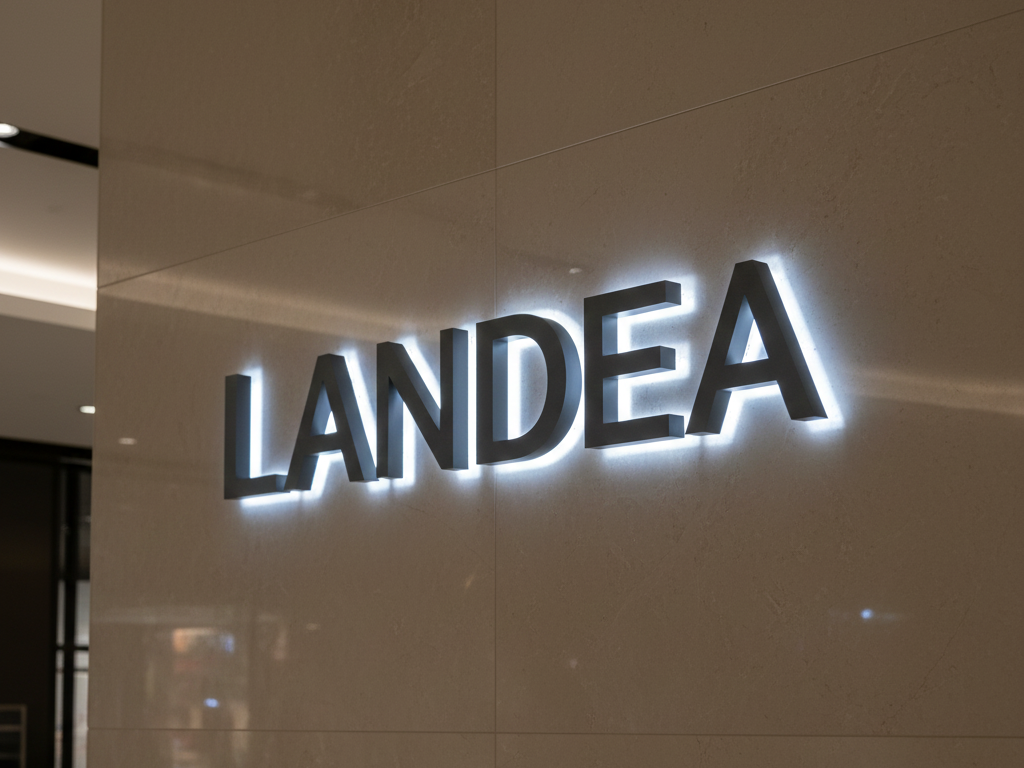
Front and halo lit channel letters, often called dual-lit channel letters, are individually fabricated three-dimensional letters that illuminate in two directions:
- Front lighting shines through the acrylic letter face, delivering strong, direct nighttime readability.
- Halo lighting shines from the rear of the letter onto the mounting surface, creating a soft outline of light around the letter.
- Together, these lighting effects create a sign with more visual depth, stronger contrast, and a more sophisticated nighttime presence.
Unlike a basic flat sign panel, each channel letter has a fabricated return, internal LED modules, electrical wiring, and a carefully selected face, back, and mounting method. The letters are normally mounted slightly away from the wall so that the rear illumination has enough space to form a consistent halo.
A dual-lit sign is particularly effective when a brand wants to look visible, established, and premium without relying on excessive brightness or oversized graphics.
The construction of a front and halo lit sign is precise. Although the finished letters may look simple from the street, several components work together to achieve uniform illumination and a durable finish.
| Component | Typical function | Why it matters |
|---|---|---|
| Acrylic face | Allows front illumination to pass through | Determines nighttime brightness and face color |
| Aluminum or stainless-steel return | Forms the sidewall and depth of the letter | Adds strength and defines the letter profile |
| LED modules | Provide internal front and rear illumination | Affects uniformity, color consistency, and service life |
| Internal divider | Separates front and rear lighting zones | Enables different face and halo colors |
| Back panel | Controls rear light output and protects internal parts | Helps create a cleaner, more even halo |
| Studs or mounting hardware | Holds letters off the wall | Creates the necessary gap for halo illumination |
| Power supply and wiring | Delivers low-voltage power to the LEDs | Must remain accessible for inspection and maintenance |
For front illumination, light passes through a translucent acrylic face. For halo illumination, light exits through the rear or around the rear edge of the letter, then reflects off the wall behind it.
The most successful results come from matching the letter construction to the sign location. For example, a dark metal façade, smooth stone wall, textured brick surface, or reflective glass background will each influence how the halo appears.
Dual illumination gives brands more flexibility than front-lit or reverse-lit letters alone. It is especially useful for businesses that need clear identification but also want a more polished visual identity.
The illuminated face provides a direct source of light, making the wording easier to read from the front and at longer distances. Research cited by the United States Sign Council Foundation found that internally illuminated signs had longer average nighttime recognition and legibility distances than externally illuminated signs. This supports the practical value of internally lit letters for businesses that depend on evening traffic, roadside exposure, or visibility across parking areas.
For a restaurant, hotel, medical clinic, retail store, office building, or shopping center tenant, this means the company name can remain recognizable long after ambient daylight has disappeared.
The halo effect gives each letter a floating appearance. Instead of looking like a bright graphic placed directly on a wall, the lettering gains depth and separation from the façade.
This is valuable for brands that want to communicate:
- Quality and professionalism
- Modern architectural style
- High-end service
- Design attention
- Long-term brand confidence
For example, a luxury salon may use warm-white halo lighting with a champagne-gold metal finish, while a technology company may combine a crisp white acrylic face with a cool-white halo on a dark composite wall. Both use the same principle, but the visual message is very different.
One of the biggest advantages of dual-lit signage is the ability to use separate colors for the front and rear illumination.
A restaurant may choose red front lighting for immediate brand recognition and warm-white halo lighting for a welcoming look. A medical or wellness brand may choose a clean blue or green face with a soft white halo. Corporate brands often use white front lighting with a subtle halo that supports the building's overall architecture.
However, color selection requires technical consideration. Dark vinyl colors can significantly reduce light transmission through an acrylic face. In many cases, a standard opaque-looking daytime color may not illuminate as expected at night. A manufacturer should therefore test or specify the correct acrylic, translucent vinyl, printed layer, or specialty film before full production.
A storefront does not stop promoting the brand when the doors close. Dual-lit channel letters continue to identify the location at night, helping customers recognize the business, remember its location, and find it more easily during future visits.
This can be particularly useful for:
- Restaurants and cafés
- Hotels and serviced apartments
- Bars and entertainment venues
- Shopping-mall tenants
- Automotive dealerships
- Fitness centers
- Medical and dental clinics
- Corporate offices
- Banks and property developments
The right illumination method depends on the brand objective, installation environment, and required viewing distance.
| Sign type | Light direction | Best for | Main visual effect |
|---|---|---|---|
| Front-lit channel letters | Through the letter face | High readability, busy commercial areas, roadside locations | Bright and direct |
| Halo-lit channel letters | Behind the letter onto the wall | Offices, hotels, luxury retail, architectural façades | Subtle and elegant |
| Front and halo lit channel letters | Through the face and behind the letter | Brands needing visibility plus premium styling | Bright, dimensional, and distinctive |
A pure halo-lit sign can look elegant, but it may be less readable at long distances or against a difficult surface. A pure front-lit sign can be highly visible, but it may not provide the same architectural refinement. Dual-lit letters solve both challenges when designed correctly.
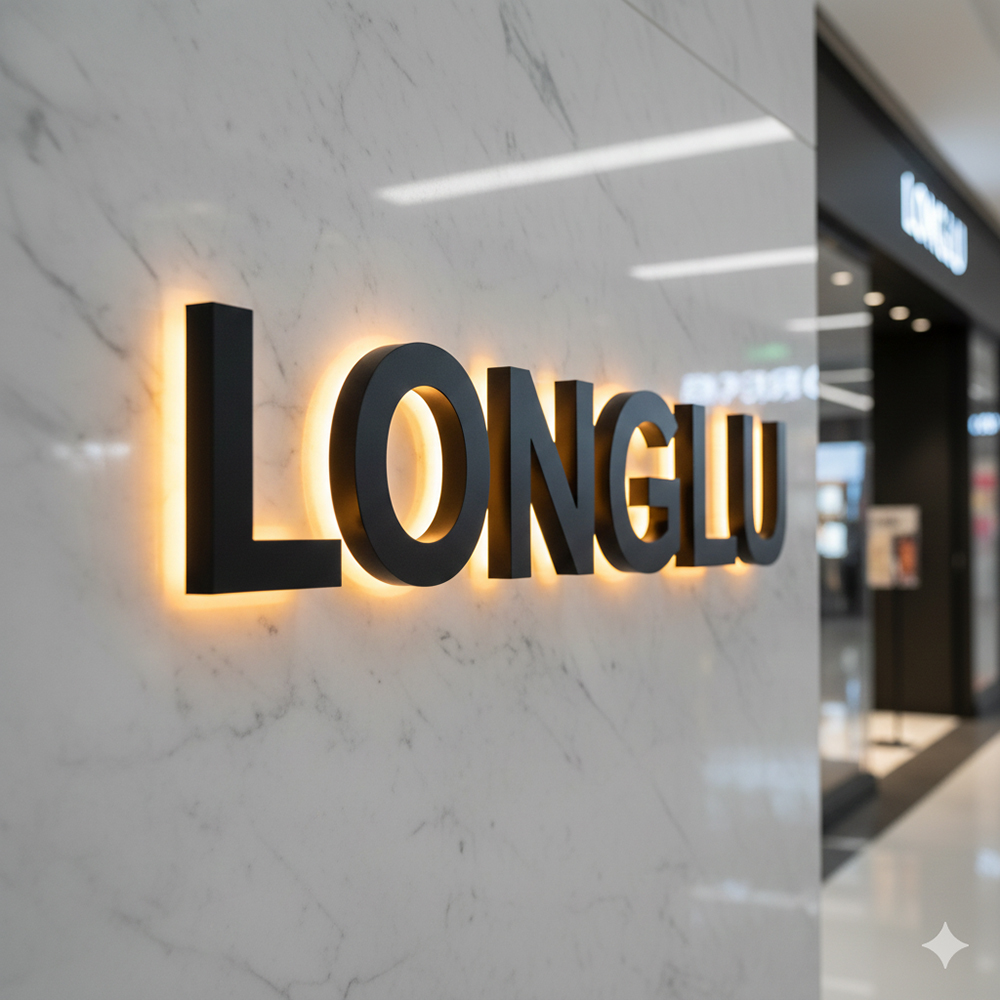
Material selection has a direct impact on appearance, weather resistance, cleaning, and long-term maintenance.
Acrylic is commonly used for front-lit faces because it allows controlled light transmission. The chosen thickness, color, and surface treatment should match the desired daytime and nighttime appearance.
Common face options include:
- Standard colored acrylic
- White acrylic with translucent color film
- Printed acrylic faces for custom graphics
- Day/night films that appear colored in daylight and illuminate differently at night
- Trim-cap finished faces for a more defined edge
For detailed logos, thin strokes, or special brand colors, it is important to confirm whether the selected material can produce even illumination. A color that looks excellent in a digital artwork file may not perform the same way when light passes through it.
The return is the sidewall of the letter. It can be finished in painted aluminum, stainless steel, polished metal, brushed metal, titanium-like finishes, or other custom treatments.
A brushed stainless-steel return can support a restrained corporate identity. Painted aluminum offers color flexibility. A polished or mirror-like finish can create a dramatic effect, but it should be considered carefully because reflective materials may show environmental reflections and require more frequent cleaning.
The rear construction controls how light leaves the letter. A well-designed back panel helps prevent uneven bright spots and supports a consistent halo outline.
The gap between the letter and the wall is also essential. If letters are mounted too close to the wall, the halo can look narrow and harsh. If they are mounted too far away, the glow can become too diffuse and lose definition. The appropriate spacing should be determined by letter depth, wall color, LED output, and the desired visual effect.
A halo effect is not created in isolation. It uses the wall itself as part of the final design.
Smooth, matte, light-colored surfaces often produce the most even and visible rear glow. Textured brick, uneven stone, corrugated metal, dark paint, and glossy cladding can all change the appearance.
- Smooth painted walls usually create a clean and consistent halo.
- Light-colored surfaces reflect more light and make the halo appear stronger.
- Dark walls create a more dramatic but sometimes narrower-looking glow.
- Brick or rough stone can break up the halo and create uneven shadows.
- Mirror-like cladding may produce reflections that compete with the letter shape.
- Glass façades require special mounting and cable-management planning.
Before fabrication, the installation team should review photographs, elevation drawings, wall materials, available power points, and the expected viewing distance. A site survey is one of the most effective ways to avoid unexpected results.
A custom sign project moves more smoothly when the buyer provides clear technical and visual information at the beginning.
1. Logo artwork in vector format, such as AI, PDF, EPS, or SVG.
2. Required letter dimensions, including overall sign width and height.
3. Installation location photos, taken during both daytime and nighttime if possible.
4. Wall material and mounting details, such as concrete, aluminum composite panel, brick, stone, or glass.
5. Preferred lighting colors for the face and halo.
6. Installation height and viewing distance from pedestrians, vehicles, or nearby roads.
7. Power supply location and access requirements.
8. Local permit, electrical, and building requirements.
9. Preferred mounting style, including individual direct mounting, raceway mounting, or backer panel installation.
10. Maintenance access plan, especially for tall façades or rooftop applications.
Providing these details early helps a manufacturer recommend the right letter depth, LED layout, wiring method, mounting hardware, and packaging solution.
Illuminated channel letters should be installed by qualified professionals familiar with the applicable local electrical and building requirements. In the United States, electric signs are commonly evaluated under UL 48, while field installation is generally subject to local code requirements and relevant electrical rules. Requirements vary by jurisdiction, so the installer should confirm permits, labeling, disconnect access, grounding, and environmental protection before installation begins.
A reliable installation plan generally includes:
- Confirming the final letter layout with a full-size pattern
- Checking the wall structure and mounting points
- Planning concealed or protected wiring routes
- Locating power supplies in accessible, ventilated positions
- Sealing outdoor cable entries and unused openings
- Testing illumination before final commissioning
- Verifying that every letter lights evenly from the intended viewing angle
Do not treat power supplies as an afterthought. Even the most attractive fabricated letters can become difficult to service if drivers are hidden in inaccessible locations. Accessible, properly protected power supplies make inspection and future replacement much easier.
Dual-lit letters are designed for long-term commercial use, but regular inspection helps preserve brightness, safety, and appearance.
- Clean letter faces and metal surfaces with non-abrasive materials.
- Inspect for loose mounting hardware, damaged sealant, or water entry.
- Check whether illumination remains consistent across all letters.
- Look for discoloration, flickering, dim modules, or visible hot spots.
- Keep power supplies and electrical connections accessible.
- Arrange professional service before a small electrical issue affects multiple letters.
- Avoid using harsh solvents that could damage acrylic, painted surfaces, or vinyl films.
A planned maintenance routine is particularly important for signs installed in coastal areas, regions with high humidity, high-temperature locations, or sites exposed to strong UV radiation and airborne pollution.
A dual-lit sign should not be selected only from a catalog image. The same letter style can perform very differently depending on the building, brand colors, illumination goals, and installation method.
At Landea Signs Co., Ltd., our goal is to help customers move from a logo file to a sign system that works in the real world. That includes reviewing the letter structure, visual balance, lighting combination, mounting details, and packaging needs before production.
The best front and halo lit channel letter signs are not simply brighter. They are appropriately designed: readable at the required distance, consistent in color, proportionate to the building, safe to install, and easy to maintain.
If you are planning a storefront, office, hotel, retail, restaurant, or commercial-building signage project, share your logo artwork, dimensions, installation photos, and target lighting style with our team. We can help develop a customized dual-lit channel letter solution that gives your brand a clear presence during the day and a memorable identity at night.

Front-lit letters illuminate through the acrylic face for direct brightness and readability. Halo-lit letters project light behind the letter onto the wall, creating a soft outline. Dual-lit channel letters combine both effects in one sign.
Yes. A dual-lit letter can use separate colors for the face and rear halo. The internal structure usually includes a divider that separates the two lighting areas and helps control color mixing.
Yes, provided the materials, electrical components, mounting system, wiring, and sealing method are selected for the local outdoor environment. The final installation should also comply with applicable local requirements.
Smooth, matte, and relatively light-colored surfaces generally create the most even halo effect. Rough brick, irregular stone, reflective metal, and glass may require extra planning because they can diffuse, weaken, or reflect the rear illumination.
They have more lighting elements than a single-direction illuminated sign, so thoughtful electrical planning is important. Accessible power supplies, organized wiring, quality components, and regular inspection make maintenance more manageable.
The ideal distance depends on letter depth, LED output, wall color, surface texture, and the desired halo width. A manufacturer should recommend the spacing after reviewing the sign dimensions and installation surface.
Often yes, but very thin strokes may require adjustments to the letter depth, LED configuration, or logo proportions to ensure even illumination. A production drawing should be reviewed before final approval.
Not always. Individual direct mounting can offer a cleaner appearance, while a raceway can reduce the number of wall penetrations and simplify wiring. The best option depends on the wall type, landlord requirements, electrical layout, and local installation rules.
1. [UL Solutions — Electric Sign Certification and Sign Component Solutions]
2. [UL Standards & Engagement — UL 48: Standard for Electric Signs]
3. [International Sign Association — Position Statements on Sign Codes and Regulations]
5. [Signage Source — Channel Letter Lighting Installation Guidance]
6. [Cosun Sign — Benefits of Front and Halo Lit Channel Letter Signs]


