From idea to market-ready product, our SIGNS solutions make every stage easier, faster. Discover How We Help

Views: 236 Author: Landea Signs Publish Time: 2026-09-13 Origin: Site


Content Menu
● Why Hospitality Signage Matters to Guest Satisfaction
● The Main Types of Hospitality Signage
● Start With the Guest Journey, Not the Sign List
>> 1. Identify Every Arrival Point
>> 2. Locate Guest Decision Points
>> 3. Confirm Arrival at Each Destination
● Design Hotel Wayfinding Signs for Fast Reading
>> Use Clear Information Hierarchy
>> Choose Legible Fonts and Strong Contrast
● Accessibility Should Be Built Into the System
● Balance Brand Personality With Function
>> Resort and Large-Property Signage
● Combine Static and Digital Signage Strategically
● Practical Hospitality Signage Checklist
>> Material Selection Checklist
● Common Hospitality Signage Mistakes to Avoid
● Create a More Confident Guest Journey With Custom Signage
>> What is hospitality signage?
>> Why is hotel wayfinding signage important?
>> What signs does a hotel need?
>> Where should directional signs be placed in a hotel?
>> Can hospitality signs be customized to match a hotel brand?
>> What materials are best for hotel signs?
>> Should hotels use digital signage?
>> How can signage support accessible guest experiences?
Hospitality signage does far more than label a building or point toward an elevator. In hotels, resorts, serviced apartments, restaurants, and event venues, it shapes the guest journey from the moment of arrival to check-out. Clear, attractive, and well-positioned hotel wayfinding signage helps guests feel oriented, welcomed, and confident—while reinforcing the character of the property.
For a hospitality business, every moment of uncertainty can affect perception. A guest who cannot find the reception desk, breakfast room, accessible entrance, pool, meeting room, or guest elevator may feel frustrated before they have even experienced the service itself. By contrast, a coordinated signage system makes the property feel organized, professional, and considerate.
At Landea Signs Co., Ltd., we design and manufacture customized advertising signage and hospitality sign solutions for brands that want to create memorable guest environments. From illuminated exterior identity signs to ADA-style room identification plaques, directional signs, wall graphics, digital displays, and branded amenity signage, each solution should balance function, durability, visual appeal, and the unique personality of the venue.

Guests arrive with different needs. Some are checking in after a long flight. Some are attending a conference for the first time. Others may be traveling with children, luggage, limited mobility, or limited knowledge of the local language.
In all of these situations, signage becomes a quiet but important form of service.
Effective hotel signage reduces decision-making effort. It tells guests where they are, where they need to go next, and what they can expect when they get there. Instead of asking staff for directions several times, guests can move through the property independently and comfortably.
A well-planned signage system supports several business goals:
- Improves guest confidence from arrival through departure
- Reduces repetitive direction questions at reception and concierge desks
- Supports accessibility for guests with visual, mobility, or communication needs
- Strengthens brand consistency across the entire property
- Promotes amenities and services such as restaurants, spas, meeting rooms, pools, and retail areas
- Makes emergency information easier to locate
- Creates photo-worthy visual moments that guests may share online
Hospitality properties are often complex environments. A guest may need to move from a parking area to the lobby, from the lobby to elevators, from an elevator to a guest room, and from the room to amenities or event spaces. Each transition is a potential point of confusion.
That is why hospitality signage should not be treated as an afterthought. It should be designed as part of the overall guest experience.
A complete hospitality signage program usually includes several sign categories. Each type serves a different purpose, but all should use a consistent visual language.
| Sign Type | Main Purpose | Typical Locations |
|---|---|---|
| Exterior identity signs | Help guests recognize the property | Building façade, entrance, roadside, monument area |
| Entrance signs | Confirm arrival and guide vehicle or pedestrian flow | Driveways, porte-cochères, gates, main entrances |
| Directional signs | Guide guests between destinations | Lobbies, corridors, elevators, parking areas |
| Room identification signs | Identify permanent rooms and guest spaces | Guest room doors, restrooms, meeting rooms |
| Directory signs | Show destinations in one overview | Lobby, elevator lobby, conference area |
| Amenity signs | Promote or identify guest facilities | Spa, gym, restaurant, pool, lounge, rooftop bar |
| Safety signs | Communicate emergency and operational information | Exits, stairwells, fire equipment areas, restricted zones |
| Digital signage | Share timely, changeable information | Lobby, conference center, restaurant entrance |
| Branded decorative signs | Create atmosphere and reinforce identity | Feature walls, reception areas, photo spots |
The strongest systems connect these sign types visually. A guest should be able to recognize the same typography, color palette, icon style, materials, and tone whether they are looking at a lobby directory or a room number plaque.
One common mistake is ordering signs one by one without first reviewing how guests actually move through the property. This can create inconsistent messages, missing directions, duplicated information, or signs placed too late to be useful.
A better approach is to map the complete guest journey.
Guests may enter through more than one route. They might arrive by private car, taxi, shuttle, tour bus, public transportation, or on foot. Staff and vendors may use separate entrances.
Review every arrival point and ask:
- Can first-time visitors clearly identify the property?
- Is the entrance visible during the day and at night?
- Are parking, drop-off, accessible routes, and reception areas clearly marked?
- Does the sign design match the quality level of the brand?
- Can guests understand the next step without asking for help?
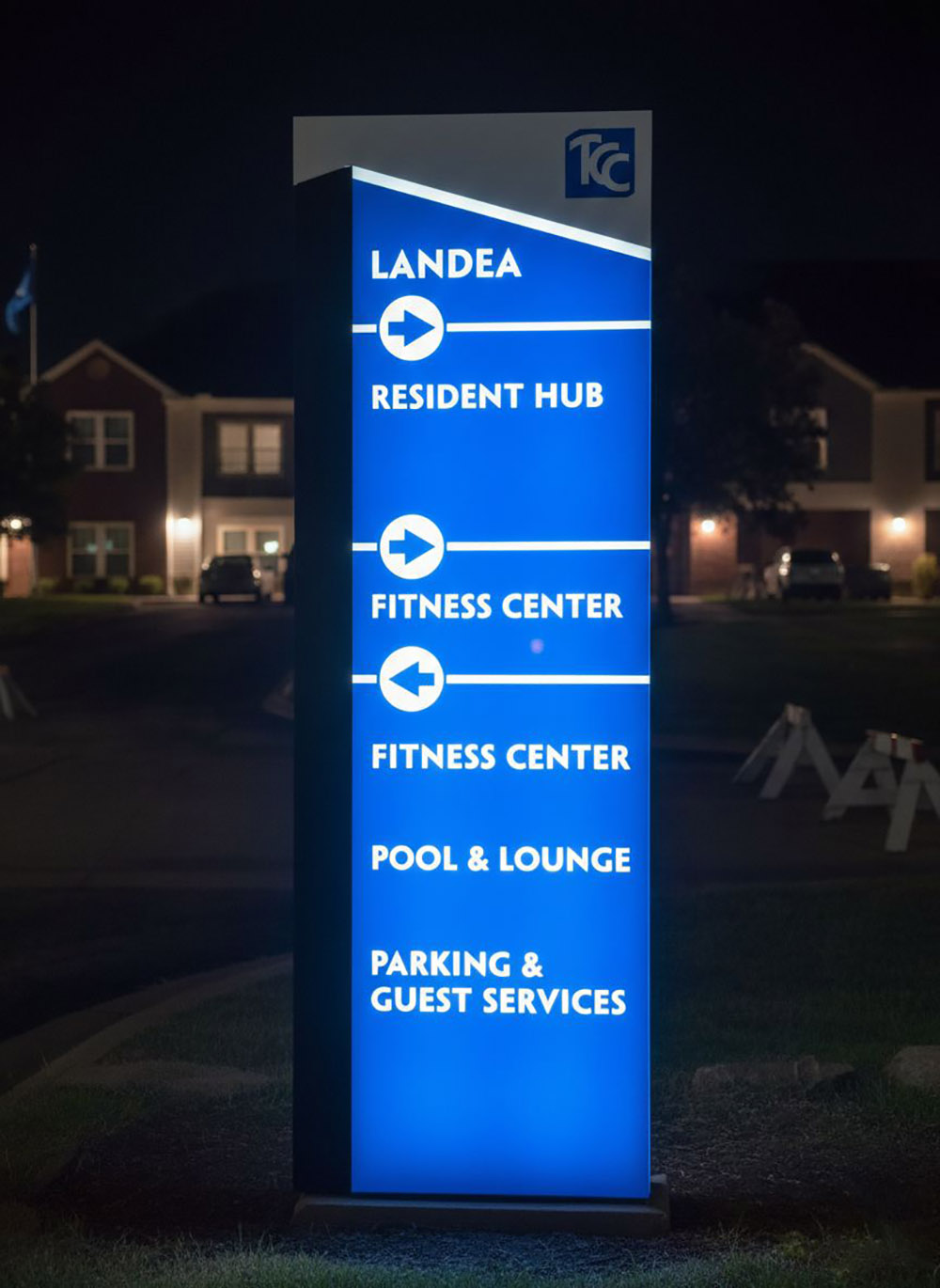
For many properties, a high-quality illuminated hotel sign is essential. Exterior illumination can improve visibility after dark, during poor weather, or in busy commercial environments. Options may include halo-lit letters, front-lit channel letters, LED light boxes, illuminated pylons, blade signs, and backlit logos.
A decision point is any place where a guest must choose a direction. Examples include a lobby intersection, elevator lobby, corridor split, parking garage exit, staircase, restaurant entrance, or conference-center hallway.
Directional signs should appear before a guest reaches the decision point, not after they have already taken the wrong turn.
Useful directional signs often include:
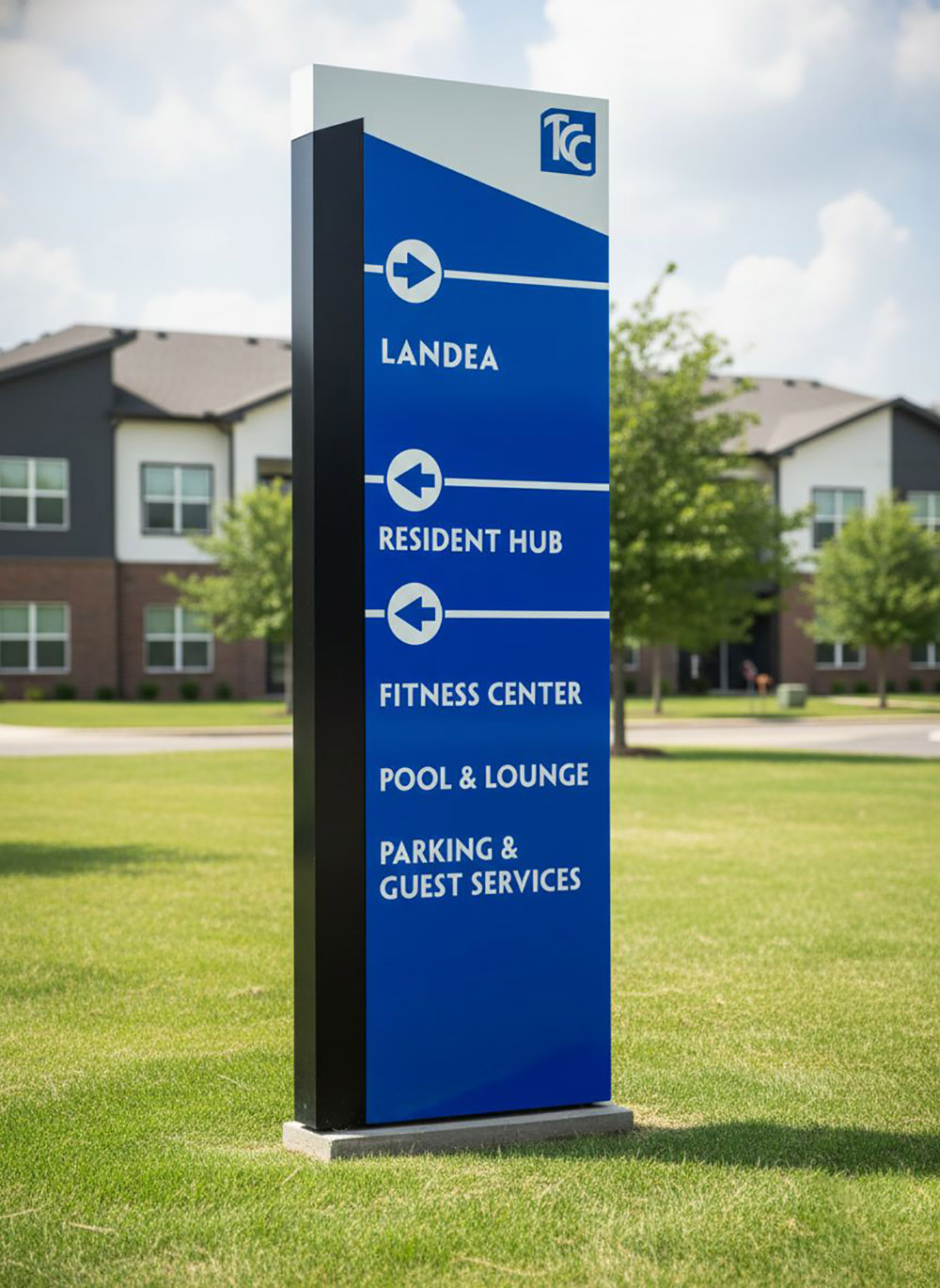
- Arrows with clear destination names
- Floor numbers and elevator information
- Internationally understandable pictograms
- Distance or time information for large resorts
- Zone names, such as "East Wing," "Garden Villas," or "Conference Level"
- Accessible-route information where appropriate
The wording should be short. "Pool & Fitness Center →" is easier to scan than "Guests wishing to access the swimming pool and fitness facilities should proceed in this direction."
Guests need reassurance that they have arrived in the right place. This is especially important in large properties with similar corridors, multiple towers, or long meeting-room hallways.
Arrival confirmation can include:
- Guest room number signs
- Floor and wing identifiers
- Restaurant name signs
- Spa reception signs
- Conference-room plaques
- Restroom signs
- Pool-entry and towel-station signs
- Parking-level markers
A sign system should answer three simple questions at every stage:
1. Where am I?
2. Where can I go next?
3. Have I arrived?
When signage answers these questions consistently, the entire property becomes easier to understand.
Hospitality signage is often viewed while guests are walking, carrying bags, pushing strollers, using wheelchairs, or navigating unfamiliar spaces. This means signs must be easy to read quickly.
A visually impressive sign that cannot be understood in a few seconds does not perform its core function.
The most important information should be the largest and easiest to see. Secondary details should support—not compete with—the main message.
For example:
Level 3
Guest Rooms 301–340
Spa →
Meeting Rooms ←
This layout is clearer than presenting every destination in the same font size and weight.
A good hierarchy usually uses:
- Large destination names for primary information
- Simple arrows that point in the actual direction of travel
- Consistent icons for universal functions
- Limited supporting text for details such as room ranges or opening hours
- Color zones only when they are used consistently throughout the property
Decorative fonts may fit a luxury or boutique identity, but they should never reduce readability. Hotel wayfinding signs work best when the typeface is clean, properly spaced, and easy to distinguish from a distance.
For better visibility:
- Use high contrast between lettering and the background
- Avoid overly glossy surfaces in areas with strong lighting
- Use large letter sizes for long viewing distances
- Keep wording concise
- Avoid placing text over busy patterns or images
- Test signs under real lighting conditions, including at night
A dark background with light lettering, or a light background with dark lettering, is often easier to read than a low-contrast color combination.
Icons can help international travelers understand destinations more quickly. However, they should be familiar and visually simple.
Useful examples include icons for:
- Elevator
- Restroom
- Accessible route
- Parking
- Restaurant
- Pool
- Fitness center
- Emergency exit
- Luggage storage
- Wi-Fi or business center
Icons should support the text, not replace it completely. A clear pictogram plus a short label is usually more reliable than an icon alone.
An inclusive hospitality environment benefits everyone. Guests with disabilities, older travelers, families, international visitors, and people navigating under stress all benefit from clear, accessible communication.
For properties serving the United States market, certain permanent rooms and spaces may require tactile identification features, including raised characters and braille. Directional and informational signs may have different requirements, but they still need to be visually clear and appropriately positioned. The U.S. Access Board explains that signs identifying specific accessible elements and certain permanent spaces have distinct accessibility requirements, while directional and informational signs must meet visual standards.
When planning accessible hospitality signage, consider:
- High color contrast between text and background
- Non-glare finishes to reduce reflections
- Tactile characters and braille where required
- Consistent mounting locations near door latch sides when applicable
- Clear accessible-route signs from parking and entrance areas
- Easy-to-understand symbols for restrooms, elevators, and emergency routes
- Readable maps with clearly marked "You Are Here" positions
- Step-free route information for wheelchair users and guests with limited mobility
Accessibility is not merely a compliance task. It is a practical expression of hospitality. When guests can navigate independently, they feel respected and included.
Every hotel has a personality. A coastal resort may use relaxed colors and natural textures. A business hotel may prefer clean metal finishes and structured graphics. A luxury property may use elegant brass, stone, etched glass, or dimensional lettering. A family resort may use playful illustrations and color-coded zones.
The key is to express the brand without sacrificing clarity.
Boutique hotels often have strong visual stories. Their signage can use custom shapes, artisanal materials, local references, and memorable decorative details.
Possible applications include:
- Hand-finished metal lobby logos
- Wood or acrylic room number plaques
- Neon-style feature signs for lounges or rooftop bars
- Local landmark illustrations in corridor graphics
- Custom door plaques with engraved room names
- Branded photo walls for social sharing
However, even highly creative signs should retain a consistent navigation system. A guest should never have to interpret a different design language on every floor.
Resorts, golf clubs, large campuses, and destination properties usually need more robust wayfinding. Guests may travel between buildings, pools, villas, parking areas, restaurants, beaches, and event spaces.
These properties benefit from:
- Large monument signs at key entrances
- Color-coded district or zone systems
- Weather-resistant outdoor directional signs
- "You Are Here" maps at major transition points
- Illuminated paths and pedestrian signs
- Vehicle and shuttle-route signs
- Multi-language information where relevant
- Digital event boards for changing schedules
For large sites, signage must work at both pedestrian and vehicle speed. A sign visible to a person walking may be unreadable to a driver approaching from a distance.
Static signage provides permanence, reliability, and brand presence. Digital signage adds flexibility for content that changes often.
The most effective hospitality properties use both.
Static signs are best for information that rarely changes, such as:
- Room numbers
- Restrooms
- Exits
- Elevator identification
- Permanent amenities
- Building directories
- Parking zones
- Brand identity signs
Digital displays are useful for information that changes frequently, including:
- Conference schedules
- Wedding or event welcome messages
- Restaurant promotions
- Daily activity calendars
- Shuttle times
- Local weather information
- Seasonal packages
- Emergency updates
- Temporary route changes
Digital hospitality signage can also promote amenities that guests might otherwise overlook. A lobby display can highlight a spa appointment opening, live music in the bar, breakfast hours, local tours, or an upcoming event. Current hotel digital-signage guidance emphasizes its role in providing real-time wayfinding, operational updates, and amenity promotion.
The goal is not to replace every physical sign with a screen. The goal is to use the right format for the right type of information.
Before manufacturing begins, property owners, designers, and sign suppliers should review the entire project with a clear checklist.
- Audit all guest entry points and travel routes
- Review site plans, floor plans, and parking circulation
- Identify common questions received by front-desk staff
- List every guest decision point
- Confirm permanent spaces that need identification signs
- Define the property's visual style and material palette
- Plan for night visibility and lighting conditions
- Consider accessibility from the earliest design stage
- Decide which information should remain static and which should be digital
- Create a sign-location plan before final fabrication
Material selection affects both appearance and long-term maintenance. Hospitality environments can expose signs to sunlight, cleaning chemicals, moisture, salt air, high traffic, and frequent touch.
Common material options include:
- Acrylic: Clean, modern, versatile, and suitable for interior signs
- Aluminum: Durable, lightweight, and suitable for outdoor applications
- Stainless steel: Premium appearance and strong corrosion resistance
- Brass: Elegant and traditional, often used in luxury environments
- Wood: Warm and natural, ideal for boutique or resort settings
- PVC or foam board: Cost-effective for temporary or low-impact applications
- LED lighting: Helps improve nighttime visibility and visual impact
- Vinyl graphics: Useful for windows, walls, temporary campaigns, and directional elements
The best material is not always the most expensive one. It should fit the location, brand style, maintenance plan, expected lifespan, and local climate.
Even a beautiful property can create a poor guest experience when the signage system is incomplete or inconsistent.
Avoid these frequent problems:
- Installing signs only after guests begin complaining
- Using too much text on directional signs
- Placing signs after intersections instead of before them
- Mixing fonts, arrows, colors, and icons without a system
- Using low-contrast colors that disappear under certain lighting
- Forgetting parking, drop-off, staff areas, and accessible routes
- Treating room-number signs as purely decorative
- Ignoring night visibility for exterior and pathway signs
- Using temporary paper notices as long-term wayfinding solutions
- Failing to update signs when amenities, layouts, or room functions change
A strong signage program should be reviewed regularly. If guests repeatedly ask where the breakfast room, elevator, restrooms, meeting space, or parking exit is located, the issue may not be staff training. It may be a wayfinding gap.
Hospitality signage is a working part of the guest experience. It guides, reassures, informs, protects, promotes, and represents the brand at the same time. When planned carefully, it helps a property feel easier to navigate and more enjoyable to visit.
The best hotel signage systems are not necessarily the loudest. They are the ones guests understand without having to think about them. A clear exterior sign confirms arrival. A well-placed directional sign prevents confusion. A readable room plaque creates confidence. A branded lobby feature sign creates a memorable first impression.
Landea Signs Co., Ltd. provides customized hospitality signage solutions for hotels, resorts, restaurants, event venues, and commercial properties. Whether you need illuminated building letters, hotel wayfinding signs, room identification plaques, custom acrylic signs, metal signs, LED signs, directories, or branded decorative displays, our team can help turn your guest journey into a clear and consistent visual experience.
Contact Landea Signs Co., Ltd. today to discuss your hospitality signage project and receive a customized solution based on your property layout, brand style, material requirements, and installation environment.
Hospitality signage is a group of visual signs used in hotels, resorts, restaurants, event venues, and similar properties. It can include exterior building signs, directional signs, room numbers, lobby directories, safety signs, amenity signs, digital displays, and branded decorative signs.
Hotel wayfinding signage helps guests move through unfamiliar spaces without confusion. It reduces stress, lowers the number of direction-related questions for staff, supports accessibility, and creates a more organized guest experience.
Most hotels need exterior identity signs, entrance signs, lobby directories, directional signs, guest room number signs, restroom signs, elevator signs, amenity signs, safety signs, parking signs, and accessible-route signs. Larger hotels may also need conference signage, shuttle signs, digital directories, and outdoor wayfinding systems.
Directional signs should be placed before major decision points, including lobby intersections, elevator areas, corridor splits, parking exits, stairwells, and entrances to amenities. Guests should see the sign before they need to choose a direction.
Yes. Custom hospitality signage can be produced in different materials, finishes, colors, fonts, lighting styles, and shapes to match the brand identity of a boutique hotel, luxury resort, business hotel, restaurant, or event venue.
The best material depends on location and design requirements. Acrylic, aluminum, stainless steel, brass, wood, PVC, vinyl, and LED components are common choices. Outdoor signs typically need weather-resistant materials, while interior signs can prioritize decorative finishes and tactile details.
Digital signage is useful for information that changes frequently, such as event schedules, restaurant promotions, welcome messages, shuttle times, and temporary announcements. It works best alongside permanent physical signs rather than as a complete replacement.
Accessible signage can use strong contrast, readable type, non-glare surfaces, tactile lettering, braille, clear symbols, and well-marked accessible routes. These features help more guests navigate the property independently and comfortably.
1. [U.S. Access Board — Chapter 7: Signs]
2. [Mappedin — How Hotel Digital Signage Improves Guest Experience]
3. [Mappedin — Wayfinding Signage: Best Practices and Examples]
4. [U.S. Department of Justice — 2010 ADA Standards for Accessible Design]
5. [Hotel Technology News — How Hotels Can Utilize Digital Signage to Elevate the Guest Experience]
6. [Pannier Graphics — Wayfinding Signage Design Principles and Guidelines]
7. [Green Dot Sign — Wayfinding Signage Overview and Design Best Practices]


