From idea to market-ready product, our SIGNS solutions make every stage easier, faster. Discover How We Help

Views: 261 Author: Landea Signs Publish Time: 2026-09-01 Origin: Site


Content Menu
● The Room-Door Moment Matters
● Traditional Hotel Room Number Signs
>> Why traditional signs remain a luxury staple
>> Their practical limitations
>> Where digital signs need scrutiny
● Traditional vs. Digital Room Signs
● Accessibility Must Shape the Specification
>> United States: ADA requirements
>> Europe: accessibility is broader than one sign
>> Australia: tactile information and installation matter
● The Best Luxury Option: A Hybrid Sign System
>> Expert design principle: keep permanent information permanent
● A Five-Step Selection Process
>> 1. Define the hotel's service model
>> 2. Set the material language
>> 3. Map accessibility requirements early
>> 4. Prototype under real corridor lighting
>> 5. Plan maintenance before procurement
● Which Option Should Your Hotel Choose?
● FAQ
>> Are digital room signs suitable for luxury hotels?
>> Do hotel room number signs need braille in the United States?
>> Can a screen replace tactile room-number information?
>> What material is best for luxury hotel room signs?
>> Are traditional signs more durable than digital signs?
>> What should be checked before ordering hotel room signs for Australia?
For luxury hotels, a room number sign is never just a wayfinding device. It is a guest's first close-up interaction with the private-room experience: a small but highly visible expression of material quality, service standards, accessibility, and brand character.
The choice between traditional hotel room number signs and digital room signs should not be framed as "classic versus modern." The better question is: which solution supports the hotel's design language, operating model, maintenance capacity, and accessibility obligations—without compromising the guest experience?
At Landea Signs Co., Ltd., we see the strongest projects begin with that question. A brass sign can feel quietly timeless. A digital room sign can reduce service interruptions and make room-status communication clearer. In many upscale properties, however, the most convincing result is a hybrid: a tactile, architecturally finished sign that delivers essential accessibility information, paired with a discreet digital layer for operational functions.
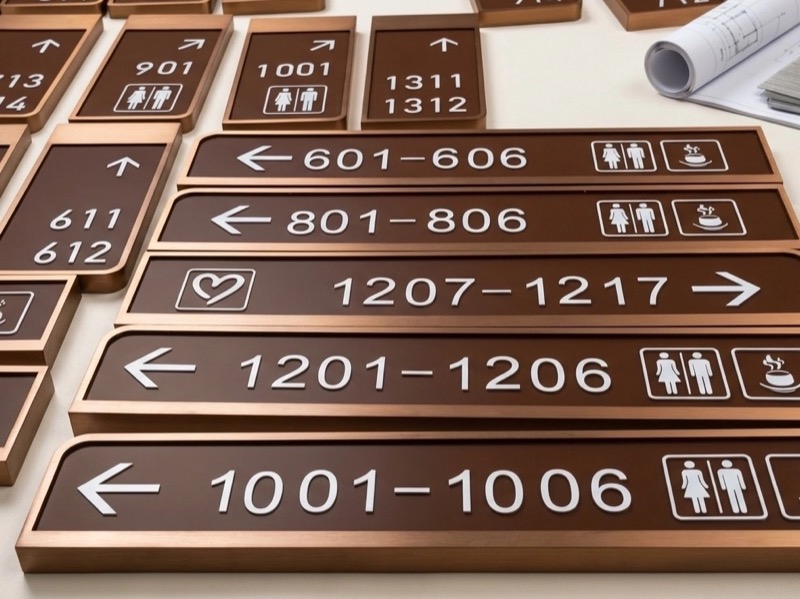
Guests may encounter dozens of hotel touchpoints before they reach their room: the entrance, reception desk, elevator, corridor lighting, carpet, door hardware, and finally the room number sign.
That final sign has to work under real conditions:
- A guest may be carrying luggage or arriving late at night.
- A housekeeper may need to confirm room status without knocking.
- A visually impaired guest must be able to identify the room independently.
- The sign must remain visually coherent after years of cleaning, impact, humidity, and daily use.
- It must align with the hotel's wider interior design, from door finish to corridor lighting temperature.
For this reason, luxury hotel room signs should be evaluated as part of the guest journey and building-accessibility system—not as an isolated decorative purchase.
Traditional room number signs use permanent materials and tactile fabrication to create a durable, architectural result. Common options include brass, bronze, stainless steel, acrylic, solid wood, stone, glass, and layered metal composites.
A well-specified traditional sign gives designers control over proportion, texture, color, depth, and visual restraint. It can be minimal without looking generic.
For example, a matte black metal sign with brushed brass raised numerals can suit a contemporary urban hotel. A patinated bronze sign may be more appropriate for a heritage property. A timber panel with inset metal numerals can reinforce a resort's natural, residential atmosphere.
The main strengths are clear:
- Material authenticity: Real brass, wood, stone, and metal develop visual depth that a screen cannot reproduce.
- Low operational dependence: No network, software, screen refresh, or power supply is required.
- Long service life: A properly fabricated sign can remain in use for many years.
- Accessibility integration: Raised characters and braille can be built directly into the permanent sign.
- Design continuity: The sign can match door hardware, elevator panels, wall finishes, and brand colors.
Traditional signs are especially appropriate for boutique hotels, heritage renovations, resorts, residential-style luxury properties, and brands that place craftsmanship at the center of their identity.
A fixed room number sign provides fixed information. It cannot display "Do Not Disturb," "Make Up Room," occupancy, guest messaging, or service requests.
It can also become costly to revise during renumbering, floor reconfiguration, or conversion projects. If a hotel has a high need for real-time room-status visibility, a traditional sign alone may require staff to rely on additional door hangers, corridor indicators, radios, or property-management workflows.
Digital room signs use LED, LCD, electronic-paper, touch-control, sensor, or network-connected technologies. Depending on the system, they can display room numbers, bell functions, occupancy status, "Do Not Disturb," "Make Up Room," housekeeping messages, and selected guest-service information.
The operational appeal is significant. When linked to hotel systems or in-room controls, digital room signs can make service status immediately visible outside the room.
A guest presses "Do Not Disturb" inside. The sign changes outside. Housekeeping can see the status before approaching. This supports privacy, reduces unnecessary knocks, and gives staff clearer information during busy turnover periods.
Digital signs can offer:
- Real-time room-status visibility
- Integrated doorbell and service-request controls
- Better low-light visibility
- Remote room-number updates where the system supports them
- A contemporary smart-hotel impression
- Potential connection with broader guest-room automation
Electronic-paper displays can be particularly attractive for design-led hotels because they have a softer, less screen-like appearance than bright LED panels. Meanwhile, concealed LED halos can improve nighttime navigation while preserving a refined exterior.
The technology must earn its place. A digital room sign adds installation, commissioning, maintenance, and replacement considerations that do not exist with fixed signs.
Before specifying one, hotel teams should ask:
1. What happens during a power or network interruption?
2. Can the room number still be identified clearly?
3. Who maintains firmware, controllers, power supplies, and software?
4. Is the user interface understandable for international guests?
5. Does the visual design belong in this hotel—or does it look like office equipment?
6. How will tactile characters and braille be provided independently of the screen?
The last question is essential. A display alone does not replace tactile accessibility information required for permanent room identification in relevant jurisdictions. In the United States, permanent-room signs must comply with tactile-character and braille requirements under ADA Standards.
| Evaluation area | Traditional room number signs | Digital room signs |
|---|---|---|
| Design character | Timeless, material-led, highly customizable | Contemporary, interactive, requires careful aesthetic integration |
| Information | Permanent room number and fixed identifiers | Room number, service status, doorbell, selected live information |
| Accessibility fabrication | Straightforward to integrate raised characters and braille | Requires a separate, durable tactile and braille solution |
| Night visibility | Depends on corridor lighting or optional halo lighting | Often strong through backlighting or illuminated display |
| Maintenance | Minimal beyond cleaning and occasional refinishing | Requires power, components, troubleshooting, and possible software support |
| Initial investment | Usually lower | Usually higher due to hardware and installation |
| Long-term value | Strong for durable premium materials | Depends on reliability, system support, and technology life cycle |
| Best fit | Heritage, boutique, resort, residential luxury | Smart hotels, new builds, high-service-volume luxury operations |
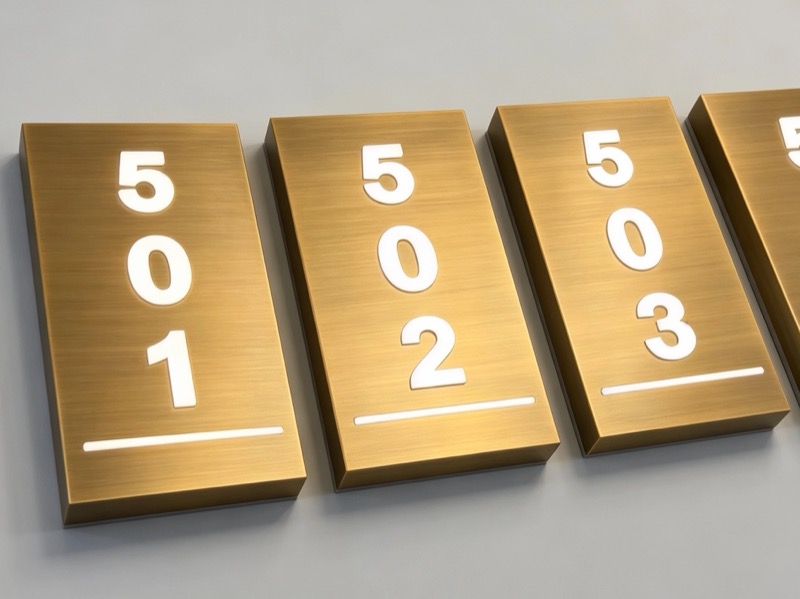
Accessibility should be resolved at the concept stage—not added at the end as a visual compromise. A luxury hotel can deliver a sophisticated design while still making room identification usable for guests with visual impairments.
For signs identifying permanent rooms and spaces, the ADA Standards require tactile characters and contracted, or Grade 2, braille. Tactile characters must be raised; their finish and contrast must support legibility, and tactile signs placed at doors follow location and mounting-height requirements.
For room-door applications, key points include:
- Raised tactile characters.
- Grade 2 braille accompanying tactile information.
- A non-glare finish.
- Visual contrast between characters and background.
- Placement at the latch side of a single door, where applicable.
- Tactile-character mounting between 48 inches and 60 inches above the finished floor, measured according to the standard.
This means a glossy decorative plaque installed directly on the door may not be the complete answer for a U.S. project. The sign system must be designed around the applicable placement and tactile requirements.
The European Accessibility Act began applying on June 28, 2025. Its practical effect for hospitality depends on the service, product, national implementation, property type, and local building rules involved. Hotels should avoid treating the EAA as a single room-sign specification. Instead, assess the full guest journey: online booking, digital communications, self-service technology, physical navigation, and accessible-room information.
For European projects, a sensible procurement approach is to confirm requirements with the local architect, accessibility consultant, and authority having jurisdiction before manufacturing begins. National and local rules may determine the exact physical-sign specifications.
Australian accessibility expectations are commonly assessed with reference to AS 1428.1 and applicable building requirements. Industry accessibility guidance highlights the importance of braille, tactile characters, contrast, and installation details. Sign location at the latch side of the door and a mounting zone of 1200 mm to 1600 mm are widely cited practical requirements for relevant applications.
A manufacturer should never make a blanket "compliant" claim without reviewing the approved drawings, sign schedule, building classification, and local project requirements. Compliance is a system outcome: content, character design, braille translation, contrast, finish, placement, and installation all matter.
For many upscale projects, the strongest solution is not a choice between a purely traditional sign and a fully digital one. It is a layered approach.
A hybrid hotel room sign might include:
- A brushed brass, bronze, stainless-steel, timber, or stone face
- Raised room numerals and contracted braille in the required format
- A matte, high-contrast visual surface
- A concealed illuminated edge or halo for nighttime wayfinding
- A separate digital status panel for "Do Not Disturb," "Make Up Room," and doorbell functions
- Modular components so the electronic unit can be serviced without replacing the full architectural sign
This approach protects the tactile and visual identity of the room number sign while allowing technology to serve operations rather than dominate the corridor design.
Room identity should remain visible and tactile even if a digital component fails. In practical terms, this means the room number, braille, and essential accessibility content should be fabricated into a durable physical sign—not dependent solely on a powered display.
That principle helps protect guest independence, maintenance resilience, and the hotel's long-term design consistency.
Start with operations, not product catalogs. Does the hotel need live housekeeping status? Is privacy a major guest promise? Will staff benefit from corridor-level alerts? If the answer is no, a refined traditional sign may be the better investment.
Choose materials that already appear in the property. Consider metal tones, timber species, wall finishes, lighting, and door hardware. Consistency creates a more intentional luxury impression than adding expensive materials at random.
Identify target markets, building codes, room types, and installation conditions before approving artwork. Confirm tactile text, braille, contrast, finish, mounting height, and latch-side placement where required.
Review a physical sample in daytime and low-light conditions. Check glare, reading distance, tactile clarity, cleaning resistance, and whether the sign can be found intuitively from the elevator approach.
For digital systems, request details on expected component life, replacement parts, warranty, network dependencies, power requirements, and service procedures. For traditional signs, confirm cleaning methods, anti-fingerprint coatings, corrosion resistance, and spare-sign quantities.
Choose traditional hotel room number signs when your priority is material craftsmanship, lasting architectural value, low maintenance, heritage compatibility, or a quiet residential luxury feel.
Choose digital room signs when the hotel is newly built or comprehensively renovated, has a smart-room strategy, needs visible service-status communication, and can support the electrical and technical maintenance requirements.
Choose a hybrid solution when you want the strongest balance: tactile, compliant, premium physical signs combined with discreet operational technology.
There is no universal winner. The best room sign is the one that lets guests navigate confidently, supports staff without invading privacy, remains beautiful after years of use, and fits the property's brand without sacrificing accessibility.
Landea Signs Co., Ltd. develops custom hotel sign solutions for projects that require more than a standard room plaque. From brass and stainless-steel tactile room signs to integrated digital-status solutions, we help project teams coordinate material selection, finish, raised characters, braille, lighting, and modular construction around the intended guest experience.
Send us your floor plans, sign schedule, design concept, target market, and installation conditions. Our team can help you develop a hotel room sign package that looks distinctive, supports daily operations, and is prepared for project-specific accessibility review.
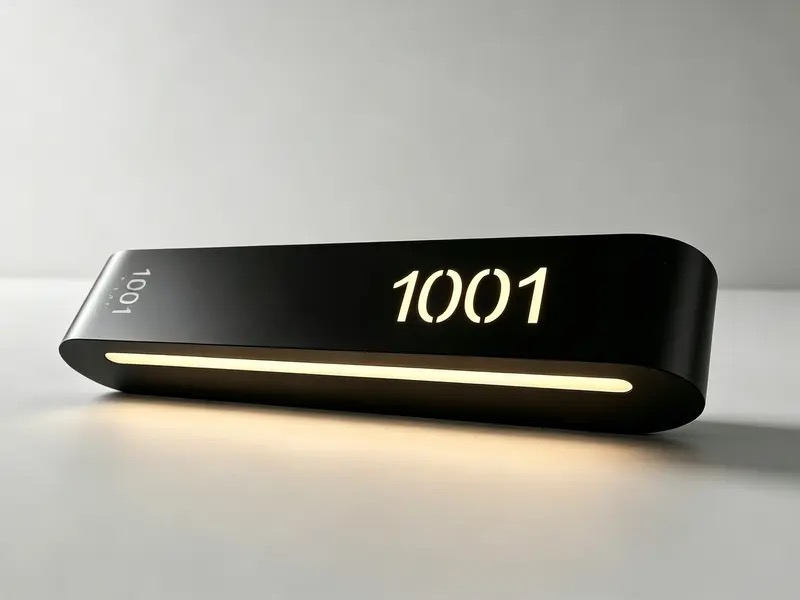
Yes, provided their technology, brightness, materials, and interface are carefully selected. The most successful installations use restrained design and keep the digital function secondary to the hotel's architecture and brand atmosphere.
Signs identifying permanent rooms and spaces generally require raised tactile characters and contracted Grade 2 braille under ADA Standards. Project teams should confirm the exact scope and installation details with qualified local professionals.
No. A screen may provide useful visual information, but physical tactile characters and braille should be incorporated where the applicable accessibility rules require them for permanent room identification.
There is no single best material. Brass and bronze suit classic luxury; stainless steel fits modern interiors; timber and stone work well in resort or residential concepts; layered acrylic and metal can support contemporary illuminated designs.
Traditional signs generally have fewer failure points because they do not rely on electronics, power, or network connectivity. Digital signs can perform well, but they require a defined maintenance and replacement plan.
Review the project's applicable building and accessibility requirements, then confirm tactile characters, braille, contrast, non-reflective finish, sign placement, and mounting height. Australian guidance commonly references AS 1428.1 for these elements.
1. U.S. Access Board. "[Chapter 7: Signs]." Guidance on tactile signs, Grade 2 braille, non-glare finish, contrast, and permanent-room sign applications.
2. U.S. Department of Justice. "[2010 ADA Standards for Accessible Design]." Sections 216 and 703 covering permanent-room signs, raised characters, braille, placement, and mounting height.
3. Australian Disability Network. "[Design for Dignity: Directional and Category Signage]." Practical accessibility guidance referencing AS 1428.1 tactile and braille sign specifications.
4. Corada. "[ADA Standard Section 703: Signs]." Accessible summary of tactile-character, braille, and door-side placement requirements.
5. Business Disability Forum. "[The European Accessibility Act: What Businesses Need to Know]." Overview of the June 28, 2025 application date.
6. Cendyn. "[The European Accessibility Act: What Hoteliers Need to Know]." Hospitality-focused discussion of EAA preparation and accessibility obligations.
7. K2K Signs. "[What Is Braille and Tactile Signage and Who Needs It in Australia?]." Industry guidance on tactile and braille sign installation practices under AS 1428.1.


