From idea to market-ready product, our SIGNS solutions make every stage easier, faster. Discover How We Help

Views: 243 Author: Landea Signs Publish Time: 2026-08-26 Origin: Site


Content Menu
● Why Traditional Sign Production Creates Delays
● Our Automated Production System
>> Automated Channel Bending for Accurate Returns
>> Dedicated Laser Welding for Stainless Steel and Aluminum
● Why Small Sign Details Benefit Most
>> A Practical Example: Small Letters in a Retail Sign Set
● Faster Production Does Not Mean Skipping Quality Control
● What Buyers Should Provide Before Production
● Manual Fabrication Versus Machine-Based Production
● A Better Way to Plan Sign Lead Time
● Start Your Custom Sign Project
● FAQ
>> 1. What is automated channel bending in sign manufacturing?
>> 2. Can laser welding be used for aluminum and stainless steel signs?
>> 3. Why are small fabricated signs harder to make manually?
>> 4. Will laser-welded signs require polishing?
>> 5. What files should I send for a custom illuminated sign quotation?
>> 6. Can Landea Signs support large repeat orders?
>> 7. What is the maximum return height you can produce?
At Landea Signs Co., Ltd., we manufacture illuminated sign projects with one goal in mind: make custom work faster without making quality less predictable. Our production system combines automated channel bending with dedicated laser welding capacity for stainless steel and aluminum, helping global buyers move from approved drawings to finished illuminated sign assemblies with fewer manual bottlenecks.
For distributors, contractors, retail brands, and project buyers, lead time is not simply a factory metric. It affects installation schedules, store-opening dates, freight planning, cash flow, and customer satisfaction. That is why we have built a production line around repeatable machine processes—not around the availability of a small number of highly skilled manual welders.
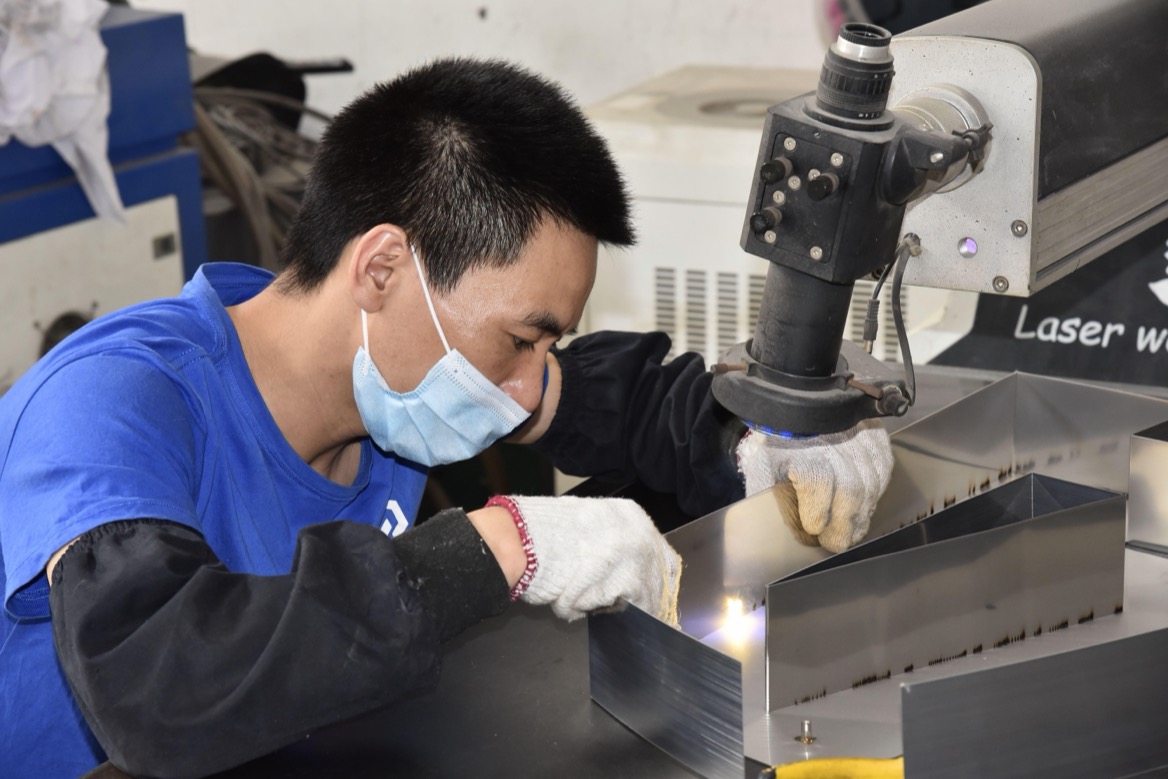
Many sign workshops still rely heavily on manual cutting, hand-shaped returns, and TIG or solder welding. Skilled craft work can create excellent results, but it often introduces capacity constraints.
When an order includes small letters, detailed logos, thin strokes, multiple finishes, or a large quantity of illuminated sign units, manual work can become the slowest stage of production.
Common delays include:
- A limited number of experienced welders available for a growing order backlog
- Inconsistent bending accuracy between shifts or operators
- Extra grinding and polishing after welding
- Rework caused by heat distortion, visible weld marks, or poor fit-up
- Difficulty welding very small sign elements precisely
- Longer inspection cycles because each unit may vary slightly
The biggest issue is not that manual fabrication is impossible. It is that it is harder to scale predictably.
For example, a retailer may need 80 illuminated sign sets for a regional rollout. If every return, seam, and small-letter joint depends on manual workmanship, output can vary from day to day. If the project is urgent, the workshop may need overtime, additional labor, or subcontracting—each of which can introduce cost and quality risks.
At Landea Signs, we reduce those dependencies by using automated equipment through the key fabrication stages.
Our core production capability includes nine dedicated machines:
| Production stage | Equipment at Landea Signs | Practical benefit |
|---|---|---|
| Stainless steel sign welding | 3 stainless steel laser welding machines | Consistent welding for polished, brushed, mirror, and detailed stainless steel sign projects |
| Aluminum sign welding | 3 aluminum laser welding machines | Dedicated capacity for aluminum fabricated sign components |
| Return forming | 3 fully automated channel bending machines | Digitally controlled feeding, notching, bending, and cutting |
| Workflow result | Integrated machine-based process | Faster flow from material preparation to formed and welded sign assemblies |
This configuration is not simply an equipment list. It is a capacity strategy.
Three automated bending machines prevent the return-forming stage from becoming a production queue. Three stainless steel laser welding machines and three aluminum laser welding machines allow us to route work by material type rather than forcing all jobs through one shared station.
That matters particularly when stainless steel and aluminum projects run simultaneously.
An automated channel bending machine receives the approved design file and converts metal coil or strip into the shaped sidewall, commonly called the return, of a fabricated sign.
The process can combine several operations:
1. Material feeding
2. Controlled notching or grooving
3. Bending along the programmed path
4. Cutting to length
5. Forming the sign return for assembly
Instead of measuring and shaping every curve by hand, the machine follows the digital geometry. This improves repeatability across letters, logos, and multi-location programs.
Industry equipment specifications show that automated channel bending systems can support a broad range of materials and dimensions. For example, comparable systems are designed to process stainless steel and aluminum and can form return heights ranging from small fabricated sign work to large-format projects.
At Landea Signs, our automatic channel bending capability supports return heights up to 500 mm, allowing us to serve both compact illuminated sign details and larger architectural applications.
After cutting and forming, the sign face, return, and structural components must be accurately assembled. This is where laser welding changes the workflow.
Laser welding uses a concentrated heat source, allowing the operator to focus energy on a narrow weld area. For fabricated stainless steel and aluminum sign components, this can help control heat input and reduce visible deformation when the correct parameters, fit-up, material thickness, and operator procedure are used.
Industry suppliers describe laser welding as particularly useful for detailed metal sign fabrication because it offers focused welding, supports materials including stainless steel and aluminum, and can reduce the risk of excessive warping compared with broader heat-input processes.
Our factory operates separate machine groups for stainless steel and aluminum because these materials behave differently during fabrication:
- Stainless steel is widely specified for premium mirror, brushed, titanium-coated, and architectural sign applications.
- Aluminum is lightweight and widely used in fabricated illuminated sign construction.
- Both materials require suitable settings, clean fit-up, and process control to achieve stable visual results.
We do not treat every sign as identical. Material thickness, finish, letter depth, stroke width, internal illumination layout, and mounting method all influence the production plan.
Small fabricated sign elements are often where automation creates the clearest advantage.
A large letter has room for tools, welding access, and correction work. A small letter does not. Tight curves, narrow strokes, sharp corners, and compact logo segments leave little margin for error.
For hand welding, the operator must manage alignment, heat, filler material, and visual appearance in a confined area. This can be slow and demanding—especially across a large order with many repeated small characters.
Laser welding is suited to controlled, localized work because the beam can be focused onto a small area. Some dedicated sign-welding systems are designed for fine spot sizes and include red-dot positioning and CCD visual monitoring for accurate setup.
Imagine a retail project that includes:
- A 150 mm-high main brand name
- A small illuminated tagline below it
- A detailed icon with narrow internal cuts
- Stainless steel returns with a mirror finish
- Multiple identical sets for different locations
The large brand letters may be relatively straightforward. The risk sits in the tagline and icon. If small joints are inconsistent, the finished sign can show alignment issues, visible seams, uneven illumination gaps, or unnecessary rework.
With digitally formed returns and laser-assisted welding, we can apply the same approved geometry repeatedly. The value is not merely speed. It is repeatable execution across every location in the program.
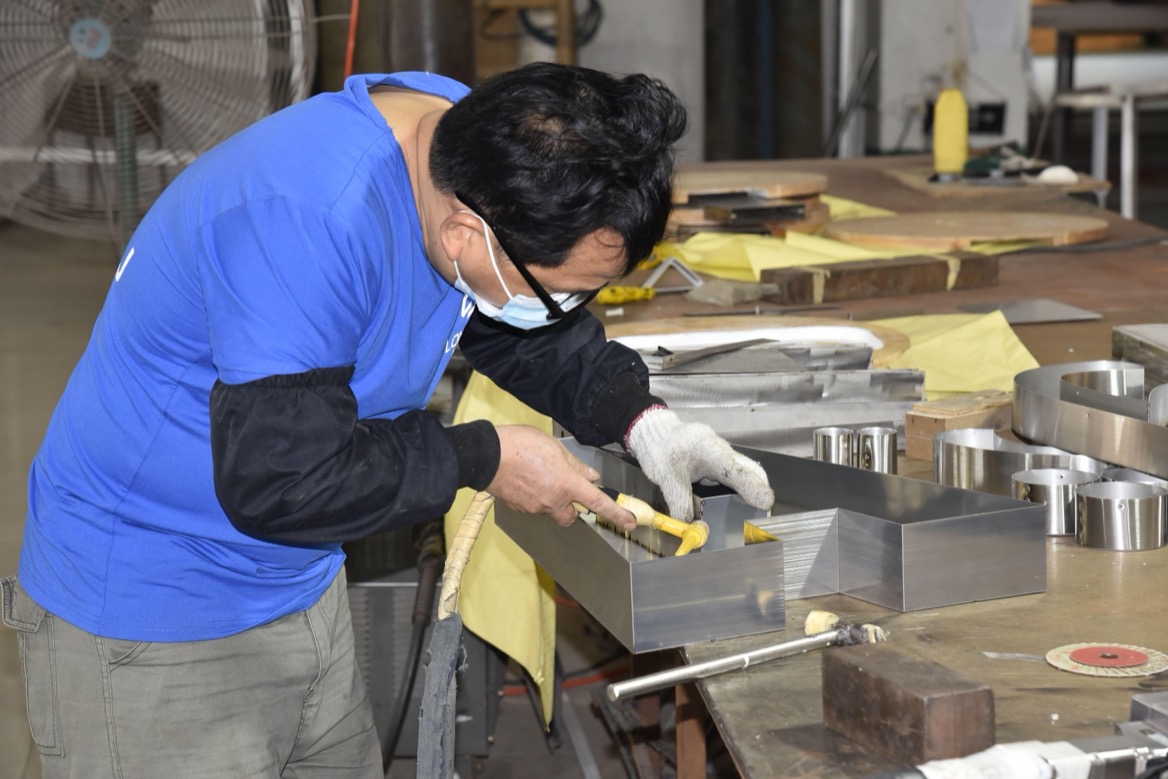
Automation only improves delivery when it is combined with disciplined inspection. Machines create consistency, but the final sign still needs human quality control.
At Landea Signs, a practical quality process should focus on the issues buyers care about after installation:
- Does the sign match the approved artwork and dimensions?
- Are letter returns aligned with faces and backs?
- Are seams visually clean for the selected finish?
- Is the internal LED layout appropriate for even illumination?
- Are drainage, wiring exits, mounting points, and access requirements addressed?
- Is the sign packed to protect polished surfaces, acrylic faces, and projecting elements during export transport?
For polished or mirror-finish sign work, inspection is especially important. Even a strong weld may require careful finishing standards depending on the customer's approved sample and surface expectations.
Laser welding can reduce secondary finishing in suitable applications, but it does not eliminate the need for inspection. A professional sign manufacturer should define the acceptable appearance standard before production begins.
The fastest production starts before materials are cut. In our experience, unclear drawings and late design changes create more delay than fabrication speed ever can solve.
To improve your illuminated sign lead time, provide the following at quotation or order-confirmation stage:
1. Vector artwork
AI, PDF, EPS, DXF, or another editable vector file is preferable to a low-resolution image.
2. Finished sign dimensions
Specify overall width, letter height, depth, stroke widths where relevant, and installation clearances.
3. Material and finish requirements
State whether you need stainless steel, aluminum, painted surfaces, brushed finishes, mirror finishes, or custom colors.
4. Illumination direction
Confirm face-lit, halo-lit, front-and-halo-lit, side-lit, non-illuminated, or another requested effect.
5. Electrical requirements
Identify voltage, regional compliance requirements, wire exit direction, and any site-specific installation needs.
6. Mounting details
Wall type, raceway requirements, stud locations, backing board needs, and installation drawings should be confirmed early.
7. Approved sample or finish reference
For premium projects, an approved color, material, or finish sample reduces subjective interpretation.
This information allows our engineering and production teams to identify potential problems before fabrication. It also makes machine programming more efficient and reduces rework later in the project.
| Comparison point | Predominantly manual process | Landea Signs machine-based workflow |
|---|---|---|
| Return forming | Hand measuring and bending | Automated channel bending from digital files |
| Welding | Greater reliance on manual TIG, soldering, or similar processes | Dedicated laser welding machines for stainless steel and aluminum |
| Small sign details | More difficult to access and repeat | Better suited to controlled, precise fabrication workflows |
| Output consistency | Can vary with individual operator technique | More repeatable programmed forming process |
| Finishing workload | May require more correction or polishing | Reduced finishing needs when weld quality and finish requirements allow |
| Capacity planning | Closely linked to skilled labor availability | Distributed across multiple bending and welding stations |
| Urgent orders | Can be difficult when manual stations are fully booked | Greater ability to plan parallel production stages |
The purpose of automation is not to remove craftsmanship. It is to reserve experienced human attention for the work that requires judgment: artwork review, material selection, finish evaluation, illumination testing, final inspection, and project coordination.
A realistic lead time should never be based only on the welding stage. A complete illuminated sign project includes design confirmation, engineering, material preparation, forming, welding, surface finishing, LED installation, testing, inspection, packing, and shipping.
For buyers, the best way to protect an installation schedule is to ask a supplier three questions:
- Which stages are automated, and which stages rely on manual capacity?
- How many machines or production cells are available for my material type?
- What information must be approved before the factory begins fabrication?
These questions reveal whether a factory has true throughput capacity or simply a fast machine in an otherwise manual process.
At Landea Signs, our answer is clear: three stainless steel laser welding machines, three aluminum laser welding machines, and three fully automated channel bending machines work together as one production system.
That system helps us handle custom illuminated sign work with greater speed, consistency, and confidence—particularly for complex logos, repeated retail programs, and small fabricated sign details.
If your project requires custom illuminated sign fabrication, send Landea Signs your artwork, dimensions, material preference, illumination style, quantity, and delivery destination.
Our team can review the manufacturability of your design, recommend a suitable production method, and prepare a tailored quotation. Let us help you turn approved artwork into a production-ready sign solution with a clearer path to delivery.
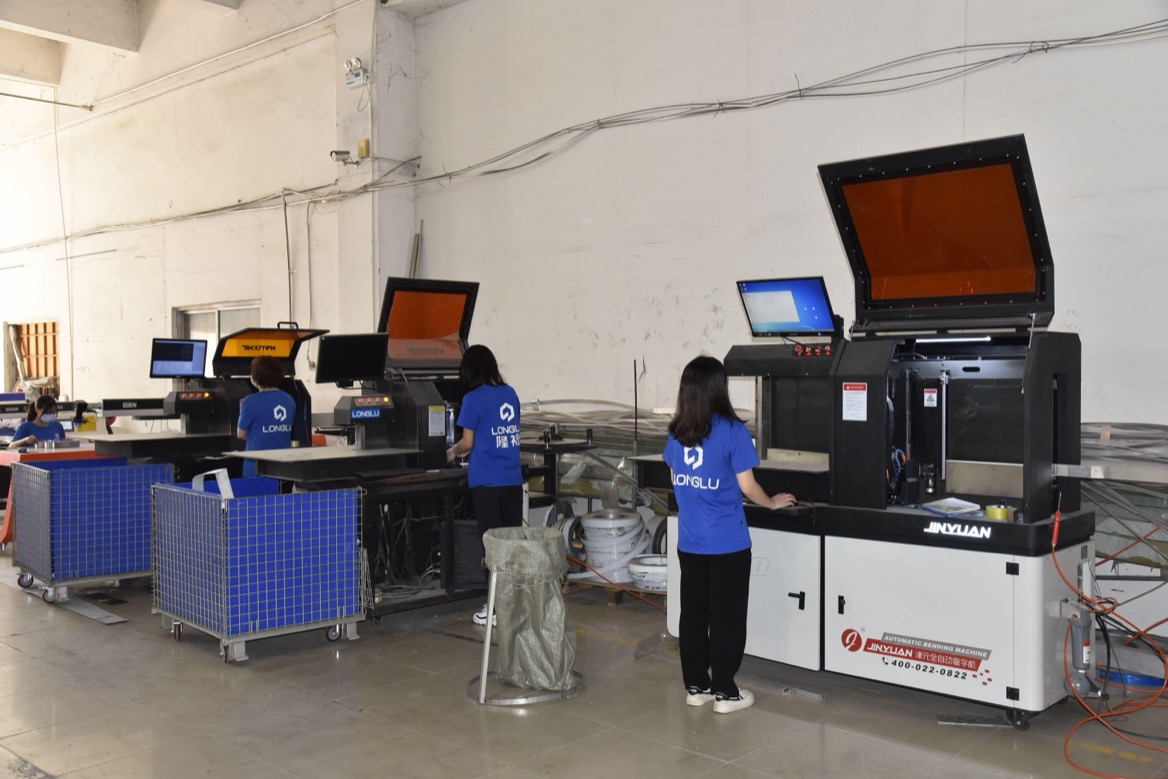
Automated channel bending uses programmed equipment to feed, notch, bend, and cut metal strips into the sidewalls of a fabricated sign. It improves repeatability compared with fully manual return forming.
Yes. Laser welding equipment can be configured for both aluminum and stainless steel applications. The proper settings depend on factors such as alloy, thickness, joint design, surface condition, and required finish.
Small signs have narrow strokes, tight radii, and limited access for welding and finishing tools. Minor alignment or heat-control errors become much more visible on small characters and detailed logos.
It depends on the material, weld design, surface finish, and customer appearance standard. Laser welding can reduce post-weld finishing in suitable applications, but premium mirror or decorative finishes may still need controlled finishing and inspection.
Send editable vector artwork whenever possible, plus dimensions, quantity, illumination type, material and finish requirements, mounting details, electrical specifications, and destination country.
Yes. Our multi-machine production layout is designed to support repeated sign programs and higher-volume orders by allowing channel bending and material-specific welding stages to run in parallel.
Our automated channel bending equipment can produce returns up to 500 mm high. Final feasibility depends on the sign design, metal thickness, material type, radius requirements, and assembly method.
1. "[How to Weld Channel Letters by Laser Welder]." Used for general process context on forming sign returns, fitting components, laser welding, and finishing considerations. [varibend]
2. "[Channel Letter Bender Machine]." Used for comparative industry examples of automated return-forming capability, materials, and production ranges. [varibend]
3. "[Stainless Steel Advertising Letters Laser Welding Machines]." Used for examples of laser-welding features, including CCD monitoring, red-dot positioning, spot-size control, and material-range specifications. [perfectlaser]
4. As"[Channel Letter Bending Machines]." Used for context on laser welding systems designed for continuous operation with steel, aluminum, and stainless steel. [ascentequipment]
5. "[Laser Welding Machine for Sale]." Used for industry context on laser welding applications for aluminum and stainless steel fabricated sign work. [varibend]


