From idea to market-ready product, our SIGNS solutions make every stage easier, faster. Discover How We Help

Views: 218 Author: Landea Signs Publish Time: 2026-09-10 Origin: Site


Content Menu
● Illuminated Signs and Reflective Signs: The Core Difference
>> How an Illuminated Sign Produces Visibility
>> How a Reflective Sign Returns Light
● Best Applications for Each Sign Type
>> When an Illuminated Sign Is the Better Choice
>> When a Reflective Sign Is the Better Choice
● A Practical Selection Framework
>> 1. Who Is Reading the Sign?
>> 2. What Is the Actual Light Condition?
>> 3. Is Safety or Brand Identity the Priority?
>> 4. What Will the Sign Cost Over Its Service Life?
>> 5. Which Standards Apply to the Project?
● Market Preferences in the United States, Europe, Australia, and China
>> United States: Safety Compliance and Brand Visibility
>> Europe: Certification, Documentation, and Public-Space Quality
>> Australia: UV Resistance and Outdoor Durability
>> China: Smart Infrastructure and Active Visibility
● Design Principles That Improve Sign Performance
● The Best Strategy: Use Both Sign Types Intentionally
● How Landea Signs Supports Custom Sign Projects
● FAQs
>> 1. What is the main difference between an illuminated sign and a reflective sign?
>> 2. Are reflective signs suitable for indoor wayfinding?
>> 3. Are illuminated signs more expensive than reflective signs?
>> 4. Can an illuminated sign meet accessibility requirements?
>> 5. Which sign type is best for a parking lot?
>> 6. Are illuminated signs appropriate for road traffic applications?
>> 7. How do I choose between an illuminated directory sign and a reflective wayfinding sign?
Choosing between illuminated directory signs and reflective wayfinding signs is not simply a design decision. It affects nighttime visibility, visitor confidence, accessibility, maintenance planning, operating cost, and the perceived quality of a property or brand.
For Landea Signs Co., Ltd., the most effective projects rarely begin with the question, "Which sign looks better?" Instead, they begin with a practical question: Where will people need information, what lighting conditions will they face, and what must the sign achieve at that exact moment? An illuminated sign provides its own light. A reflective sign depends on an external light source, such as vehicle headlights. Both can be highly effective—but in very different environments.
This guide compares illuminated directory signs and reflective wayfinding signs for commercial properties, public buildings, roads, parking areas, healthcare facilities, airports, retail spaces, and mixed-use developments. It also examines the purchasing priorities that commonly shape projects in the United States, Europe, Australia, and China.

The fundamental distinction is simple: an illuminated sign actively produces light, while a reflective sign returns light from another source.
An illuminated directory sign may use internal LED modules, edge lighting, backlighting, halo lighting, or face illumination. Its message remains visible in darkness even when there is no nearby vehicle, streetlight, or building light.
A reflective wayfinding sign uses retroreflective sheeting. When headlights, a flashlight, or another directed light source hits its surface, the material reflects much of that light back toward the source. This makes reflective signs highly practical for roads, parking areas, drive-through routes, loading zones, and vehicle-oriented environments.
| Feature | Illuminated sign | Reflective sign |
|---|---|---|
| Light source | Built-in LED or other integrated lighting | External lighting, commonly vehicle headlights |
| Visibility in darkness | Consistent, because the sign is self-lit | Strong when an external light source reaches the sign |
| Best for pedestrians | Excellent for lobbies, interiors, public facilities, and retail areas | Suitable when surrounding lighting is reliable |
| Best for drivers | Useful at entrances, buildings, and high-value destinations | Highly effective for roads, parking circulation, and traffic guidance |
| Electricity requirement | Yes, unless paired with solar or another independent power solution | No |
| Maintenance needs | Requires electrical design, inspection, and eventual component servicing | Generally simple; condition depends on surface durability and cleanliness |
| Brand presentation | Strong visual presence and premium appearance | Functional, efficient, and often more discreet |
| Initial investment | Typically higher | Typically lower |
| Typical applications | Directory sign, building identity sign, lobby sign, airport sign, hospital sign, retail sign | Road sign, parking sign, safety sign, directional sign, traffic sign |
For many sites, the best answer is not one type replacing the other. It is a layered sign system: reflective signs guide vehicles toward a destination, while illuminated signs help visitors recognize the entrance, understand the directory, and navigate complex interiors.
An illuminated sign includes an internal or integrated lighting system. In modern commercial projects, LEDs are widely selected because they can offer controlled brightness, long operating life, compact installation, and flexible lighting effects.
Common illuminated sign formats include:
- Internally illuminated letter signs with light shining through acrylic or polycarbonate faces.
- Halo-lit letter signs that cast a glow onto the mounting surface behind each letter.
- Edge-lit directory signs with engraved or printed panels illuminated from the side.
- Backlit cabinet signs for tenant directories, maps, parking instructions, and building information.
- Front-and-back illuminated signs for highly visible entrances and roadside brand identity.
- Digital or changeable-message signs for sites requiring frequent content updates.
The key advantage is independence from ambient light. In an underground parking area, a hospital corridor during night hours, or an airport arrivals hall, people may need information before they are close enough for another light source to activate a reflective surface. An illuminated sign can deliver that information continuously.
However, brightness alone does not create an effective sign. A well-designed illuminated sign must control glare, maintain contrast, use appropriate letter size, and place information at the decision point where visitors need it.
Reflective signs use retroreflective materials engineered to direct light back toward its original source. This behavior differs from ordinary reflection, which scatters light in many directions.
When a driver's headlights shine on a reflective road sign, the sign becomes bright from the driver's viewing position. This is why reflective signs are a long-standing choice for traffic control, parking guidance, road safety, vehicle circulation, and outdoor directional systems.
In the United States, the Manual on Uniform Traffic Control Devices states that regulatory, warning, and guide signs, along with object markers, must be retroreflective or illuminated so they present the same shape and similar color by day and night.
Reflective signs are particularly valuable because they:
- Do not need a power connection.
- Can be installed in remote locations.
- Offer cost-effective nighttime visibility for drivers.
- Are practical for large sign networks across roads or parking areas.
- Can support maintenance programs based on material condition and measured reflectivity.
- Remain a familiar and trusted format for road users.
Their limitation is equally important: a reflective sign is only as visible as the light reaching it. In a pedestrian plaza without vehicle headlights, a poorly lit lobby, or a dark corridor, reflective material alone may not provide adequate guidance.
The right sign depends on whether the site is primarily pedestrian-focused, vehicle-focused, brand-focused, safety-critical, or a combination of all four.
Choose an illuminated sign when people must read information reliably in low light without depending on passing vehicles or surrounding lighting.
Illuminated signs are often the stronger choice for:
- Building entrances: A prominently illuminated company name or address sign improves recognition at night.
- Lobby directories: Visitors can identify tenants, departments, floors, and services immediately.
- Hospitals and clinics: Clear 24-hour navigation can reduce stress for patients, families, and emergency visitors.
- Airports and transport hubs: Travelers must make quick decisions in large, unfamiliar environments.
- Hotels and retail centers: Lighting can reinforce a premium environment and make routes feel safer.
- Underground parking areas: Active lighting improves readability where daylight and headlights are inconsistent.
- High-end commercial properties: An illuminated sign supports architecture, branding, and perceived property value.
- Campus navigation: Universities, corporate parks, and public complexes often need highly visible maps and directional information after dark.
For an illuminated directory sign, a designer should consider more than the panel itself. Viewing distance, letter height, information hierarchy, icon use, mounting height, power access, service access, and emergency operation all influence real-world performance.
Choose a reflective sign when the main viewer is a driver or when the site needs a durable, cost-conscious sign solution without electrical infrastructure.
Reflective signs are especially effective for:
- Road and highway guidance
- Parking lot circulation
- Directional arrows and lane-control signs
- Loading docks and logistics centers
- Industrial facilities
- School zones and community streets
- Outdoor campus roads
- Temporary traffic control areas
- Vehicle entrances and exit routes
- Property boundary and safety messages
For road-oriented locations, reflective signs are often the baseline solution rather than an optional upgrade. Transport for NSW requires road signs on its roads to use approved retroreflective sheeting, and its approvals reference the performance requirements of AS/NZS 1906.1.
A reflective sign can also be the right choice for a commercial property when the goal is clear vehicle movement rather than visual drama. For example, a warehouse may use reflective signs for truck routes, dock numbers, speed instructions, pedestrian crossings, and emergency assembly points, while reserving illuminated signs for the main reception entrance.
Before specifying a sign, evaluate the location using five questions.
A driver moving at 30 km/h, a pedestrian walking through a lobby, and a visitor in a wheelchair do not experience signage in the same way.
For vehicle users, legibility must work at speed and from a distance. For pedestrians, the sign must support closer reading, route confirmation, and often multiple layers of information. For visitors with low vision, contrast, glare control, and clear type are especially important.
In the United States, accessible signs with tactile characters must use a non-glare finish and contrast between characters and their backgrounds. The 2010 ADA Standards also specify installation requirements for tactile characters and emphasize visual contrast.
Expert perspective: Do not assume illumination automatically solves accessibility. A very bright sign with glare, a low-contrast color combination, or densely packed wording can still be difficult to use.
Assess the site after dark—not only during daytime design review.
Ask these questions:
- Is the sign in direct daylight, shade, or deep nighttime darkness?
- Are headlights likely to reach the sign at the correct angle?
- Does the area have streetlights, canopy lights, or interior lighting?
- Could glare from glass, wet pavement, or surrounding lighting reduce legibility?
- Will a power outage affect the sign's function?
- Does the site need 24-hour guidance?
A reflective sign may perform exceptionally well on a vehicle route with consistent headlights. The same sign may underperform in a pedestrian-oriented plaza where people approach from several angles and no strong light source is aimed at it.
When safety and regulatory guidance are the primary goals, clarity must come first. Reflective signs are often ideal for traffic and road applications because they are standardized, visible to drivers, and practical across large networks.
When brand visibility, architectural integration, and a high-end customer experience are key, illuminated signs typically deliver more value. A carefully engineered illuminated letter sign can make a building recognizable from a distance and establish a stronger first impression.
The strongest commercial projects separate these roles:
- Use reflective signs for efficient vehicle movement and safety communication.
- Use illuminated signs for destination recognition, main entrances, tenant identity, and interior directories.
- Use tactile, high-contrast, non-glare signs where accessibility requirements apply.
Purchase price is only one part of the decision.
A reflective sign generally has lower upfront cost because it does not require wiring, drivers, electrical testing, or LED components. It may be the most economical option for a large outdoor sign program.
An illuminated sign generally requires a higher initial investment, but it can create value that a reflective sign cannot easily provide: night-time brand presence, consistently visible wayfinding, a stronger tenant experience, and greater architectural impact.
Evaluate the full lifecycle:
| Cost factor | Illuminated sign | Reflective sign |
|---|---|---|
| Fabrication cost | Higher due to lighting components and enclosure design | Often lower, depending on size and sheeting grade |
| Installation | May require electrical coordination and weatherproof connections | Usually simpler and faster |
| Energy use | Ongoing electricity consumption | No electricity consumption |
| Routine maintenance | Cleaning, power checks, LED driver and module inspection | Cleaning, damage checks, replacement of degraded surfaces |
| Replacement planning | Lighting system and face materials may be serviced separately | Whole panel or reflective face may be replaced when performance declines |
| Long-term visual impact | High, especially for brand and destination visibility | High for practical traffic guidance under headlights |
Never select a sign type based on appearance alone when it is part of a regulated road, safety, or accessibility environment.
For example:
- In the United States, traffic control signs are governed by the MUTCD. The current guidance requires many regulatory, warning, and guide signs to be retroreflective or illuminated for consistent day-and-night appearance.
- For accessible interior and building signs in the United States, ADA requirements address tactile characters, Braille, non-glare surfaces, contrast, and installation positions.
- In the European Union, permanent vertical road signs are associated with EN 12899 requirements and CE marking obligations. Certification involves factory production control, initial testing, and documentation such as a Declaration of Performance.
- In Australia, retroreflective sheeting used for road signs is linked to AS/NZS 1906.1 performance requirements.
- In China, active and connected traffic infrastructure is receiving growing attention within broader smart-city development. Research published through the U.S. National Library of Medicine notes that China has pursued more than 300 smart-city projects and discusses connected or wireless digital traffic sign concepts.
A qualified manufacturer should help the buyer distinguish between a decorative commercial sign and a regulated traffic or emergency sign. They are not interchangeable categories.
Regional differences matter because climate, regulation, procurement habits, accessibility expectations, and urban-development priorities shape how buyers evaluate signs.
In the U.S. market, road and traffic applications are strongly influenced by MUTCD requirements. Reflective signs are widely used because they work effectively with vehicle headlights and fit established maintenance practices.
For commercial properties, illuminated signs are common at shopping centers, hospitals, office buildings, hotels, campuses, and retail developments. Buyers often expect signs to combine strong nighttime visibility with durable construction and professional brand presentation.
Accessibility is also central. Interior signs should account for contrast, tactile requirements, Braille, non-glare finishes, and clear placement where applicable.
European buyers frequently focus on compliance evidence, technical documentation, material performance, and consistent quality control.
For permanent vertical road signs, EN 12899 and CE marking requirements are a major consideration. CE marking is not merely a label on a finished panel; it is tied to conformity processes, production control, testing, and performance documentation.
Commercial illuminated signs are widely used in airports, shopping districts, public buildings, hotels, offices, and transport environments, where visual consistency and architectural quality can be as important as brightness.
Australia's intense UV exposure, heat, rain, and regional weather conditions make material durability a major procurement factor. Buyers commonly examine color stability, corrosion resistance, sheeting performance, panel construction, and long-term outdoor reliability.
Reflective signs remain especially important for road and parking applications. Transport for NSW's approval system illustrates the importance placed on approved retroreflective sheeting for road signs.
For commercial sites, illuminated signs must be engineered with weatherproof housings, suitable electrical components, robust finishes, and maintenance access that remains practical over time.
China continues to expand smart-city and digital-infrastructure initiatives. This creates opportunities for illuminated signs, active traffic signs, dynamic message systems, and branded commercial wayfinding systems.
Reflective signs remain a core solution for traditional road traffic guidance because they are proven, scalable, and cost-effective. At the same time, active illumination is increasingly attractive for high-end commercial developments, smart campuses, transport facilities, urban renewal projects, and complex road environments where static reflection may not be sufficient.
For international buyers sourcing from China, the key is not simply finding a factory that can make illuminated signs. It is finding a partner that can verify drawings, materials, wiring methods, ingress protection needs, brightness requirements, color specifications, packing methods, and project-specific documentation.
A sign can fail even when its materials are technically good. Most wayfinding problems come from poor information hierarchy, wrong placement, insufficient contrast, or a design that does not match the user's route.
Use these principles during planning:
1. Place the sign before the decision point. People need information before they turn, park, enter, or choose a corridor.
2. Prioritize the destination name. A driver should not need to read a paragraph to find "Visitor Parking" or "Loading Bay B."
3. Use fewer words. Short labels and familiar symbols improve recognition speed.
4. Create strong contrast. Light text on a dark background or dark text on a light background is usually easier to read than low-contrast brand colors.
5. Avoid glare. Matte surfaces, controlled LED brightness, appropriate diffusion, and correct viewing angles improve practical readability.
6. Match letter height to viewing distance. A directory sign read from two meters needs different typography than a vehicle sign read from thirty meters.
7. Plan for service access. Illuminated signs need accessible electrical components. Outdoor signs need drainage, weather sealing, and corrosion-resistant materials.
8. Test at night. A full-scale nighttime review is one of the most valuable quality-control steps in any sign project.
The most successful sign systems often use illuminated signs and reflective signs together rather than treating them as competing products.
Consider a hospital campus:
- Reflective signs direct vehicles from the public road to the correct entrance, emergency department, parking structure, and service road.
- Illuminated entrance signs help visitors recognize the hospital at night.
- Illuminated directory signs explain departments, floors, clinics, and registration points inside the building.
- Accessible tactile signs identify rooms, toilets, stairways, and permanent spaces.
- Emergency signs follow the applicable life-safety requirements for the site.
This integrated approach gives every user the right information in the right format. It also prevents overinvestment in illumination where reflective material is more efficient and avoids relying on reflection where active lighting is necessary.
Landea Signs Co., Ltd. develops customized advertising signage, illuminated lettering, directory signs, wayfinding signs, and project-based visual communication systems.
For each project, the most important early-stage inputs are:
- Installation location and mounting surface.
- Daytime and nighttime lighting conditions.
- Viewing distance and user type.
- Required dimensions and message content.
- Indoor or outdoor exposure.
- Material and finish preferences.
- Need for illumination, wiring, transformers, or access panels.
- Applicable local standards and approval requirements.
- Quantity, delivery schedule, and packaging requirements.
A detailed drawing review before production helps prevent common problems such as unreadable text, unsuitable mounting methods, inadequate brightness, missing service access, or incorrect electrical specifications.
Need a tailored recommendation for your project? Share your drawings, sign schedule, installation photos, target market, and preferred sign style with Landea Signs. Our team can help you compare illuminated and reflective sign options, refine the technical details, and develop a custom sign solution that supports visibility, durability, safety, and brand impact.
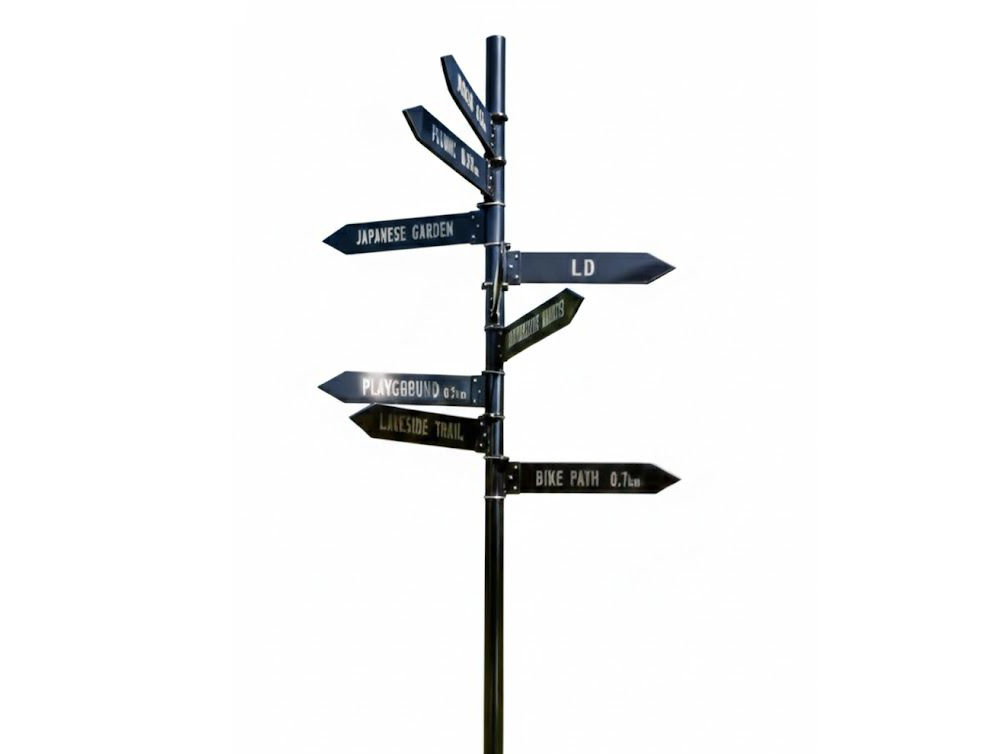
An illuminated sign has its own integrated light source, usually LEDs. A reflective sign does not create light; it reflects light from headlights, flashlights, or other external sources back toward the viewer.
They can be used indoors, but they are usually not the best standalone solution in dim interiors. If a hallway, lobby, or garage does not have reliable external lighting aimed at the sign, an illuminated sign or well-designed ambient lighting may be more effective.
In most cases, yes. Illuminated signs require lighting components, power planning, electrical installation, and maintenance access. However, they can offer superior nighttime branding and continuous visibility, which may justify the investment for high-profile locations.
It can, but illumination alone does not guarantee accessibility. The sign should also use appropriate contrast, non-glare finishes, readable typography, suitable mounting height, and tactile characters or Braille where required by local rules.
Reflective signs are generally highly effective for parking circulation because vehicle headlights activate the reflective surface. For entrances, payment stations, pedestrian routes, elevator lobbies, and underground areas, illuminated signs may be added for stronger visibility.
They may be appropriate in selected situations, particularly where active visibility is needed. However, road traffic signs are subject to local standards and approval requirements. Buyers should confirm the relevant authority specifications before choosing materials or illumination methods.
Start with the user and the environment. Choose an illuminated sign for pedestrian-oriented, low-light, brand-critical, or 24-hour locations. Choose a reflective sign for vehicle routes, remote areas, large sign networks, and cost-efficient outdoor guidance. In complex properties, use both.
1. Federal Highway Administration. "Manual on Uniform Traffic Control Devices, 11th Edition, Chapter 2A: General." Explains that regulatory, warning, and guide signs, as well as object markers, must be retroreflective or illuminated to provide comparable day-and-night visibility. [Read the MUTCD Chapter 2A]. [mutcd.fhwa.dot]
2. U.S. Department of Justice. "2010 ADA Standards for Accessible Design." Covers tactile sign placement, non-glare finishes, and visual contrast requirements for accessible signs. [Read the ADA Standards]. [ada]
3. Transport for NSW. "Retro-reflective Sheeting." States that approved sheeting materials must meet AS/NZS 1906.1 requirements and that road signs on Transport for NSW roads must use approved retroreflective sheeting. [Read the Transport for NSW guidance]. [transport.nsw.gov]
4. RINA. "Fixed Vertical Road Traffic Signs: UNI EN 12899 and CE Marking." Describes conformity, factory production control, certification, Declaration of Performance, and CE marking for permanent vertical road signs in the European Union. [Read the EN 12899 overview]. [rina]
5. Texas A&M Transportation Institute. "Signs." Defines retroreflectivity and explains that traffic signs use retroreflective materials to improve nighttime visibility and support road-user safety. [Read the research overview]. [visibility.tti.tamu]
6. U.S. National Library of Medicine, PubMed Central. "Advances in Smart Roads for Future Smart Cities." Discusses smart-road development, including China's extensive smart-city projects and connected traffic-sign concepts. [Read the article]. [pmc.ncbi.nlm.nih]


