From idea to market-ready product, our SIGNS solutions make every stage easier, faster. Discover How We Help

Views: 228 Author: Landea Signs Publish Time: 2026-09-24 Origin: Site


Content Menu
● What Is the Difference Between Indoor and Outdoor Commercial Signage?
● Indoor vs. Outdoor Commercial Signage Comparison
● Outdoor Commercial Signage: Built for Visibility and Exposure
>>> Illuminated Channel Letters
>>> Monument Signs
>> Outdoor Sign Materials and Why They Matter
>> Outdoor Lighting: Brightness Is Not the Only Goal
>> Outdoor Sign Selection Checklist
● Indoor Commercial Signage: Branding, Wayfinding, and Visitor Confidence
>>> Directional and Wayfinding Signs
>>> Room Identification and Accessibility Signs
● How to Choose the Right Signage System
>> Step 1: Map the Customer Journey
>> Step 2: Define the Sign's Main Job
>> Step 3: Match Materials to Exposure
>> Step 4: Plan for Content Changes
● Expert Insight: Total Cost Matters More Than Initial Price
>> Questions to Ask a Sign Manufacturer
● Indoor vs. Outdoor Signage Mistakes to Avoid
>> Choosing Materials Only by Appearance
>> Treating Lighting as an Add-On
>> Creating Inconsistent Brand Experiences
>> Forgetting Installation Conditions
● Create a Signage System That Works Everywhere
>> 1. What is the main difference between indoor and outdoor commercial signage?
>> 2. What materials are best for outdoor advertising signage?
>> 3. Are illuminated channel letters suitable for both indoor and outdoor use?
>> 4. How can I make an outdoor sign more visible at night?
>> 5. What signage is needed inside an office or commercial building?
>> 6. Why are modular wayfinding signs useful?
>> 7. Should I order indoor and outdoor signs from the same manufacturer?
Choosing between indoor commercial signage and outdoor commercial signage is not simply a matter of where a sign will be installed. It is a decision that affects brand visibility, visitor experience, operational safety, maintenance costs, and the long-term value of a commercial property.
At Landea Signs Co., Ltd., we work with businesses that need more than standard sign panels. They need signage systems that reflect their brand, fit their physical environment, survive real operating conditions, and remain practical when locations, tenants, campaigns, or product lines change. From illuminated exterior channel letters to refined lobby signs, wayfinding systems, and custom advertising signage, the correct solution starts with understanding the fundamental difference between indoor and outdoor applications.
This guide compares indoor vs. outdoor commercial signage from a manufacturer's and project-planning perspective. It covers sign types, materials, lighting, installation, durability, accessibility, purchasing criteria, and common mistakes that can increase replacement costs.
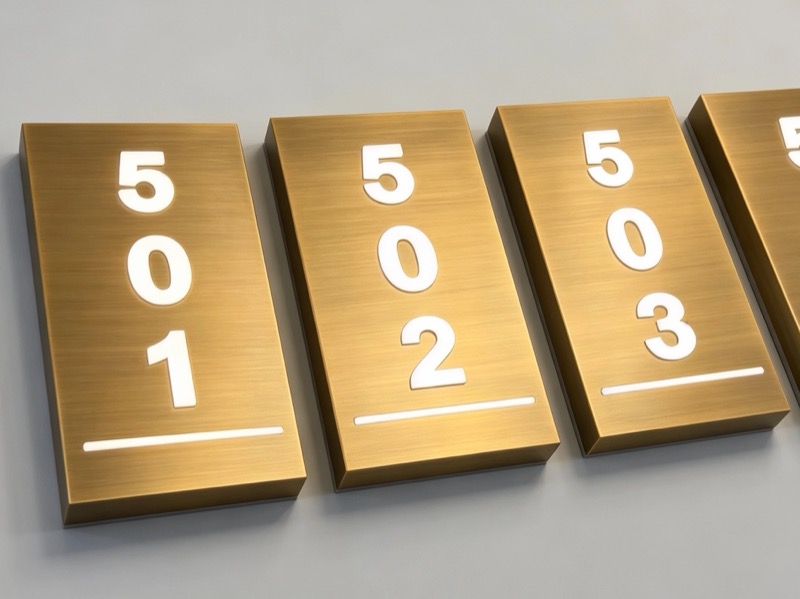
The core difference is the environment each sign must serve.
Outdoor commercial signage must attract attention from a distance while resisting sun, rain, wind, humidity, dust, temperature changes, and sometimes salt air or industrial pollution. Its design must balance visual impact with structural strength, weather resistance, electrical safety, and local installation requirements.
Indoor commercial signage operates in a more controlled environment. It usually prioritizes brand consistency, visual detail, visitor navigation, information clarity, surface quality, and a comfortable user experience. Indoor signs may not face direct weather exposure, but they still need to withstand touching, cleaning, foot traffic, changing layouts, and daily use.
A successful signage program treats indoor and outdoor signs as connected parts of one branded journey:
1. An exterior sign helps people find the business.
2. An entrance sign confirms that they have arrived at the right place.
3. A lobby sign builds confidence and communicates brand positioning.
4. Directional signs help visitors move without confusion.
5. Safety, room-identification, and accessibility signs support everyday operations.
When those stages use disconnected materials, colors, fonts, or illumination styles, the customer experience feels inconsistent. When they are planned as one system, the business appears more established, professional, and easier to navigate.
| Selection Factor | Indoor Commercial Signage | Outdoor Commercial Signage |
|---|---|---|
| Primary purpose | Branding, navigation, information, interior experience | Visibility, customer acquisition, location identification, promotion |
| Typical viewing distance | Close range, usually several feet to a few meters | Medium to long range, often from roads, parking areas, or sidewalks |
| Main environmental risks | Fingerprints, scratches, cleaning chemicals, foot traffic, interior lighting glare | UV exposure, rain, wind, corrosion, dust, temperature variation |
| Common materials | Acrylic, brushed stainless steel, aluminum, PVC, wood, glass, fabric, vinyl | Aluminum, stainless steel, galvanized steel, acrylic, polycarbonate, weather-resistant vinyl |
| Lighting priority | Balanced, comfortable, low-glare illumination | High brightness, day-and-night readability, weatherproof components |
| Installation complexity | Wall mounting, suspended mounting, adhesive fixing, modular frames | Structural anchors, steel fabrication, foundations, electrical routing, sealing |
| Maintenance focus | Surface cleaning, panel updates, graphic replacement | Weather inspection, electrical checks, seal inspection, cleaning, repainting |
| Design emphasis | Detail, finish, readability, brand atmosphere | Scale, contrast, durability, long-distance recognition |
| Budget pattern | Often lower installation cost; may require frequent content updates | Higher initial engineering cost; designed for longer service life |
The right choice is not "indoor is easier" or "outdoor is stronger." Each category has its own engineering, design, and procurement requirements.
Outdoor signage is often the first physical interaction between a business and its audience. A well-positioned pylon sign, illuminated logo, storefront channel letter set, or monument sign can make a location easier to notice, easier to remember, and easier to trust.
For many retail, hospitality, healthcare, industrial, automotive, and commercial-property projects, exterior signage is a long-term brand asset rather than a short-term decoration.
Channel letters are three-dimensional letters, logos, or shapes commonly installed on storefronts, façades, shopping centers, hotels, restaurants, and office buildings.
Popular configurations include:
- Front-lit channel letters with illuminated acrylic faces
- Halo-lit or reverse-lit letters that create a glow around the back
- Front-and-back-lit letters for stronger nighttime visibility
- Non-illuminated metal letters for premium architectural branding
- Open-face channel letters for retro or decorative environments
Channel letters are especially effective when a company needs its name or logo to remain visible after dark. Their final performance depends on face material, LED layout, color consistency, electrical protection, letter depth, mounting method, and viewing distance.
Pylon signs are freestanding structures typically placed near entrances, roads, parking lots, fuel stations, industrial parks, retail developments, and business campuses.
They are useful when a building sits back from the road or when multiple tenants need clear identification. A pylon sign may include:
- Illuminated logo boxes
- Changeable tenant panels
- Digital displays
- Directional arrows
- Freestanding monument-style bases
- Single-sided or double-sided message areas
Because these signs are exposed to wind forces, their structural design should be based on site conditions, sign dimensions, material weight, mounting height, and local building requirements. Outdoor sign engineering should never be treated as an afterthought.
A monument sign sits close to ground level and is often used at corporate parks, schools, hotels, residential communities, hospitals, and premium retail developments.
Compared with tall pylon signs, monument signs usually create a more architectural appearance. They can incorporate aluminum panels, stone textures, metal letters, illuminated logos, digital message centers, or landscaping integration.
Building-mounted outdoor signs include:
- Flat-cut metal letters
- Acrylic logo signs
- Light boxes
- Cabinet signs
- Blade signs
- Wall murals
- LED neon-style signs
- Large-format printed graphics
The best option depends on façade material, wall strength, building height, viewing angle, branding needs, and local installation rules.
Material selection has a direct impact on service life, maintenance frequency, appearance, and total project cost.
| Material | Advantages | Best Applications | Considerations |
|---|---|---|---|
| Aluminum | Lightweight, corrosion resistant, easy to fabricate | Channel letters, cabinets, pylon panels, directional signs | Thickness and finishing quality affect rigidity |
| Stainless steel | Premium appearance, strong, durable | High-end logos, reverse channel letters, monument signs | Higher material and fabrication cost |
| Acrylic | Bright color options, good light transmission | Illuminated faces, light boxes, logo panels | Requires UV-stable grades for exterior use |
| Polycarbonate | High impact resistance | Protective sign faces, high-risk public areas | Can scratch more easily than acrylic |
| Galvanized steel | Strong and economical for structures | Internal frames, posts, foundations | Needs correct coating and corrosion protection |
| Vinyl graphics | Flexible, cost-effective, easy to update | Windows, vehicles, temporary promotions | Outdoor longevity varies by film and ink system |
For exterior illuminated signs, material selection should also consider thermal expansion, drainage, seal integrity, LED heat management, electrical access, and replacement procedures. A sign can look excellent on installation day but fail early if these details are ignored.
Many buyers focus only on whether a sign is "bright enough." In practice, outdoor lighting requires a more balanced evaluation.
A sign should remain readable in daytime conditions, at dusk, and at night without creating excessive glare. It should also provide even illumination across letters and logos. Uneven lighting can make colors look inconsistent and make a premium brand appear poorly maintained.
High-quality LED systems can provide long operating life, but performance gradually declines over time rather than ending suddenly. Useful LED life is commonly described as the point when output falls to 70 percent of its initial level, and good-quality white LED products are often expected to provide approximately 30,000 to 50,000 operating hours or more.
For buyers, this means LED selection should include more than a claimed lifespan. Ask about:
- LED module brand and specification
- Power supply quality
- Heat dissipation design
- Waterproof protection level
- Accessibility for future maintenance
- Color-temperature consistency
- Warranty scope for illumination components
Before approving an outdoor commercial signage project, confirm the following:
1. Viewing distance: Can drivers or pedestrians read the sign early enough to make a safe decision?
2. Sign height: Is the sign visible above parked vehicles, trees, neighboring buildings, or roadside obstructions?
3. Environmental exposure: Does the site experience intense sunlight, heavy rain, strong wind, snow, high humidity, or salt air?
4. Brand visibility at night: Does the business operate or receive visitors after dark?
5. Structural requirements: Does the sign need a foundation, steel support, wall reinforcement, or engineered mounting system?
6. Maintenance access: Can technicians safely reach LED drivers, electrical components, and sign faces?
7. Future flexibility: Will tenant names, promotions, or business information change later?

Indoor signage may operate in a controlled environment, but it has a major influence on how customers, visitors, employees, patients, guests, and partners judge the business.
A visitor who enters a clean, coordinated space with clear reception signage and intuitive directional information often assumes the company is organized and dependable. By contrast, missing room signs, inconsistent materials, outdated graphics, and confusing directions create friction before a conversation even begins.
A lobby sign is often the visual centerpiece of an office, showroom, clinic, hotel, school, or corporate facility. It usually appears behind a reception desk, on an entrance feature wall, or near the main visitor check-in point.
Popular lobby sign options include:
- Brushed stainless-steel letters
- Polished metal logo signs
- Layered acrylic signs
- Backlit logo walls
- Wood-and-metal combinations
- LED neon-style branding
- Printed wall graphics
- Dimensional PVC letters
The right design depends on the desired brand position. A law firm may choose brushed metal letters with subtle halo lighting. A technology company may prefer a layered acrylic logo with colored LED accents. A manufacturer may choose durable metal letters with industrial textures that reflect its production capability.
Wayfinding signage helps people understand where they are, where they need to go, and what actions they should take next.
It is especially important in large or complex environments:
- Office buildings
- Hospitals and clinics
- Schools and universities
- Hotels and conference centers
- Factories and warehouses
- Shopping centers
- Transportation facilities
- Exhibition halls
A well-designed wayfinding system can reduce staff interruptions, prevent visitors from entering restricted areas, improve appointment punctuality, and make large facilities less stressful.
Effective directional signs use:
- Clear wording
- Consistent arrows and symbols
- High contrast
- Logical placement at decision points
- Readable type sizes
- Consistent color coding
- A predictable hierarchy of information
The most attractive sign is not always the most useful sign. In wayfinding projects, clarity must come before decoration.
Room identification signs may include restroom signs, meeting-room signs, office numbers, stairway labels, elevator information, emergency instructions, and restricted-area notices.
In markets where accessibility requirements apply, permanent room or space identification signs may require tactile raised characters and contracted Grade 2 Braille. Such signs also need non-glare finishes and visual contrast to support readability. The U.S. Access Board identifies tactile requirements for permanent rooms and spaces, along with certain exit and elevator-related signs.
For projects serving the U.S. market, tactile signs should be reviewed carefully before production. The required mounting range for raised characters and Braille is generally 48 to 60 inches above the finished floor or ground surface, measured according to the standard's baseline rules.
This is a critical example of why signage should be planned early. Retrofitting non-compliant signs after installation can cost more than producing them correctly from the beginning.
Indoor signage supports a wider range of decorative finishes because it does not face direct weather exposure. However, materials should still be selected based on durability, cleaning requirements, traffic level, and brand style.
| Material | Visual Character | Typical Uses | Practical Benefit |
|---|---|---|---|
| Acrylic | Modern, clean, colorful | Lobby logos, directories, room signs | Easy to shape and layer |
| Brushed metal | Premium, professional, architectural | Reception signs, office logos, directories | Durable and high-end appearance |
| PVC foam board | Lightweight, economical, dimensional | Interior letters, temporary graphics | Cost-effective for large interiors |
| Aluminum composite panel | Smooth, rigid, versatile | Directional signs, wall panels | Stable surface for printed graphics |
| Wood | Warm, natural, distinctive | Hospitality, retail, lifestyle brands | Adds texture and personality |
| Vinyl film | Flexible and easy to update | Glass graphics, walls, promotions | Fast installation and replacement |
| Fabric or acoustic panels | Soft, design-focused | Offices, conference spaces, exhibitions | Can support both branding and sound control |
The strongest signage projects begin with a structured planning process. Instead of asking only, "What type of sign should we buy?" ask, "What should visitors see, understand, and do at each point in their journey?"
Walk through the site as if you are visiting for the first time.
Identify the points where people need information:
- Road approach
- Parking entrance
- Main building entrance
- Reception desk
- Elevators and stairs
- Corridors and intersections
- Meeting rooms or service counters
- Emergency exits
- Loading areas or restricted zones
This simple exercise often reveals signage gaps that are invisible to people who work at the site every day.
Every sign should have a primary function. Common functions include:
- Attract attention
- Identify a location
- Reinforce a brand
- Direct movement
- Provide information
- Promote a campaign
- Improve safety
- Support accessibility
- Display changeable content
A sign that tries to perform too many tasks may become visually crowded. For example, a roadside pylon sign should prioritize fast recognition, while a lobby directory can provide more detailed information.
Do not use indoor-grade materials simply because they cost less at the beginning.
For example, a low-cost interior acrylic panel may look acceptable on an outdoor façade initially, but UV exposure can cause discoloration, warping, cracking, or premature fading. Similarly, an outdoor-grade metal cabinet may be unnecessarily heavy and expensive for an interior directional system.
The best value comes from using the appropriate material for the actual environment.
Many businesses overlook future updates. Tenant names change. Departments move. Product campaigns end. Regulations change. Facilities expand.
For signs that will need regular updates, consider:
- Modular directory panels
- Replaceable printed inserts
- Magnetic or slide-in information holders
- Digital wayfinding displays
- Changeable tenant strips
- Standardized panel sizes
A modular strategy can reduce future replacement costs and help maintain a consistent visual system as the business evolves.
From a manufacturing perspective, the lowest quotation is rarely the lowest long-term cost.
A cheaper sign may use thinner metal, lower-grade acrylic, insufficient sealing, poor-quality LEDs, limited drainage, or inaccessible power supplies. These shortcuts may not be visible in a product photograph or basic quotation, but they can lead to fading, water ingress, uneven illumination, electrical failures, or expensive service calls later.
When comparing quotations, evaluate the total ownership cost:
Total Ownership Cost=Initial Sign Cost+Installation Cost+Maintenance Cost+Energy Cost+Replacement Cost
A higher-quality outdoor sign may require a larger upfront investment, but it can provide better appearance, fewer repairs, more stable lighting, and a longer replacement cycle. The same principle applies indoors: durable modular systems can be more economical than repeatedly replacing individual low-cost signs.
Before selecting a commercial signage supplier, ask:
- What materials are specified for the sign face, returns, frame, and mounting system?
- Is the design suitable for indoor or outdoor use?
- What protection is used for electrical components and cable entry points?
- How will the sign be installed on the actual site surface?
- Can the lighting components be accessed for maintenance?
- Is the color finish UV resistant where required?
- Are drawings provided before production?
- Can the supplier support custom sizes, branding colors, multilingual content, or special mounting needs?
- What is included in the warranty?
- How will replacement parts be handled in the future?
At Landea Signs Co., Ltd., we recommend discussing these points during the design stage, not after fabrication begins. Early technical coordination helps avoid costly revisions, installation conflicts, and material mismatches.
A sign can look beautiful in a catalog but perform poorly at the installation site. Always evaluate weather exposure, cleaning practices, mounting conditions, and expected service life.
Small text may look elegant close up but become unreadable from a road or parking lot. Sign size, letter height, contrast, and illumination should match the real viewing distance.
Lighting affects visibility, safety, brand color, energy use, and maintenance. It should be designed into the sign from the beginning.
Exterior signs, lobby logos, room signs, and wayfinding panels should not appear to come from unrelated companies. Use a coordinated visual system with consistent brand colors, typography, icon styles, and material language.
A strong sign needs a suitable mounting surface, correct anchors, proper electrical preparation, and safe access. Even the best fabricated sign can fail if installation details are overlooked.
The best commercial signage is not simply visible. It is purposeful. It guides people, reinforces trust, protects your brand image, and continues performing long after installation.
Whether you need an illuminated outdoor pylon sign, durable channel letters, a custom monument sign, a refined lobby logo, modular directional signage, or a complete indoor and outdoor signage package, Landea Signs Co., Ltd. can help turn your brand requirements into a practical, custom-built solution.
Share your drawings, logo files, site photos, required dimensions, installation conditions, and target application with our team. We can help you evaluate materials, recommend suitable sign structures, develop production drawings, and create a coordinated signage solution for your business environment.

Indoor commercial signage focuses on interior branding, navigation, and visual detail. Outdoor commercial signage must also provide strong visibility while resisting weather, UV exposure, wind, moisture, and temperature changes.
Aluminum, stainless steel, galvanized steel structures, UV-stable acrylic, polycarbonate, and weather-resistant vinyl are commonly used. The best material depends on location, sign type, climate, illumination needs, and budget.
Yes. Channel letters can be designed for both environments, but outdoor versions require weatherproof construction, UV-resistant materials, appropriate electrical protection, and mounting systems suitable for exterior exposure.
Use properly designed LED illumination, high-contrast colors, readable letter sizing, suitable sign placement, and lighting that is bright enough for the environment without producing distracting glare.
Common indoor signage includes lobby signs, reception logos, directional signs, floor directories, room identification signs, restroom signs, safety signs, accessibility signs, and promotional wall graphics.
Modular signs make it easier to update tenant names, office locations, room functions, and directional information without replacing the entire sign system. They are particularly useful in multi-tenant buildings, hospitals, schools, and changing office environments.
In many cases, yes. A single experienced manufacturer can help maintain consistent branding, coordinate materials and colors, streamline technical communication, and simplify project management across multiple sign categories.
1. U.S. Access Board. "[Chapter 7: Signs]." Guidance on tactile signs, Braille, visual contrast, and mounting requirements for accessible building signage.
2. U.S. Department of Energy. "[LED Basics]." Information on LED useful life, lumen depreciation, and typical operating-hour expectations for quality LED products.
3. ENERGY STAR. "[Learn About LED Lighting]." Explanation of LED lifetime measurement and light-output depreciation.
4. U.S. Access Board. "[ADA Guides: Chapter 7—Signs PDF]." Detailed guidance concerning tactile characters, contracted Braille, contrast, finish, and sign placement.
5. Meca Enterprises. "[Wind Loads on Solid Signs]." Overview of wind-load considerations for solid, elevated, and wall-mounted signs.


