From idea to market-ready product, our SIGNS solutions make every stage easier, faster. Discover How We Help

Views: 222 Author: Landea Signs Publish Time: 2026-04-04 Origin: Site


Content Menu
● What "Weatherproofing the Dots" Really Means
● Interior vs. Exterior Braille Signs: Key Differences
>> Core Differences Between Interior and Exterior Braille Signs
>> Interior vs. Exterior Braille Sign Factors Table
● How ADA and Accessibility Compliance Shape Design
>> ADA and Tactile Standards That Apply Everywhere
>> Where Exterior Braille Signs Raise the Bar
● Material Choices: Keeping Braille Dots Intact Indoors
>> Common Interior Braille Sign Materials
>> Interior Weathering Risks You Should Not Ignore
● Exterior Braille Signs: Beating UV, Moisture, and Temperature Swings
>> Exterior-Grade Materials That Protect Braille Dots
>> Best Practices to Weatherproof the Dots Outdoors
● How Manufacturing Methods Impact Durability
>> Common Braille Fabrication Methods
>> Matching Method to Environment
● Practical Specification Steps for Architects and Facility Managers
>> 7-Step Checklist to Weatherproof Braille Signs
● How Landea Signs Supports Long-Term Braille Performance
>> Manufacturing Expertise and Quality Control
>> Typical User Feedback and Field Experience
● Call to Action: Get the Right Braille Signs for Each Environment
● FAQs on Interior vs. Exterior Braille Signs
Designing Braille signs that truly work for people with visual impairments is about more than meeting code—it is about making sure every raised dot stays readable, day after day, in the real world. In my work with B2B buyers and facility managers, I see one mistake over and over again: treating interior and exterior Braille signs as if they face the same environment. They do not—and if you ignore that, your Braille dots will yellow, flatten, or even fall off long before the sign's expected service life. [novapolymers]

When we talk about weatherproofing Braille dots, we are really talking about protecting three things: legibility, adhesion, and structural integrity over time. Exterior Braille signs must endure UV exposure, moisture, temperature swings, and mechanical abuse, while interior signs battle cleaning chemicals, human contact, and building traffic patterns. [blinksigns]
From an expert manufacturing perspective, that means making deliberate choices about:
- Substrate (acrylic, aluminum, photopolymer, etc.) [caribee-sign]
- Braille dot construction (applied bead, CNC-routed, photopolymer, UV-printed) [novapolymers]
- Finishes and coatings (UV clear coats, anti-graffiti, non-glare) [blinksigns]
- Installation methods (mechanical fixing, adhesives rated for exterior or interior use) [excelsiormarking]
For a company like Landea Signs Co., Ltd., which manufactures both illuminated and tactile signage for global brands, the key is specifying the right combination for the environment instead of offering a one-size-fits-all "ADA sign." [linkedin]
From a facilities and compliance perspective, interior and exterior Braille signs may share the same accessibility rules, but they live very different lives. [access-board]

- Environment severity: Exterior signs must withstand constant weather exposure; interior signs are usually climate controlled. [blinksigns]
- Material selection: Exterior Braille signs demand more robust, weatherable materials such as aluminum or exterior-grade photopolymer; interiors can use a wider mix, including standard acrylic and laminates. [sunrisesigns]
- Service life expectations: Exterior Braille signs are often expected to remain serviceable for 8–15 years; interior signs may have shorter refresh cycles tied to branding updates. [blinksigns]
- Regulatory overlay: ADA/tactile rules apply to both, but exterior signs also intersect with zoning, building façades, and sometimes fire-safety signage standards. [access-board]
| Factor | Interior Braille Signs | Exterior Braille Signs |
|---|---|---|
| Typical location | Doors, corridors, restrooms, offices | Entrances, parking, building IDs, exterior wayfinding |
| Primary risks | Cleaning agents, frequent touch, minor impacts | UV, rain, snow, humidity, temperature swings, vandalism |
| Preferred materials | Acrylic, standard photopolymer, laminates | Aluminum, exterior-grade photopolymer, UV-stable acrylic |
| Expected lifespan | 5–10 years, often aligned with interior renovation cycles | 8–15 years in harsh climates if materials and coatings are chosen well |
| Finish requirements | Non-glare, easy to clean, visually on-brand | Non-glare, UV-resistant, often anti-graffiti or anti-corrosion |
| Mounting approach | Foam tape, silicone, mechanical standoffs on drywall | Mechanical fixing, construction-grade adhesives on masonry/metal |
| Compliance focus | ADA tactile rules, wayfinding clarity | ADA tactile plus local codes, durability and visibility at distance |
Any discussion of interior vs. exterior Braille signs has to start with ADA and equivalent accessibility standards. These rules dictate Braille dot height, shape, spacing, character contrast, and non-glare finishes, regardless of where the sign is installed. [excelsiormarking]
According to U.S. ADA guidance, tactile signs must use raised characters paired with Grade 2 Braille and must have a non-glare surface and adequate contrast between text and background. Placement rules cover height and location relative to doors, so the Braille can be found consistently by touch. [blinksigns]
From a manufacturer's standpoint, this means:
- Consistent dot profile: Smooth, domed dots with precise diameter and height. [coldesi]
- Repeatable processes: CNC-routing, photopolymer, or UV-printed Braille must be calibrated not to "over-build" or flatten under clear coats. [novapolymers]
- Non-glare finishes: Glossy, reflective surfaces are avoided to reduce glare for low-vision users. [access-board]
Exterior use adds additional functional requirements that are not directly spelled out in ADA text but are critical in practice. [novapolymers]
- Weather resistance: The lettering and Braille must remain readable despite UV and moisture, which calls for weather-resistant materials and coatings. [sunrisesigns]
- Structural integrity: Signs must resist warp, delamination, and dot loss under intense sun plus freeze–thaw cycles. [novapolymers]
- Installation robustness: Wall structures, adhesives, and mechanical fasteners must match the substrate (e.g., masonry vs. metal). [excelsiormarking]
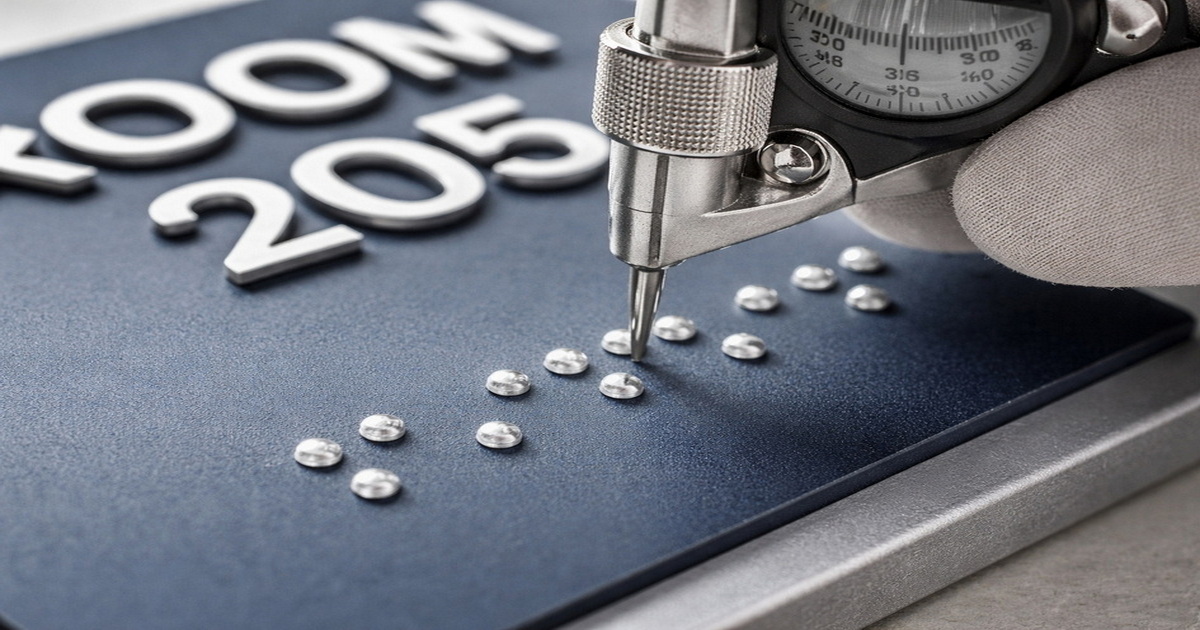
Many facility owners assume any "ADA acrylic sign" will perform the same indoors, but that is not what we see in the field. Interior environments vary widely—from quiet corporate offices to chlorinated indoor pools—and material choice has a direct impact on Braille longevity. [novapolymers]
Based on current industry guidance and recent materials research, interior Braille signs typically use: [allstarsignsinc]
- Acrylic: Clean, modern look, excellent for corporate and retail interiors.
- Standard photopolymer: Single-sheet construction where Braille and tactile elements are formed as part of the substrate, reducing delamination risk. [novapolymers]
- Laminated systems: Printed or engraved face with applied Braille beads for flexibility in branding.
- Metals for high-traffic interiors: Brushed stainless or aluminum where vandalism or abrasion is a concern. [allstarsignsinc]
For a manufacturer like Landea Signs, the goal is to match these materials to brand colors and architectural finishes while keeping tactile features fully compliant. [landeasigns]
Even when signs are indoors, there are subtle "weathering" forces: [caribee-sign]
- Cleaning chemicals: Aggressive cleaners can fog acrylic or soften adhesives, which may eventually loosen Braille beads.
- High humidity zones: Interior pools, spas, and industrial wash areas behave more like exterior environments, requiring upgraded materials. [novapolymers]
- Constant hand contact: Room IDs and elevator signs face heavy tactile use, which can polish surfaces and flatten poorly formed dots over time.
A practical specification tip: treat indoor water parks, locker rooms, and parking garages as "exterior by nature," and upgrade those Braille signs to exterior-grade constructions even if they are technically indoors. [novapolymers]
Exterior Braille signs fail for predictable reasons, and as a manufacturer we see the same pattern: yellowed faces, cracked layers, and partially missing dots. All of these come down to material choice, fabrication quality, and installation practices. [tuppsigns]
For true exterior Braille signage, the industry increasingly favors: [sunrisesigns]
- Aluminum (painted or anodized): Strong weather resistance, good dimensional stability, and excellent base for tactile and Braille inserts.
- Exterior-grade photopolymer: Engineered to resist cracking, warping, and moisture-induced delamination in harsh climates. [novapolymers]
- UV-stable acrylics or polycarbonate: Used in some systems with appropriate UV-blocking coatings and mechanical construction. [blinksigns]
When fabricated correctly, exterior-grade photopolymer signs can remain structurally sound after years of exposure to a broad range of climate conditions while maintaining sharp, tactile Braille. Pairing these materials with UV-protective and waterproof coatings helps signs remain legible and intact for 8–15 years outdoors. [blinksigns]
From an expert fabrication standpoint, there are several non-negotiables when weatherproofing exterior Braille: [tuppsigns]
1. Use high-quality sealants and overlaminates to lock out moisture and protect raised dots from UV degradation.
2. Control curing and bonding of photopolymer and coatings to prevent bubble formation and layer separation.
3. Design for drainage and ventilation so water does not pool behind or inside the sign structure.
4. Specify impact resistance in areas prone to vandalism or accidental impact, such as parking garages or exterior stairwells.
A real-world example: Nova Polymers reports that exterior-grade photopolymer, when combined with proper sealing and installation, resists cracking, warping, and delamination even in climates with dramatic swings in temperature and humidity. This aligns with what we see when we compare high-quality installations to low-cost imports that skip these steps and start failing in just a few seasons. [tuppsigns]

Beyond what material you choose, how you create the Braille dots is crucial for weatherproofing. Different manufacturing methods carry different strengths for interior vs. exterior use. [landeasigns]
Industry-standard options include: [landeasigns]
- Applied bead Braille: Individually placed beads bonded into drilled holes or onto the surface; flexible for many substrates when done precisely. [landeasigns]
- CNC-routed / engraved Braille: Braille pockets or dots formed directly into the substrate, often paired with in-fill or caps. [landeasigns]
- Photopolymer Braille: Dots formed as part of a single photopolymer sheet that hardens under UV exposure. [novapolymers]
- UV-printed Braille: Built-up UV ink dots using specialty UV-LED printers designed for ADA signage. [coldesi]
According to sources focused on ADA production, UV-LED printers can streamline ADA-compliant Braille signage with durable, high-quality raised text and Braille when processes are tightly controlled. [coldesi]
From a weatherproofing perspective: [landeasigns]
- Interior signs: Applied bead Braille and UV-printed Braille can perform very well if adhesion is strong and signs are not subjected to extreme temperature swings or harsh chemicals. [landeasigns]
- Exterior signs: Exterior-grade photopolymer and metal-based systems tend to outperform low-cost applied or printed methods because they integrate Braille into a single, robust structure. [landeasigns]
Landea Signs, for example, uses CNC machining and controlled bead application for precision Braille, backed by ISO and UL-certified manufacturing and strict QC, which is essential when producing for overseas projects with longer warranty expectations. [landeasigns]
A common pain point we hear from specifiers is: "I do not have time to become an ADA signage expert." To make interior vs. exterior Braille sign decisions easier, you can follow a simple step-by-step process. [allstarsignsinc]
1. Define the environment: Classify each sign location as interior, exterior, or "interior but exterior by nature" (parking garages, pool areas, loading docks). [novapolymers]
2. Quantify exposure: Note UV intensity, moisture (rain, sprinklers, humidity), and temperature swings for each zone. [blinksigns]
3. Select materials accordingly:
- Interior: acrylic or standard photopolymer for offices and corridors. [caribee-sign]
- Exterior: aluminum or exterior-grade photopolymer plus UV coatings. [sunrisesigns]
4. Specify Braille method: Choose photopolymer or CNC/metal systems for harsh exteriors; allow applied bead or UV-printed Braille for controlled interiors with reputable vendors. [coldesi]
5. Confirm compliance: Check that suppliers follow ADA or relevant local tactile guidelines, including Grade 2 Braille, dot profile, and non-glare finishes. [access-board]
6. Demand documented durability: Ask for data, warranties, or case studies showing performance in similar climates and applications. [tuppsigns]
7. Plan for maintenance and replacement: Integrate signage checks into facility maintenance and budget for replacement cycles based on environment severity. [blinksigns]

As a global sign manufacturer, Landea Signs Co., Ltd. focuses on producing ADA and Braille signage that balances design, compliance, and durability. For B2B buyers, we see ourselves not only as a factory, but as an engineering partner helping you avoid hidden lifetime costs. [linkedin]
Landea's production of CNC Braille signs is ISO and UL certified, with strict QC and fast lead times for OEM orders. Coupled with deep export experience, this allows us to deliver consistent tactile quality across multiple projects and geographies. [linkedin]
In our own expert content, we highlight applied bead Braille and CNC machining as precision methods that, when paired with appropriate substrates and coatings, offer excellent durability and ADA compliance. We also work with customers to align sign systems with other branded elements such as LED channel letters, stainless steel letters, and acrylic signage for a consistent visual identity. [linkedin]
From project feedback and user comments we encounter, facility teams tend to value: [allstarsignsinc]
- Predictable lead times and consistency across large rollouts.
- Signs that "just last" outdoors, saving them from early replacement and compliance risk.
- Tactile clarity—users repeatedly note that smoother, well-formed Braille dots are easier to read by touch.
Those insights feed back into our material recommendations and production choices, which is why we are careful to differentiate interior and exterior Braille solutions rather than taking a single-technology approach.
Choosing between interior and exterior Braille signs is not just a design decision—it is a long-term accessibility and risk management decision that directly affects users and compliance. If you are planning a new build or retrofit and want to ensure your Braille dots stay readable for the full life of the project, you can work directly with manufacturers like Landea Signs Co., Ltd. to specify environment-appropriate materials, fabrication methods, and coatings from day one. [linkedin]
For project reviews, value engineering, or OEM production of interior and exterior Braille systems, contact Landea's engineering team with your site conditions and sign schedule so we can recommend a tailored, code-compliant solution.
Q1: Can I use the same Braille sign construction indoors and outdoors to simplify procurement?
In most cases, it is better to upgrade exterior signs to more robust materials and coatings while using cost-effective, compliant options indoors, because exterior environments accelerate wear and failure. [caribee-sign]
Q2: How long should an exterior Braille sign last?
With exterior-grade photopolymer or metal substrates plus UV and moisture protection, many sources indicate a service life of roughly 8–15 years, depending on climate and installation quality. [allstarsignsinc]
Q3: Are UV-printed Braille dots reliable outdoors?
UV-printed Braille produced on dedicated ADA-capable UV printers can be very durable, but for harsh, long-term exterior applications many specifiers still favor photopolymer or metal-based systems for additional safety margin. [coldesi]
Q4: Do I need different cleaning procedures for Braille signs?
Yes. Aggressive solvents and abrasive pads can damage finishes and Braille dots, especially on acrylic and applied bead systems, so most experts recommend mild detergents and soft cloths. [tuppsigns]
Q5: What is the biggest mistake people make with exterior Braille signage?
The most common mistakes are using interior-grade materials outdoors and ignoring drainage and mounting details, which leads to moisture ingress, delamination, and loss of tactile readability. [excelsiormarking]
1. Modulex – Interior Signage vs. Exterior Signage: Key Considerations (2024).https://modulex.com/uncategorized/interior-signage-vs-exterior-signage-key-considerations/
2. Blink Signs – Interior Signage vs Exterior Signage: Which is Right for Your Business? (2025).https://blinksigns.com/interior-signage-vs-exterior-signage/
3. Caribee Sign – ADA Sign Materials: Choosing Durable & Stylish Options (2026).https://www.caribee-sign.com/blog/ada-sign-materials-choosing-the-right-options/
4. Nova Polymers – Choosing Novacryl® for Your ADA Braille Signage in 5 Simple Steps (2025).https://novapolymers.com/novacryl-braille-signage-simple-steps/
5. Excelsior Marking – ADA/Braille Sign Guidelines.https://www.excelsiormarking.com/ada-braille-sign-guidelines
6. Blink Signs – ADA Sign Placement & Installation Guide 2025.https://blinksigns.com/ada-sign-placement-installation-guide-2025/
7. Landea Signs Co., Limited – Company profile (LinkedIn).https://www.linkedin.com/company/landea-signs-co.-ltd
8. Sunrise Signs – Ultimate Guide to ADA Tactile Signage Materials (2025).https://www.sunrisesigns.com/our-blog/ultimate-guide-to-ada-tactile-signage-materials
9. Nova Polymers – Exterior-Grade Photopolymer for ADA Signs (2025).https://novapolymers.com/exterior-grade-photopolymer-signs/
10. Landea Signs – Applied Bead Braille (news article).https://www.landeasigns.com/news.html
11. Star Signs – ADA Braille Signage: Best Compliance Practices (2025).https://www.allstarsignsinc.com/ada-braille-signage-best-compliance-practices/
12. Tupp Signs – Why Most ADA Signs Fail and How Graphic Components Gets It Right Every Time (2025).https://tuppsigns.com/why-most-ada-signs-fail-and-how-graphic-components-gets-it-right-every-time/
13. Landea Signs – CNC Braille Sign product page.https://www.landeasigns.com/cnc-braille-sign.html
14. U.S. Access Board – ADA Guides Chapter 7 – Signs.https://www.access-board.gov/files/ada/guides/signs-ADA.pdf
15. ColDesi – Streamlining ADA-Compliant Braille Signage with UV Printing (2025). https://coldesi.com/uv-printers/streamlining-ada-compliant-braille-signage-with-uv-printing/


