From idea to market-ready product, our SIGNS solutions make every stage easier, faster. Discover How We Help

Views: 258 Author: Landea Signs Publish Time: 2026-10-05 Origin: Site


Content Menu
● Lightbox Sign Styles for Different Business Needs
>> Wall-Mounted Lightbox Signs for Storefronts
>> Double-Sided Projecting Lightbox Signs
>> Pylon and Pole-Mounted Lightbox Signs
>> Multi-Tenant Lightbox Signs
>> Custom-Shaped and Indoor Lightbox Signs
● Lightbox Signs vs. Illuminated Lettering
● How to Make an Outdoor LED Lightbox Sign Easier to Read
>> Start With the Viewing Position
>> Evaluate Daytime and Nighttime Appearance
● Three Project Lessons From Published Lightbox Examples
>> Mountain Gate Plaza: Plan for Tenant Changes
>> Midici's: Connect Identification With the Entrance
>> Red Barn Market: Coordinate the Overall Identity
● Calculating LED Lightbox Sign Operating Costs
● Outdoor Durability, Electrical Safety, and Service Access
>> Specify the Installation Environment
>> Check Requirements in the Destination Market
● A Practical Brief for Custom Lightbox Sign Procurement
● Approve the Sign Before It Ships
● Plan Your Custom Sign With Landea Signs Co., Ltd.
>> 1. What is the best lightbox sign style for a small storefront?
>> 2. Can an existing lightbox sign be converted to LED lighting?
>> 3. Are lightbox signs better than illuminated channel letters?
>> 4. Can the graphics on a lightbox sign be changed?
>> 5. How much electricity does an LED lightbox sign use?
>> 6. What information is needed for an accurate quotation?
Lightbox sign styles can transform how customers recognize your business, but choosing the right custom LED lightbox sign takes more than selecting a shape or color. The sign must suit your building, communicate clearly from the customer's approach, and remain practical to operate and maintain. For businesses comparing lightbox signs with illuminated lettering, the best starting point is the message, viewing distance, and installation environment.
At Landea Signs Co., Ltd., our focus is personalized illuminated lettering solutions. This guide takes a manufacturer-oriented approach to comparing sign styles, preparing specifications, and making informed purchasing decisions.
The central principle is readability: a sign should help people identify your business, not simply attract attention.
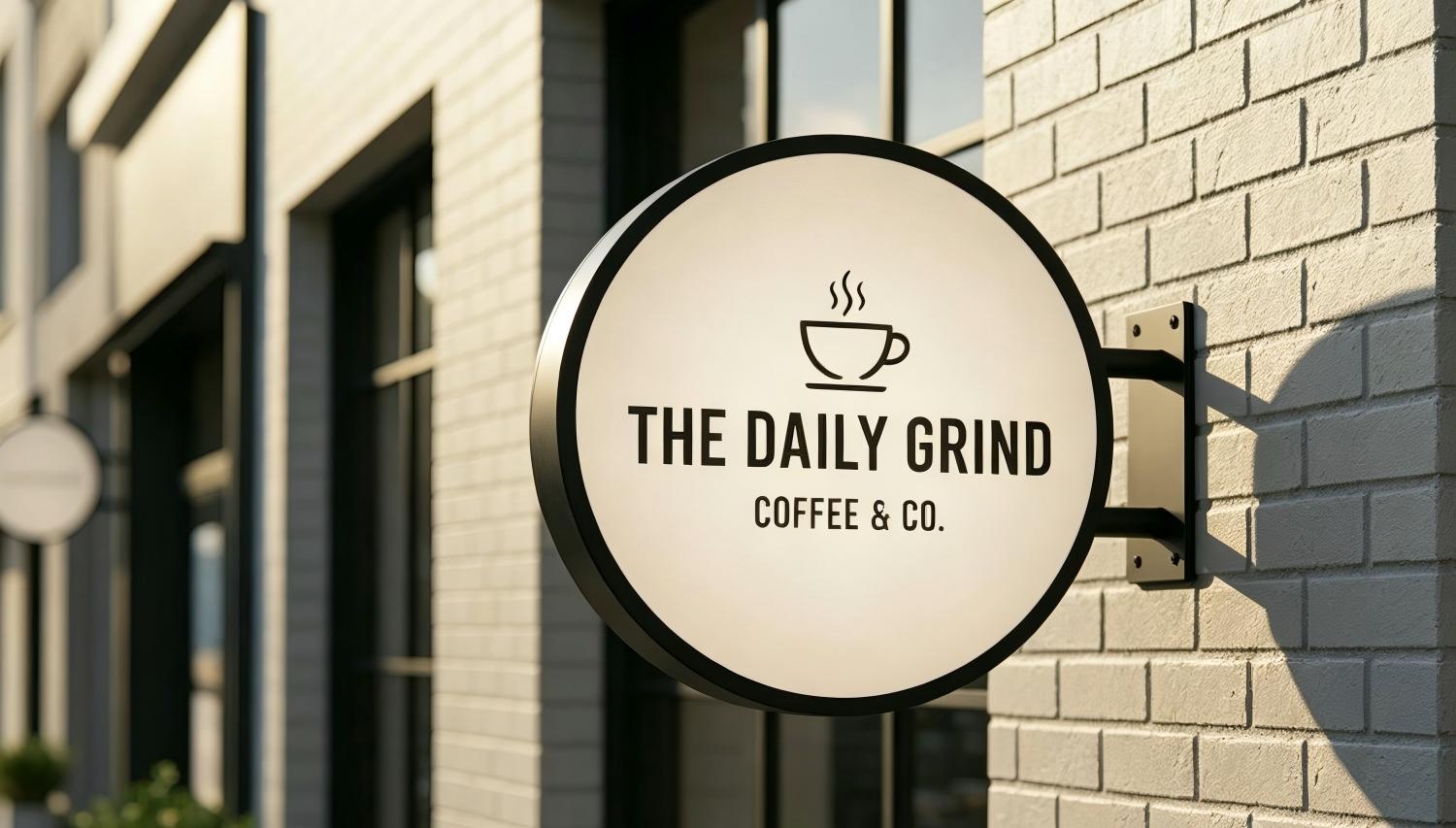
A lightbox sign is an illuminated cabinet with a translucent display face. Internal lighting passes through the face to reveal a business name, logo, graphic, or directory.
Unlike individually formed illuminated letters, a lightbox generally presents its message within one continuous frame. Its face can accommodate several design elements together, making it useful when a business needs more than a name alone.
A typical LED lightbox sign includes:
- A cabinet that supports the assembly.
- A translucent acrylic, polycarbonate, or specified flexible face.
- Graphics suitable for backlighting.
- LED modules and compatible power supplies.
- Mounting hardware and electrical connections.
- Access provisions for inspection and servicing.
Materials and construction should match the application. An indoor reception sign and an exposed roadside sign should not be treated as the same product with different dimensions.
A wall-mounted lightbox attaches to a building façade and provides a defined display area for the business identity.
This style suits retailers, restaurants, clinics, and service businesses that need their name and logo presented together. It can also help organize a visually complex identity into one recognizable composition.
However, a sign facing the road may be difficult to read from an approaching vehicle if customers see it at a sharp angle.
Before choosing this format, assess:
- Where customers first see the building.
- Whether parked vehicles or landscaping obstruct the face.
- How the sign relates to windows, awnings, and neighboring signs.
- Whether the lettering remains clear when viewed obliquely.
A projecting lightbox extends outward from the building and usually displays graphics on both sides.
It is particularly useful on pedestrian streets and commercial corridors where customers approach along the façade rather than directly toward it.
The cabinet depth, bracket design, and projection distance affect both appearance and installation requirements. Local restrictions may also control clearance above the sidewalk or projection over public space.
Keep the message short. A compact business name or recognizable symbol is usually more effective than squeezing multiple services into a small projecting face.
Pylon and pole-mounted lightbox signs provide identification away from the building, often near a property entrance or roadway.
These signs can serve shopping centers, fuel stations, dealerships, and commercial properties with buildings set back from traffic.
Their effectiveness depends on more than height. The available sightline, approach speed, letter size, and surrounding visual clutter all influence whether drivers can understand the message.
Structural design is also important. The cabinet, supporting structure, foundation, and connections must be appropriate for the site and applicable requirements.
A multi-tenant lightbox organizes several business names within a shared display.
For property managers, replaceable tenant panels can make future changes easier than rebuilding an entire sign face. Nevertheless, consistency matters.
Establish rules for:
- Panel dimensions.
- Logo placement.
- Minimum letter size.
- Background colors.
- Panel replacement procedures.
Without a coordinated layout, one tenant may dominate visually while another becomes difficult to identify.
Custom-shaped cabinets can follow a logo silhouette or complement an architectural feature. They offer differentiation, but unusual shapes may complicate light distribution, face replacement, and access.
Indoor lightbox signs serve a different purpose. In reception areas, showrooms, and branded interiors, they support identification at closer viewing distances.
Indoor brightness should feel comfortable within the space. A sign that looks impressive in isolation may appear harsh beside a reception desk or create distracting reflections on nearby glass.
Lightbox signs and illuminated lettering solve related problems through different visual structures.
A lightbox frames the complete message. Illuminated lettering separates the name into individual characters, allowing the building surface to become part of the design.
| Decision factor | Lightbox sign | Illuminated lettering |
|---|---|---|
| Visual composition | One continuous display face | Individual illuminated characters |
| Detailed graphics | Useful for combined logos and messages | Best assessed against letter and logo construction |
| Architectural appearance | A visible cabinet or framed panel | A dimensional identity integrated with the façade |
| Future changes | Replaceable faces or panels may simplify updates | Name changes may require new letters and mounting work |
| Lighting effect | Light passes through a shared face | Front-lit, halo-lit, or combined illumination |
| Maintenance planning | Access to the cabinet interior | Access depends on individual letters and mounting |
Choose a lightbox when a framed graphic panel supports the message. Consider illuminated lettering when the business name itself should become the principal architectural feature.
Neither format is automatically more effective. The correct choice depends on the site, identity, and customer journey.
Evaluate the sign from where customers actually approach, not only from directly beneath it.
A façade rendering can show an attractive design without revealing a poor viewing angle. Review photographs taken from the street, parking entrance, and pedestrian route.
For roadside locations, customers also need time to recognize the business and make a safe access decision.
Avoid treating a general letter-height guideline as a guaranteed result. Typeface, contrast, road conditions, and message length all affect real-world legibility.
A business name and a clear descriptor often communicate more effectively than a dense list of products, telephone numbers, and promotional claims.
Use a practical hierarchy:
1. Business name or primary logo.
2. Essential descriptor, if needed.
3. Secondary information only when viewing conditions allow it.
Ask what a first-time visitor must understand immediately. Information that requires prolonged reading may belong on another sign or communication channel.
Backlighting can change how colors appear. A graphic that looks accurate on a computer screen may behave differently on a translucent face.
Request an illuminated sample when color matching is important.
Also inspect light distribution. Visible bright spots, darker edges, or shadows behind graphics can distract from the message.
The goal is controlled, even illumination—not maximum brightness regardless of surroundings.
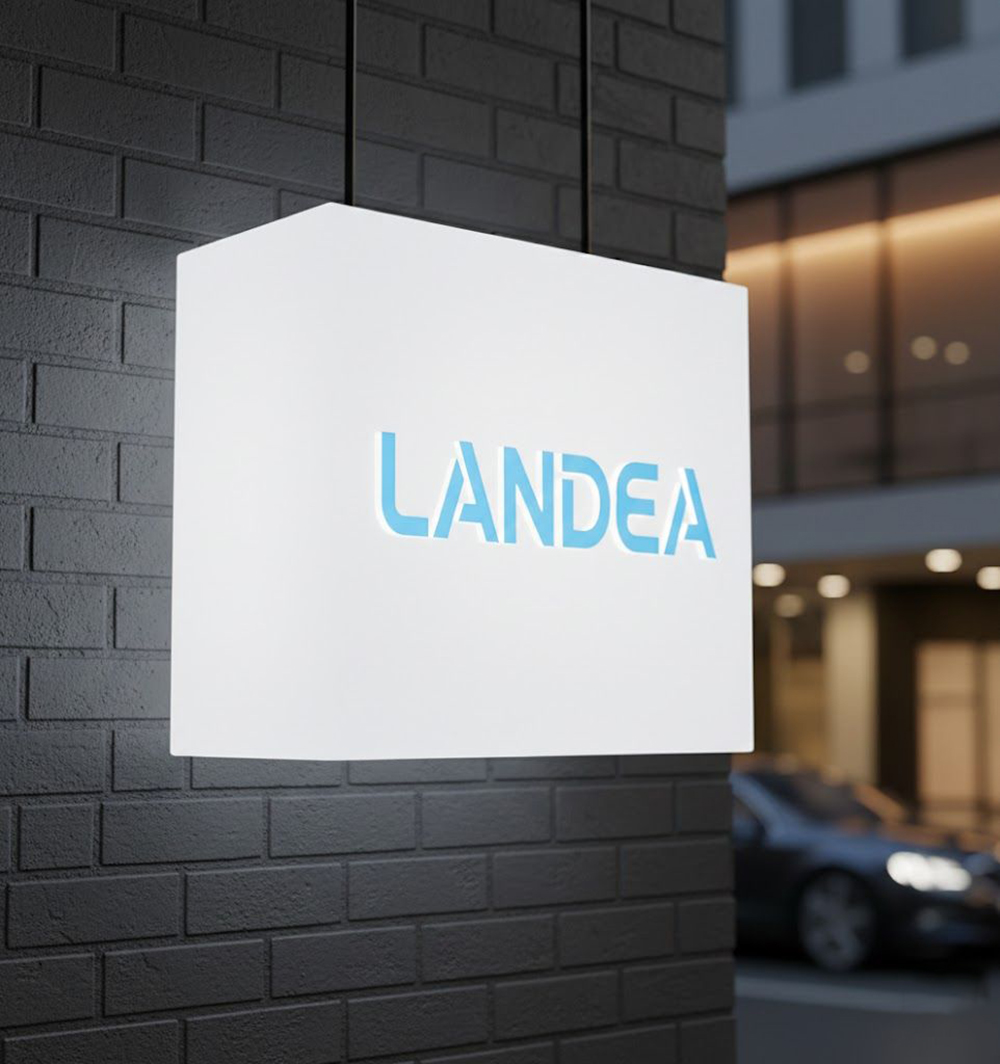
Published examples from Dave's Signs show how different applications shape sign design. These are that company's projects, not projects completed by Landea Signs Co., Ltd.
The Mountain Gate Plaza example uses a pylon arrangement with removable lightbox panels.
The useful procurement lesson is to consider future tenant changes before fabrication. Panel replacement should be practical, and the overall display should retain a consistent hierarchy as occupants change.
The restaurant example demonstrates how an exterior lightbox can combine a business name and visual identity.
For restaurant buyers, the broader lesson is to connect the sign with the arrival experience. Check whether approaching customers can identify the restaurant and locate the entrance without confusion.
The Red Barn Market example highlights a coordinated red visual theme.
For other businesses, consistency across the sign, façade, and surrounding graphics can support recognition. However, color coordination should not come at the expense of clear lettering or suitable contrast.
These examples illustrate design approaches. They do not establish a guaranteed increase in visits or revenue.
An energy comparison should use the proposed system's input power and operating schedule, rather than a broad claim about LED savings.
Annual electricity consumption can be estimated as:
Annual kWh = input watts ÷ 1,000 × operating hours per day × operating days.
For illustration, a 120-watt sign operating 12 hours daily throughout a 365-day year uses approximately 525.6 kWh.
At an assumed electricity rate of $0.15 per kWh, the annual electricity cost would be approximately $78.84.
This is a calculation example, not a Landea product specification or an electricity-price forecast.
For an existing sign, compare:
- Measured or documented input power.
- Actual switching hours.
- Proposed replacement power.
- Electricity tariffs.
- Maintenance and installation costs.
Timers, photocells, and compatible dimming controls can help manage operating hours or output. Select controls for the actual application and applicable local restrictions.
An LED conversion may also reduce maintenance demands, but it does not eliminate servicing. Power supplies, wiring, graphics, seals, and mounting components still need attention.
Describe whether the sign will face direct rain, strong sunlight, coastal conditions, dust, or temperature extremes.
A component's weather rating does not prove that the completed sign assembly is suitable for the same exposure.
Discuss cabinet construction, drainage, electrical protection, face materials, and service access together. Also clarify how water management will be maintained after installation.
For United States projects, relevant electric-sign standards include UL 48 for electric signs, UL 879 for sign components, and UL 879A for LED sign and retrofit kits.
The presence of certified components alone does not establish certification of the completed sign.
For other markets, confirm the applicable electrical, structural, installation, and documentation requirements with qualified local professionals.
Ask the supplier to identify exactly what certification or test documentation applies to the proposed product. Avoid relying on a generic compliance statement.
A low purchase price can become expensive if ordinary repairs require extensive dismantling.
Before ordering, establish:
- How technicians will reach the LEDs and power supplies.
- Whether the face is removable.
- What lifting equipment may be required.
- Whether replacement parts are available.
- Who will perform local servicing.
Service access is part of the design, not an issue to address only after a failure.
A detailed brief helps manufacturers provide comparable proposals and reduces avoidable revisions.
Send the following information:
1. Installation address and destination market.
2. Daytime photographs and approach views.
3. Available mounting dimensions.
4. Vector logo files and brand-color references.
5. Required sign style and quantity.
6. Indoor or outdoor exposure conditions.
7. Electrical supply information.
8. Target installation schedule.
9. Known permit, landlord, or property requirements.
10. Maintenance and documentation expectations.
For export projects, also clarify packaging, shipping responsibilities, installation drawings, and replacement-part support.
When comparing quotations, check what each price includes. Two similarly sized signs may differ substantially in face material, cabinet depth, electrical design, mounting hardware, documentation, and warranty terms.
A final review should verify more than spelling and dimensions.
Request suitable evidence of:
- Overall dimensions and mounting locations.
- Graphic alignment and logo proportions.
- Illuminated appearance.
- Input-power specifications.
- Access-panel arrangement.
- Electrical and installation documentation.
- Packaging appropriate to the shipment.
Photographs and video are useful, but camera exposure can conceal uneven lighting or distort color. Where appearance is critical, agree on samples and acceptance criteria before production.
A successful sign begins with a clear understanding of the site and the message.
For a personalized illuminated lettering solution, send Landea Signs Co., Ltd. your logo, installation photographs, approximate dimensions, destination market, and preferred lighting effect.
Explain whether you want a framed lightbox appearance or individually illuminated letters. This helps establish the right visual direction and the questions that must be resolved before fabrication.
A wall-mounted lightbox suits many storefronts, while a projecting sign can improve identification for people approaching along the building. Choose according to the available sightlines, mounting space, and local restrictions.
Often, but the existing cabinet, wiring, face, and structure must be assessed first. Specify a compatible retrofit system and qualified installation rather than assuming that replacing the light source is sufficient.
Neither is universally better. Lightboxes suit a continuous graphic display. Illuminated channel letters suit dimensional business names and architectural branding. Compare both against the actual installation.
Many designs allow face or panel replacement. Confirm the replacement method before ordering, especially for multi-tenant properties or businesses expecting future branding changes.
Consumption depends on system input power and operating hours. Request the proposed wattage, then calculate annual kWh using the actual schedule. Sign dimensions alone do not provide a reliable electricity estimate.
Provide dimensions, site photographs, vector artwork, installation location, exposure conditions, electrical information, quantity, and schedule. Include known approval requirements and clarify who will handle installation.
1. Dave's Signs. "Lightbox Sign Styles That Help Rev Up Your Advertising Game." Source for the original application categories and the Mountain Gate Plaza, Midici's, and Red Barn Market examples. These project descriptions belong to Dave's Signs. [davessigns]
2. International Sign Association. "Design & Placement of Signs." Industry guidance on visibility, message comprehension, viewing distance, placement, and illumination. General guidance should be assessed against site conditions. [signs]
3. International Sign Association. "ISA Position Statements." Source for industry perspectives on luminance, nighttime contrast, and illuminated-sign legibility; these statements represent the association's positions. [signs]
4. UL Solutions. "Electric Sign Certification and Sign Component Solutions." Source for UL 48, UL 879, UL 879A, custom-sign certification, and dry, damp, or wet installation classifications. [ul]
5. U.S. Department of Energy, Federal Energy Management Program. "Purchasing Energy-Efficient Commercial and Industrial LED Luminaires." Background on LED controls, efficiency, and maintenance considerations. This guidance concerns luminaires and does not establish a sign-specific savings percentage. [energy]


