From idea to market-ready product, our SIGNS solutions make every stage easier, faster. Discover How We Help

Views: 272 Author: Landea Signs Publish Time: 2026-07-22 Origin: Site


Content Menu
● Why Sign Material Matters in Public Spaces
● Metal ADA Signs: Built for Long-Term Performance
>> Key advantages of metal ADA signs
● Plastic ADA Signs: Cost-Effective and Flexible
>> Key advantages of plastic ADA signs
● Durability Comparison in Real Use
>> Longevity factors that matter most
● Compliance and Accessibility Considerations
>> What facility teams should check
● Best Use Cases by Environment
>> Choose metal ADA signs when you need:
>> Choose plastic ADA signs when you need:
● Expert Insight from Manufacturing Practice
● Recommended Decision Framework
● FAQs
>> 1. Are metal ADA signs always better than plastic ADA signs?
>> 2. Can plastic ADA signs still meet ADA requirements?
>> 3. Which material is better for outdoor ADA signage?
>> 4. What causes plastic ADA signs to fail sooner?
>> 5. How do I choose the right ADA sign material for my project?
>> 6. Do metal ADA signs look more premium?
When public facilities need signage that is both compliant and reliable, the material choice matters more than many buyers realize. Metal ADA signs vs. plastic ADA signs is not just a cost discussion; it is a long-term decision that affects durability, maintenance, appearance, and accessibility performance in high-traffic public spaces.
As a manufacturer of customized advertising signage, Landea Signs Co., Ltd. understands that property owners, architects, and facility managers often need a sign system that performs under pressure. In practice, the best choice depends on the environment, the required lifespan, and the level of visual consistency a facility must maintain.

Public spaces are demanding. Signs are exposed to frequent touching, cleaning, moisture, sunlight, impact, and routine wear. In these conditions, the material behind the raised characters and Braille can decide whether a sign still looks professional after one year or still performs after ten.
ADA signage also has to meet tactile and visual requirements. Raised characters, Grade 2 Braille, non-glare finish, and strong contrast are core accessibility expectations for permanent room and space identification. That means material selection is not only about style; it directly affects readability, maintenance, and long-term consistency.
Metal ADA signs are often the preferred option for facilities that expect heavy traffic, frequent cleaning, or outdoor exposure. Aluminum, brass, and bronze are commonly used because they resist corrosion well and maintain structural integrity longer than many plastic alternatives.
A major advantage is longevity. Solid metal construction reduces the risk of layer separation, adhesive failure, and edge deformation, especially when signs face temperature swings or humidity changes. In public environments such as airports, schools, hospitals, transit areas, and parks, that extra resilience can lower replacement frequency and reduce lifecycle cost.
- Excellent durability in high-traffic public spaces.
- Better resistance to weather and UV exposure when properly finished.
- Premium appearance that supports brand image in professional facilities.
- Lower long-term replacement risk because the base material is more stable.
- Strong fit for exterior ADA applications where exposure is harsher.
From a user experience perspective, metal also signals quality. Visitors often associate metal signage with permanence, care, and institutional reliability. That perception matters in public-facing environments where signage is part of the overall trust signal of the building.
Plastic ADA signs can be a smart choice when budget, speed, or lighter-duty usage is the priority. Common plastic-based materials such as acrylic or PVC-style substrates are easy to customize, lightweight, and suitable for many indoor applications.
For facilities with moderate traffic and limited exposure to harsh conditions, plastic signs can deliver acceptable performance at a lower upfront cost. They are often used in offices, clinics, classrooms, tenant spaces, and short-cycle projects where replacement intervals are expected to be shorter.
- Lower initial cost compared with metal options.
- Lightweight and easy to install.
- Highly customizable for colors, shapes, and branding.
- Suitable for indoor, low-to-medium traffic spaces.
- Useful for fast-turn projects where speed matters more than long service life.
Still, plastic usually has more limitations in public spaces. It can scratch, fade, warp, or lose visual sharpness faster than metal, especially where cleaning chemicals, direct sunlight, or temperature changes are common. For buyers who want the lowest total replacement burden, that trade-off deserves careful attention.
The real question is not which material looks good on day one. The real question is which one still performs after repeated use in demanding public environments. That is where the difference between metal ADA signs and plastic ADA signs becomes much clearer.
| Factor | Metal ADA Signs | Plastic ADA Signs |
|---|---|---|
| Structural stability | Very high | Moderate |
| Resistance to weather | Strong | Variable |
| Resistance to impact | Strong | More vulnerable to surface damage |
| Long-term appearance | Excellent with proper finish | Can fade or wear faster |
| Maintenance burden | Lower over time | Higher in frequent-use areas |
| Best use case | High-traffic, outdoor, premium facilities | Indoor, budget-sensitive, lower-traffic areas |
In our view, metal is the safer long-life choice for public spaces that expect constant use. Plastic is practical when the sign is indoors, protected, and not expected to endure years of heavy wear without replacement.
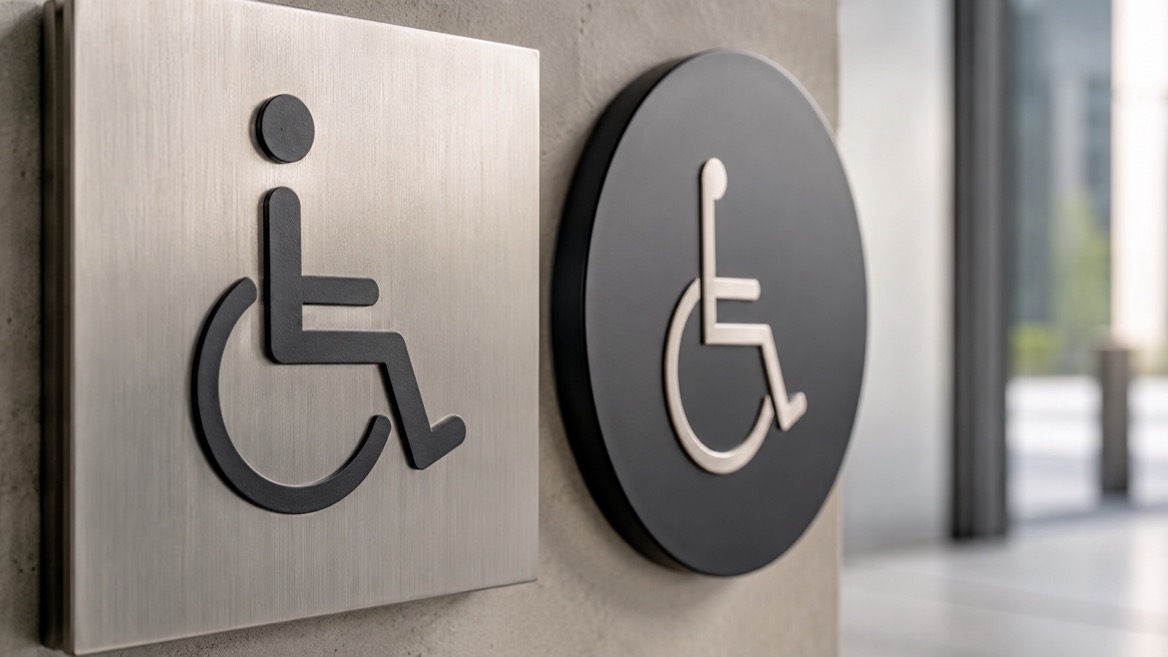
ADA compliance is not optional for covered facilities. Signs that identify permanent rooms and spaces must follow standards for tactile characters, Braille, contrast, placement, and finish. The material must support those details clearly and consistently.
Both metal and plastic can be made ADA-compliant, but the durability of those compliant features differs. Raised characters and Braille on a stable metal substrate are less likely to loosen, warp, or degrade over time in harsh conditions. Plastic signs can comply at installation, but their long-term consistency may be weaker in environments where heat, impact, or cleaning stress is frequent.
1. Non-glare finish for visual comfort and accessibility.
2. Grade 2 Braille positioned correctly below text.
3. Tactile character height and spacing that remain readable over time.
4. Installation location and mounting height aligned with standard guidance.
5. Material behavior under cleaning and environmental exposure.
Many buyers focus on purchase price and ignore lifecycle cost. That is a mistake in public-space signage. A cheaper plastic sign that needs earlier replacement can become more expensive than a higher-quality metal sign over the life of a building.
Replacement also creates operational friction. Maintenance teams must schedule labor, facility access, and inventory control. In regulated or branded spaces, inconsistent signage can also create a poor visitor experience and weaken wayfinding clarity. For organizations that value continuity, the most economical sign is often the one that lasts the longest with the least intervention.
Not every project needs the same material. The right choice depends on where the sign will live and how hard it will be used.
- Outdoor performance.
- High-traffic durability.
- A premium, architectural look.
- Lower long-term maintenance.
- Stronger resistance to moisture, UV, and wear.
- Lower upfront cost.
- Indoor use with limited abuse.
- Lightweight installation.
- Fast turnaround for project rollout.
- Flexible branding or color variation.
For many organizations, a mixed approach works best. For example, use metal for exterior entries, restrooms, and primary wayfinding points, then use plastic for protected interior rooms with lower traffic. This strategy balances budget and durability without compromising the visitor experience.
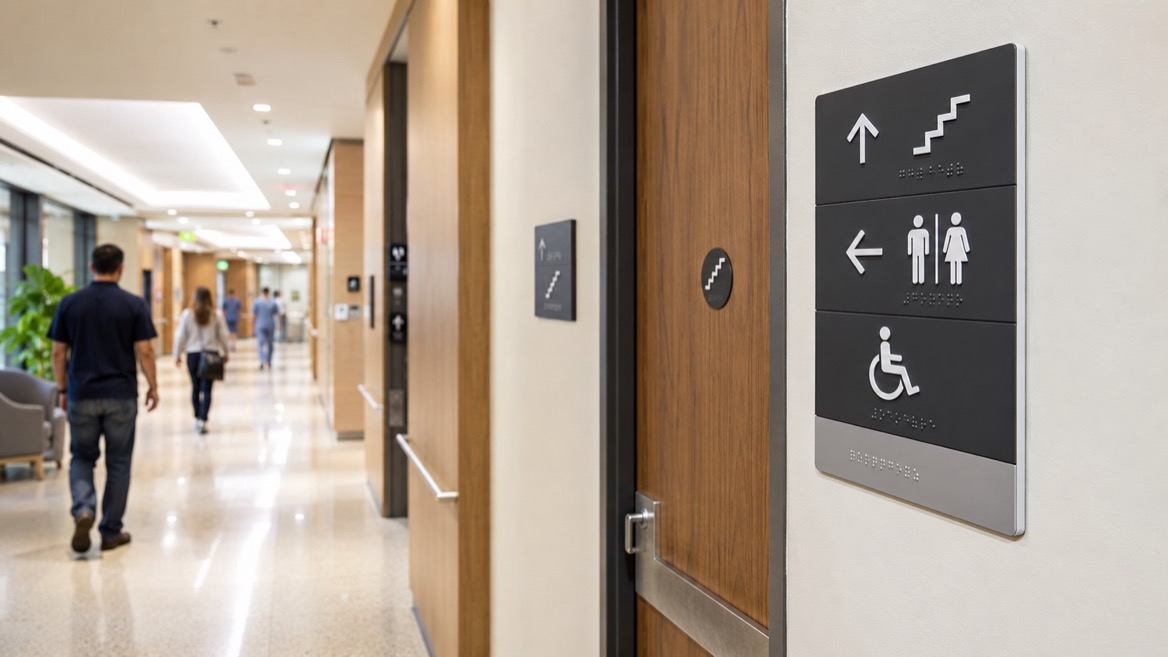
From a production standpoint, the sign material should match the facility's real operating conditions, not just the design brief. When we evaluate a project, we look at sun exposure, cleaning frequency, public contact level, interior versus exterior placement, and the expected replacement cycle.
One practical rule is simple: if the sign will be touched often, cleaned often, or exposed to the weather, the base material should be engineered for endurance. In those cases, metal usually delivers better long-term value and a more consistent user experience. If the sign is indoors and the project is temporary, plastic may be the more efficient option.
If you are deciding between metal ADA signs vs. plastic ADA signs, use this quick framework:
1. Define the environment. Indoor or outdoor, low traffic or high traffic, controlled or exposed.
2. Set the lifespan goal. Temporary, mid-term, or long-term.
3. Estimate maintenance capacity. Will your team replace signs frequently, or do you need long service intervals?
4. Check branding requirements. Do you need a premium architectural finish or a simple functional sign?
5. Match the substrate to the burden. Use metal for endurance, plastic for efficiency.
For public spaces, metal ADA signs usually win on longevity. They are the stronger choice when durability, appearance, and reduced replacement frequency matter most. Plastic ADA signs still have a place, especially in indoor, low-traffic, or budget-sensitive projects where upfront cost is the top priority.
For facilities that want a sign system built to last, the smartest approach is to choose the material based on real-world exposure, not just initial price. That is the most reliable way to protect accessibility, maintain brand quality, and reduce future maintenance burden.
If your project requires durable, customized, ADA-compliant signage, Landea Signs Co., Ltd. can help you select the right material, finish, and structure for your facility's environment.
Not always. Metal is usually better for longevity and high-traffic use, but plastic can be more cost-effective for indoor, lower-demand spaces.
Yes. Plastic signs can meet the required tactile, Braille, contrast, and mounting standards if they are manufactured correctly.
Metal is generally the better choice outdoors because it handles weather, UV exposure, and physical wear more effectively.
Common issues include fading, scratching, warping, and reduced stability under heat, cleaning, or repeated contact.
Start with the environment, traffic level, and expected lifespan. Then compare total lifecycle value instead of only upfront cost.
Yes. Metal signage often delivers a more architectural and durable appearance, which is especially useful in branded public spaces.
- U.S. Access Board, [Chapter 7: Signs]
- ADA Requirements for Signs and Standards, [Accessibility Checker]
- Raised Text & Braille Requirements, [Avalis Wayfinding Solutions]
- ADAAG Manual: Raised and Brailled Characters, [Corada]
- ADA Sign Materials: Choosing Durable & Stylish Options, [Caribee Sign]
- Choosing the Right Materials for ADA Signage, [All Star Signs]
- Exterior ADA Sign Product Data Sheet, [Green Dot Sign]
- Metal Outdoor Restroom Signs - Extreme Durability, [Green Dot Sign]
- Ultimate Guide to ADA Tactile Signage Materials, [Sunrise Signs]
- Plastic vs. Metal Signs: What You Save Now Could Cost You Later, [National Directory]
- Aluminium vs Plastic Safety Signs: Which Lasts Longer?, [PXP Safety]


