From idea to market-ready product, our SIGNS solutions make every stage easier, faster. Discover How We Help

Views: 259 Author: Landea Signs Publish Time: 2026-07-19 Origin: Site


Content Menu
● What Fabricated ADA Signs Are
● Compliance and Tactile Rules
● FAQ
Choosing the right ADA sign construction method affects compliance, durability, brand consistency, production speed, and long-term performance. For facilities that need accessible signage at scale, molded ADA signs and fabricated ADA signs are two of the most important options to compare.
From a manufacturer's point of view, the decision is rarely only about appearance. It is about how the sign will perform in the real world, whether it must support a large rollout or deliver a highly customized look for a premium environment.
ADA tactile signage plays a critical role in public and commercial spaces. Accessibility standards set minimum requirements for newly designed, constructed, or altered facilities, including technical and scoping rules that govern sign placement and tactile communication.
For buyers, that means every choice must balance three things:
- Compliance with accessibility rules.
- Durability under daily use.
- Design flexibility for brand and interior standards.
This is where molded ADA signs and fabricated ADA signs begin to diverge. One is often selected for large-scale consistency and repeatability, while the other is preferred when projects require custom detailing, architectural matching, or premium visual integration.
Molded ADA signs are produced by forming the tactile copy and braille as part of the sign body itself. In thermoformed or compression-style manufacturing, the raised elements become an integrated part of the finished surface rather than being applied afterward.
This construction method is valued for high durability, strong tactile definition, and vandal resistance. Because the braille and raised characters are embedded into the sign structure, they are harder to remove or damage than surface-applied elements.
Molded ADA signs are often used for:
- Hospitals and healthcare campuses.
- Schools and universities.
- Multifamily housing.
- Commercial interiors with repetitive room-identification needs.
- Large facilities that require standardized signage across many locations.

Fabricated ADA signs are built through a more custom assembly process. Depending on the project, they may use layered materials, routed substrates, applied graphics, raised characters, or mixed-media construction to achieve a specific look.
This approach offers more freedom in color layering, material selection, form factor, and brand expression. For projects where the sign must match a unique architectural finish, a custom brand system, or a luxury interior concept, fabrication is often the better fit.
Fabricated ADA signs are often chosen for:
- Boutique hotels and hospitality.
- Corporate headquarters.
- Premium retail environments.
- Mixed-use developments.
- Projects where visual identity matters as much as accessibility.
The simplest way to understand the difference is this:
- Molded ADA signs are usually the better option for large-scale rollouts.
- Fabricated ADA signs are usually the better option for custom branding and design-led environments.
Large projects benefit from repeatability. If a developer needs hundreds of identical room signs, molded production can reduce variation, keep tactile standards consistent, and simplify procurement. Custom projects benefit from design freedom. If a designer needs a sign that aligns with a specific wall system, color palette, or architectural concept, fabrication offers more control.
| Factor | Molded ADA Signs | Fabricated ADA Signs |
|---|---|---|
| Best use case | Large-scale, standardized projects | Custom, design-led projects |
| Tactile construction | Integrated into the sign body | Often layered or assembled |
| Durability | Very high | High, depending on materials |
| Vandal resistance | Strong | Varies by build method |
| Visual customization | Moderate | Very high |
| Production consistency | Excellent for repeat orders | Strong, but more variable by design |
| Cost efficiency | Often better for volume | Often better for premium custom work |
| Brand expression | More limited | More flexible |
| Installation fit | Standardized installations | More adaptable to unique spaces |
This comparison is useful, but the real decision depends on the facility type, installation environment, and project goals.
ADA tactile signage must follow strict accessibility expectations. Common guidance includes raised characters, Grade 2 braille, non-glare surfaces, and proper mounting heights to support both readability and usability.
The most important production takeaway is that compliance is not only about the graphic layout. It also depends on the manufacturing process, because the sign must remain legible, durable, and intact over time.
In practical terms, your sign partner should confirm:
1. Raised text height is correct.
2. Braille placement follows standard positioning.
3. Surface finish is low-glare.
4. Contrast supports visibility.
5. Mounting height and location are appropriate.
For high-traffic buildings, molded signs often perform well because the tactile components are part of the material itself. That integrated structure helps them resist wear, cleaning chemicals, and accidental impact better than many surface-applied alternatives.
Fabricated signs can still be highly durable, but performance depends on how they are built. Material choice, edge finishing, adhesive strength, and exposure conditions all matter. A custom sign can last for years, but it needs the right engineering to match the environment.
A simple maintenance plan should include:
- Weekly visual checks in heavy-use zones.
- Regular cleaning with non-abrasive methods.
- Periodic inspection of braille, edges, and mounting.
- Replacement when tactile readability is compromised.
In general, molded ADA signs are more economical when the same design is repeated many times. Once tooling or setup is established, the production process supports volume efficiency and consistent output.
Fabricated ADA signs may carry more labor and setup cost because each project can involve more design variables, more material combinations, and more finishing steps. That extra cost can be justified when the sign becomes part of the brand experience.
For procurement teams, the real question is not simply "Which is cheaper?" but which method delivers the best total value for this project. In a large rollout, value often means standardization and speed. In a flagship property, value often means aesthetic impact and premium perception.
Molded ADA signs are usually the smarter choice when the project needs scale, repetition, and resilience. They are especially effective when every sign must look identical and perform reliably across many locations.
Choose molded ADA signs when you need:
- A large quantity of room signs.
- Strong vandal resistance.
- Long-term consistency.
- Interior or exterior durability.
- A practical solution for standardized facilities.
For manufacturers and buyers alike, molded production reduces variability. That matters when a project has tight timelines, large volume, or strict sign schedules.
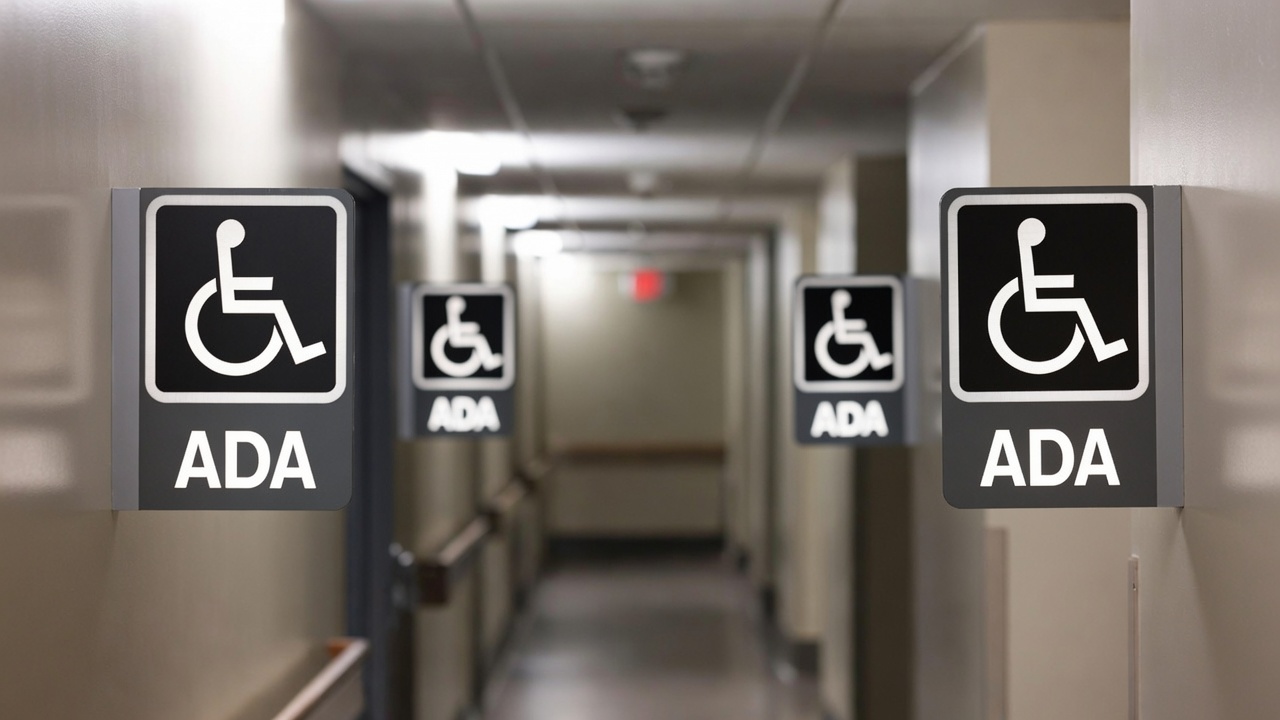
Fabricated ADA signs are the stronger choice when customization is part of the design strategy. They can be built to align with architectural finishes, premium interiors, brand systems, and more complex wayfinding programs.
Choose fabricated ADA signs when you need:
- A highly branded environment.
- Unique material combinations.
- Premium visual presentation.
- Nonstandard sizes or layouts.
- Greater design flexibility across different sign types.
For projects like hospitality, luxury retail, corporate headquarters, or custom public environments, fabrication often creates a better user experience because the signage feels integrated rather than added on.
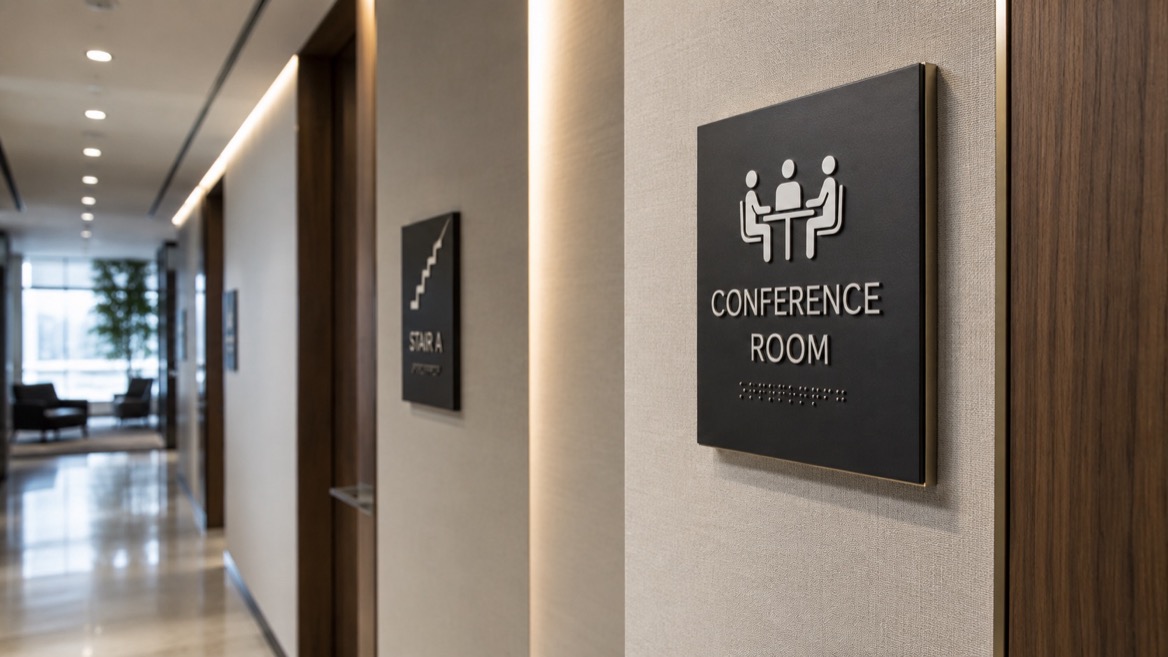
In the broader ADA signage market, acrylic and photopolymer remain widely used because they support durable tactile signage and precise compliance details. Thermoformed and molded systems are especially attractive where vandal resistance and repeatability matter.
From an execution standpoint, this means the best-performing sign programs are rarely chosen by material alone. They are planned around site type, traffic level, brand requirements, cleaning conditions, and installation consistency.
This is also where experienced manufacturers create real value. A strong partner does not just produce a sign. It helps translate accessibility requirements into a scalable system that matches the facility's operational reality.
Use this simple decision process:
1. Define the project scale.
2. Identify the environment, indoors or outdoors.
3. Confirm accessibility requirements.
4. Decide how important custom branding is.
5. Estimate traffic, wear, and maintenance needs.
6. Compare volume cost against design value.
7. Request samples before final approval.
If the project is large and repetitive, start with molded options. If the project is design-driven and premium, start with fabricated options. If both matter, work with a manufacturer that can engineer a hybrid strategy.
As a signage manufacturer, we recommend treating ADA signs as part of the facility's accessibility system, not just as decorative identification. The best choice is the one that satisfies compliance while also supporting navigation, brand standards, and maintenance realities.
For Landea Signs Co., Ltd., the most effective projects usually begin with a clear specification sheet. That sheet should define location, quantity, surface finish, tactile format, and branding requirements before production begins. This reduces revisions and protects both schedule and compliance.
If your project is a large-scale rollout, molded ADA signs usually deliver the best combination of consistency, durability, and cost control. If your project is custom and brand-sensitive, fabricated ADA signs usually create the stronger visual and experiential result.
The most successful ADA signage programs are the ones that balance accessibility, durability, and design intent from the beginning. For complex facilities, a manufacturer-led consultation can save time, reduce compliance risk, and produce a better final environment.
Contact your signage manufacturer early in the planning stage to review room count, material options, and compliance requirements before finalizing the design package.
1. Are molded ADA signs better than fabricated ADA signs?
Molded ADA signs are usually better for large, standardized projects, while fabricated ADA signs are usually better for custom, design-led spaces.
2. Which option is more durable?
Molded ADA signs often offer stronger vandal resistance because the tactile elements are integrated into the sign body. Fabricated signs can also be durable, but their performance depends more on the materials and assembly method used.
3. Which option is more customizable?
Fabricated ADA signs are generally more customizable because they can use different materials, finishes, layers, and layouts. That makes them a strong fit for branded or premium environments.
4. Are molded ADA signs compliant with ADA standards?
Yes, molded ADA signs can be compliant if they meet the required tactile, braille, contrast, and mounting guidelines. Compliance depends on design execution, not just the fabrication method.
5. What is the best choice for a large building project?
For a large building project, molded ADA signs are often the better choice because they support consistency, faster rollouts, and repeat production.
6. What should I ask a sign manufacturer before ordering?
Ask about compliance support, material options, durability in your environment, production time, sample approval, and whether the sign system can be standardized across the project.
- [Americans with Disabilities Act, 2010 ADA Standards for Accessible Design]
- [Different Types of Sign Compression Processes - Identity Group]
- [Ultimate Guide to ADA Tactile Signage Materials - Sunrise Signs]
- [ADA Signs by Industry: The Complete Compliance Guide - ADA Signs]
- [ABC's of ADA – An Introduction to Tactile Signage - Park Place Sign]
- [The Right Material for Your Project - Park Place Sign]
- [ADA Signage Requirements in 2025: A Compliance Guide for Businesses - Identiti]


