From idea to market-ready product, our SIGNS solutions make every stage easier, faster. Discover How We Help

Views: 229 Author: Landea Signs Publish Time: 2026-08-02 Origin: Site


Content Menu
● Why This Decision Shapes Brand Perception
● What Is Static White LED Signage?
● The Case for RGB: Dynamic Branding Advantages
● The Case for Static White: Reliability and Brand Discipline
● What Manufacturing Data Tells Us About Lifespan and Maintenance
● Practical Steps for Choosing Between RGB and Static White
● Industry Insight: The Shift Toward Hybrid Configurations
● Making the Right Investment for Your Storefront
Choosing between RGB LED and static white LED illuminated lettering is one of the most consequential decisions a business makes when investing in storefront signage, and the right choice depends on how often your brand identity needs to move, change, or stay perfectly still.
Illuminated lettering is often the first physical touchpoint a customer has with a business, especially after dark. Lighting has a significant impact on shoppers' behavior and emotional responses, with color temperature playing a particularly important role in how a storefront is perceived. This means the LED technology behind your sign is not just a technical spec sheet item — it is a direct extension of your brand strategy.
At Landea Signs Co., Ltd., we manufacture custom illuminated lettering for clients across retail, hospitality, and corporate sectors, and we consistently see business owners underestimate how much lighting technology influences customer first impressions. This guide breaks down the real differences between RGB and static white LED channel letters so you can make an informed, long-term branding decision.

RGB channel letters use multi-color LED modules capable of producing virtually any color on demand, typically controlled via a remote, app, or programmable controller. Instead of committing to a single hue, RGB systems allow signage to shift colors, run transition effects, or sync with seasonal campaigns and events.
Key characteristics of RGB illuminated lettering:
- Full color-changing capability without hardware replacement
- Programmable animations and lighting sequences
- Requires a dedicated controller and often app or remote pairing
- Higher upfront investment compared to single-color systems
Static white LED channel letters use single-color LED modules that are fixed at the time of installation. Once mounted, the letters glow consistently in the same white tone every time they are powered on, with no color-shifting hardware involved.
Key characteristics of static white LED signage:
- Simple, reliable, single-color illumination
- Lower cost with no controller required
- Long-term consistency ideal for established brand identities
- Easier installation and maintenance profile
| Factor | RGB LED | Static White LED |
|---|---|---|
| Color flexibility | Unlimited colors, changeable anytime | Fixed at installation |
| Upfront cost | Higher due to controller and driver hardware | Lower, simpler electronics |
| Best for | Brands needing seasonal refreshes, multi-tenant venues, nighttime-focused businesses | Retail storefronts, medical offices, professional services with fixed brand colors |
| Complexity | Requires programming and controller maintenance | Plug-and-play simplicity |
| Lifespan | Comparable module lifespan, ~50,000+ hours to L70 rating | Comparable module lifespan, ~50,000+ hours to L70 rating |
| Energy use | Slightly higher due to multi-chip modules | Lower, single-chip efficiency |
RGB LED lettering earns its higher price tag when a business genuinely needs visual flexibility. If your sign will serve different events, promotions, or seasonal campaigns, RGB pays for itself in avoided replacement costs over time. A restaurant that shifts colors for holidays, a nightclub that syncs lighting with music, or a shopping center with rotating tenants all benefit from this adaptability.
Dynamic lighting environments also tend to capture more attention after dark. Businesses operating primarily at night benefit from moving color that draws more attention than a static glow. This is particularly relevant in dense commercial districts where dozens of signs compete for the same passing foot traffic.
There is also a growing body of evidence connecting dynamic, digitally-driven visual displays to measurable commercial outcomes. Research on in-store digital signage found it can increase the likelihood of customers purchasing advertised products by an average of 8.1% over a six-year study period, with particularly strong effects for spontaneous, emotionally-driven purchases. While channel letters differ from full digital displays, the underlying psychological principle — that movement and color variation capture attention more effectively than static visuals — applies directly to RGB signage strategy.
Static white LED signage remains the stronger choice for businesses built on consistency. If your brand color is fixed and will never change, face-lit or backlit channel letters with single-color LEDs are simpler, lower-cost, and require no controller compared to RGB systems. For most retail storefronts, medical offices, and professional service businesses, static illuminated channel letters deliver reliable, high-visibility illumination without the added complexity of a color-changing system.
This simplicity translates into fewer points of failure. RGB systems introduce controllers, drivers, and wireless connectivity components that can fail independently of the LED modules themselves, while static systems avoid this added layer entirely.
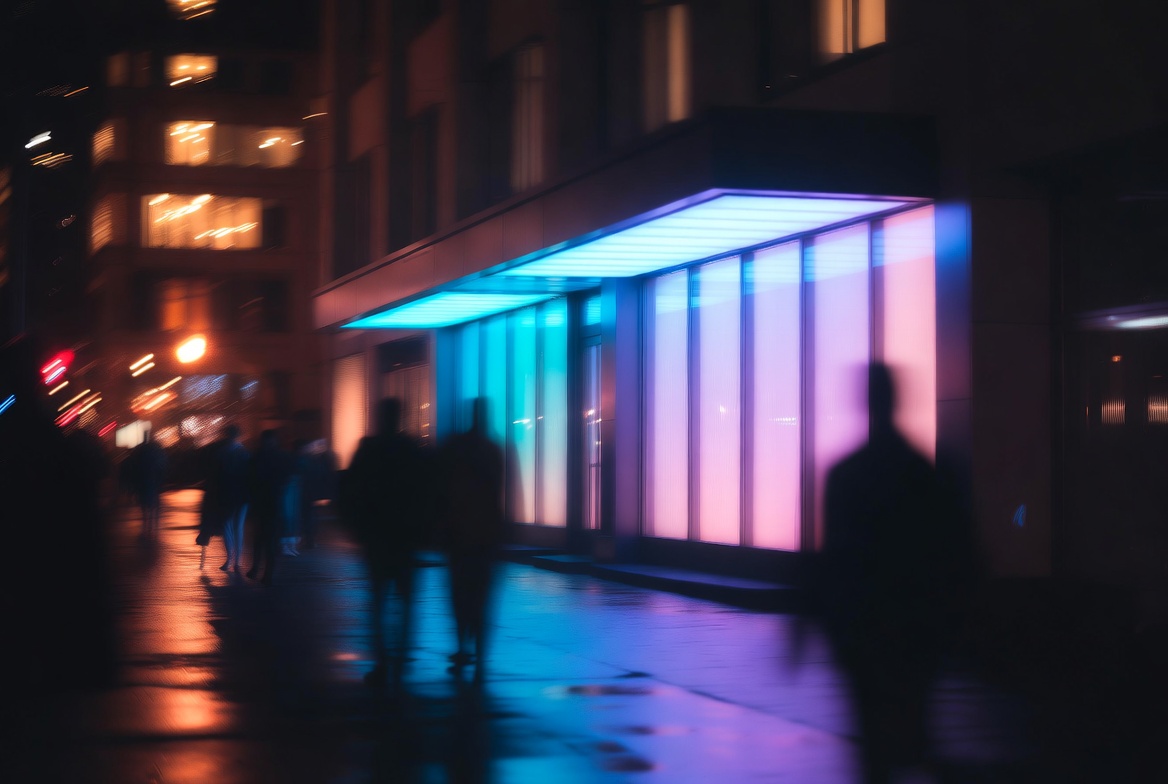
One area competitors rarely address in depth is the actual component-level breakdown of channel letter longevity, which matters enormously when comparing total cost of ownership between RGB and static systems.
Component lifespan for LED channel letters:
- LED modules: 8–12 years (50,000+ hours), with dimming or color shift as the primary failure mode, costing $50–$150 per letter to replace
- Power supplies: 5–8 years, with complete circuit failure as the main risk, costing $150–$400 per unit
- Acrylic faces: 7–12 years, prone to yellowing and fading, costing $100–$300 to replace
- Aluminum structure: 15–20+ years, essentially maintenance-free barring physical damage
This breakdown matters because RGB systems carry an additional maintenance layer — the controller and driver electronics — that static systems simply do not have. When budgeting for illuminated lettering, factoring in these component-specific replacement cycles gives a far more accurate long-term cost picture than comparing sticker prices alone.
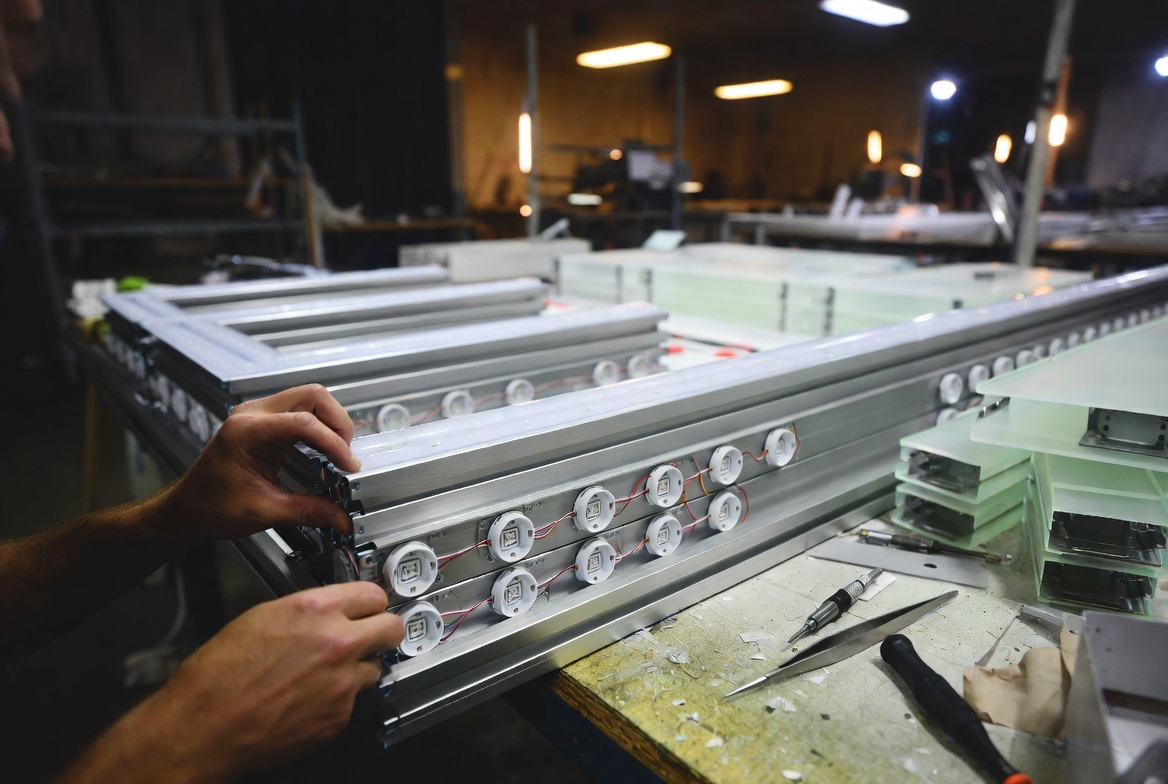
Manufacturers and brand managers evaluating illuminated lettering should follow a structured decision process rather than choosing based on price alone.
1. Audit your brand color policy. If your brand guidelines specify one fixed color, static white LED is almost always the more efficient investment.
2. Assess your operating hours and foot traffic patterns. Nighttime-heavy businesses in high-competition areas benefit more from RGB's attention-grabbing dynamics.
3. Calculate promotional frequency. Businesses running frequent seasonal or event-based campaigns recover RGB's higher cost faster through avoided sign replacements.
4. Factor in maintenance capacity. Confirm whether your facilities team can manage a networked controller system before committing to RGB.
5. Request a total cost of ownership estimate that includes power supply replacement cycles, not just initial LED pricing.
An emerging trend worth noting is that some businesses are no longer choosing exclusively one technology or the other. Signage designers increasingly recommend dynamic messaging with RGB LEDs combined with day/night vinyl overlays, allowing a single sign to function as a static nameplate during the day while offering programmable color accents at night. This hybrid approach is particularly relevant for businesses that want brand consistency during business hours but added visual impact after dark, and it reflects how illuminated lettering design has matured beyond a binary RGB-versus-static decision.
Both RGB and static white LED illuminated lettering are durable, energy-efficient technologies capable of serving a business reliably for a decade or more. The right choice ultimately comes down to whether your brand strategy prioritizes consistency and cost efficiency or flexibility and attention-driven engagement.
At Landea Signs Co., Ltd., we work directly with businesses to evaluate their branding goals, operating environment, and budget before recommending a lighting configuration. If you are planning a new storefront sign or upgrading an existing installation, reach out to our team for a custom consultation and a tailored illuminated lettering proposal built around your specific branding objectives.
Is RGB LED signage more expensive to run than static white LED?
RGB systems typically cost more upfront due to the controller and multi-chip modules, and energy use is slightly higher, though the difference is usually modest compared to overall signage investment.
How long do LED channel letters typically last?
Quality LED modules are rated for 50,000+ hours to an L70 brightness threshold, translating to roughly 8–12 years of service under normal daily operation.
Can static white LED signage be upgraded to RGB later?
Generally no — static systems use fixed single-color modules, so upgrading to color-changing capability usually requires replacing the LED modules and adding a controller.
Does dynamic lighting actually improve sales?
Studies on dynamic in-store signage show measurable purchase-intent increases, with one analysis finding an 8.1% boost in likelihood of purchase for advertised products.
Which option is better for a business with a fixed brand color?
Static white LED is the more efficient and cost-effective choice for businesses with an established, unchanging brand color, since it avoids the added complexity of a controller system.
What is the biggest maintenance difference between the two systems?
RGB signage adds an extra layer of components — controllers and drivers — that can fail independently of the LEDs, while static systems have fewer points of potential failure.
1. RGB LED Sign — [Bright Light Signs]
2. How Long Do Channel Letters Last? LED Lifespan Guide — [Sign Manufacturing Resource]
3. Study: In-Store Digital Signage Boosts Sales by 8.1% — [Digital Signage Today]
4. 5 Design Mistakes to Avoid with Channel Letter Signs — [Sign Industry Resource]
5. Retail Lighting: Enhancing Customer Experience and Sales — [Retail Design Institute]


