From idea to market-ready product, our SIGNS solutions make every stage easier, faster. Discover How We Help

Views: 287 Author: Landea Signs Publish Time: 2026-10-07 Origin: Site


Content Menu
● Stainless Steel vs Aluminum Hotel Signs: The Practical Comparison
>> What "Long-Term Commercial Use" Actually Means
● Corrosion Resistance: Match the Metal to the Hotel Environment
>> Stainless Steel Hotel Signs: Grade Selection Matters
>> Aluminum Hotel Signs: Alloy and Finish Work Together
● Impact, Scratches, and Daily Hotel Traffic
>> Stainless Steel Often Has the Advantage in High-Contact Locations
>> Aluminum Can Perform Well with Appropriate Construction
● Appearance and Guest Experience
>> Stainless Steel Supports a Distinctive Metallic Identity
>> Aluminum Offers Broad Color and Design Flexibility
>> Accessibility Is a Separate Requirement
● Installation: Weight, Fixings, and Mixed-Metal Connections
>> Aluminum Reduces Handling and Support Loads
>> Stainless Steel Requires More Attention to Load
>> Prevent Problems at Mixed-Metal Interfaces
● Maintenance: Plan for the Housekeeping Team
>> Cleaning Stainless Steel Hotel Signs
>> Cleaning Aluminum Hotel Signs
● Lifetime Cost: Compare the Whole Signage System
>> When Stainless Steel May Justify Its Premium
>> When Aluminum May Deliver Better Value
● A Five-Step Specification Process for Hotel Sign Buyers
>> 1. Divide the Property into Exposure Zones
>> 2. Define the Main Failure Risk
>> 3. Specify the Complete Assembly
>> 4. Approve a Representative Sample
>> 5. Document Maintenance and Acceptance Criteria
● Practical Hotel Scenarios: Where Each Material Fits
>> Large Hotel with Frequently Updated Directories
● Specify Hotel Signs Around Their Real Operating Conditions
>> Is Stainless Steel Better Than Aluminum for Outdoor Hotel Signs?
>> Which Stainless Steel Grade Should a Coastal Hotel Consider?
>> Can Aluminum Hotel Signs Rust?
>> Are Stainless Steel Hotel Signs Maintenance-Free?
>> Which Material Is Better for Illuminated Hotel Signs?
>> Can Both Materials Be Used for Accessible Room Signs?
Stainless steel hotel signs generally perform better where impact resistance, frequent handling, and a premium metallic appearance matter most. Aluminum hotel signs are often the better choice for large installations, lightweight mounting, and cost-efficient customization. For coastal properties, neither material wins automatically: alloy selection, surface finish, drainage, and maintenance determine long-term performance.
At Landea Signs Co., Ltd., our approach to personalized advertising signage starts with a practical question: what must this sign withstand after installation? A protected guest-room plaque and a salt-exposed entrance sign face very different conditions.
This comparison explains how stainless steel vs aluminum hotel signs perform across corrosion resistance, maintenance, appearance, installation, and lifetime cost—so you can specify durability rather than simply buy a metal name.

A useful comparison evaluates the complete sign assembly, not just its face material.
| Selection factor | Stainless steel hotel signs | Aluminum hotel signs |
|---|---|---|
| Weight | Heavier at comparable dimensions | Lighter; useful for large panels and letters |
| Resistance to dents | Generally better at comparable thickness | Often needs added thickness or reinforcement |
| Corrosion performance | Strong with suitable grade selection; chlorides require care | Strong with suitable alloy, finish, and detailing |
| Appearance | Distinctive brushed, polished, or textured metallic finishes | Broad painted, powder-coated, and anodized options |
| Installation | Greater load on supports and fixings | Easier handling and lower dead load |
| Maintenance | Requires appropriate cleaning; not stain-proof | Finish-specific cleaning and inspection |
| Initial cost | Often higher, depending on fabrication | Often lower, depending on finish and construction |
| Typical applications | Premium plaques, exposed lettering, high-contact locations | Large signs, directories, coated panels, modular systems |
These are directional comparisons, not guarantees. An engineered aluminum assembly can outperform a thin stainless steel panel. A well-finished stainless sign can outlast poorly prepared coated aluminum.
For a hotel, a sign has failed commercially before it necessarily fails structurally.
A room number may remain attached but become difficult to read. A lobby directory may develop scratches that conflict with the property's presentation. An entrance letter may collect salt deposits around a concealed fixing.
Evaluate four outcomes:
- Does the assembly remain securely installed?
- Does its appearance remain acceptable?
- Can guests still read and use it comfortably?
- Can staff maintain or replace components economically?
The best material supports all four.
Stainless steel resists corrosion through a protective passive surface layer. However, "stainless" does not mean immune to staining or localized corrosion.
Grade 304 is commonly considered for protected architectural applications. Grade 316 offers greater resistance to chloride-related corrosion because its composition includes molybdenum. This makes it a stronger starting point for many coastal hotel signage projects.
Australian Stainless Steel Development Association guidance recommends grade 316, or equivalent corrosion resistance, as a minimum within approximately five kilometres of surf. That distance is guidance, not a universal boundary: wind, shelter, salt deposition, and cleaning access also matter.
For exposed hotel signs, specify:
- The stainless steel grade.
- Surface finish and fabrication quality.
- Treatment of welds and contaminated surfaces.
- Drainage around joints and supports.
- An accessible cleaning method.
Brown surface discoloration, commonly called tea staining, shows why these details matter. A premium alloy cannot compensate for every poor design decision.
Aluminum naturally forms an oxide layer, but its service performance still depends on alloy and exposure.
The Aluminum Association identifies anodized 5005 sheet as an architectural application and describes 6xxx-series extrusions as widely used in architectural and structural work. These examples show why "aluminum" alone is an incomplete specification.
Anodizing converts the surface into an integrated aluminum oxide finish. Unlike an applied paint film, that oxide layer cannot peel away in the same manner as paint.
Powder coating offers extensive color choices, but its durability depends on pretreatment, coating selection, application quality, and environmental exposure.
For exterior aluminum hotel signs, confirm:
- Alloy and product form.
- Anodizing or coating specification.
- Protection around fabricated edges and fixing holes.
- Drainage and cleaning access.
- Compatibility with adjacent metals.
At comparable thickness, stainless steel generally provides greater stiffness and resistance to denting than aluminum. It is therefore a strong candidate for locations exposed to luggage, housekeeping equipment, or repeated guest contact.
Potential applications include:
- Elevator identification plates.
- Low-mounted corridor signs.
- Entrance plaques.
- Service-area identification.
However, stainless steel can still scratch. Highly polished surfaces may make fingerprints and surface marks conspicuous.
A brushed finish may suit a busy hotel better, but the sample should be reviewed under actual lighting. Texture, grain direction, and reflections all affect the visible result.
Aluminum's lower stiffness does not automatically make it unsuitable for demanding locations.
A folded edge, thicker sheet, reinforced backplate, or supported frame can improve performance significantly. For many signs, assembly design matters more than a simple material ranking.
Ask suppliers to compare finished constructions—not unsupported sheets of equal thickness.
The procurement question should be: "Will this complete sign resist foreseeable contact?" rather than "Which metal is harder?"
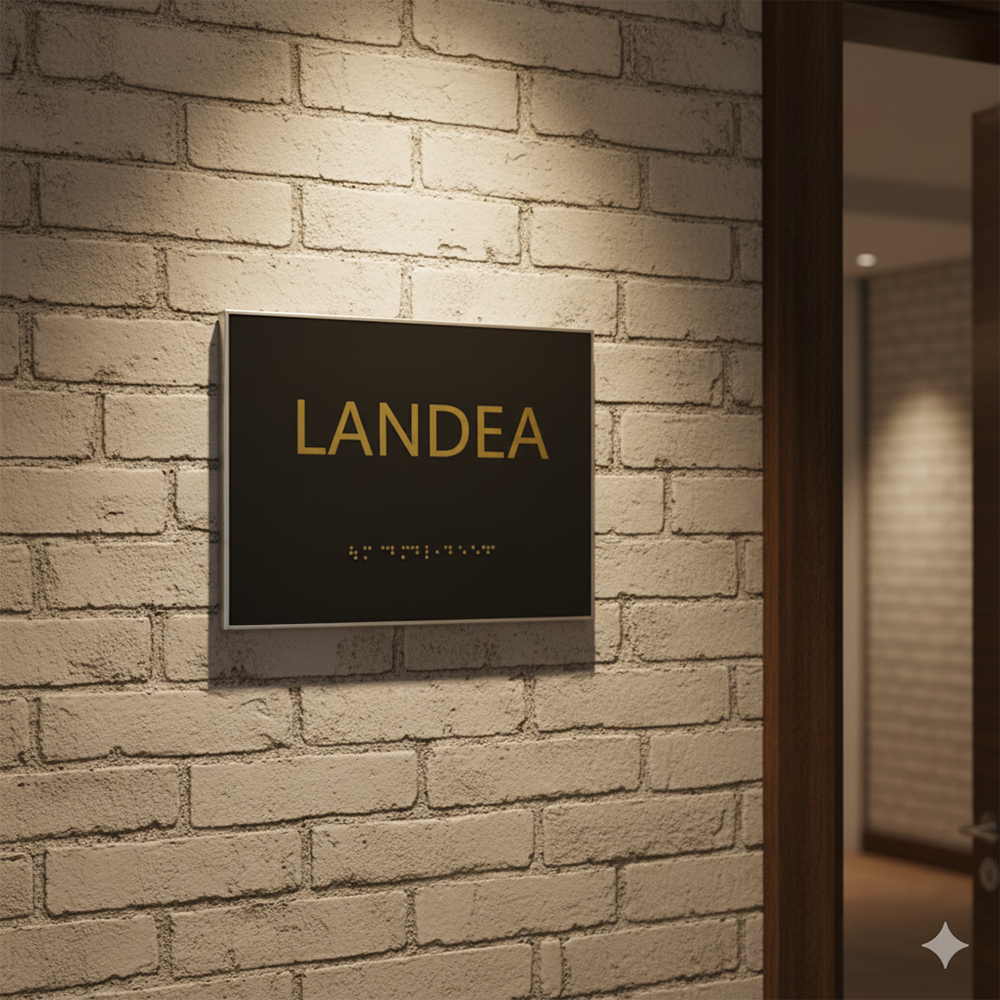
Stainless steel hotel signs suit projects seeking a restrained, architectural metallic appearance.
Brushed plaques, fabricated letters, and recessed details can complement stone, timber, glass, and other hotel finishes. Yet appearance must remain consistent across the sign family.
Specify grain direction, edge treatment, and finish approval. Otherwise, adjoining signs may reflect light differently even when their material descriptions match.
Aluminum is particularly useful when signage must follow a coordinated color system.
Painted or powder-coated aluminum supports brand colors, contrasting backgrounds, and differentiated wayfinding zones. Anodized aluminum provides another appearance option, although color consistency should be agreed with the supplier.
For frequently updated hotel directories, lightweight modular aluminum components may also simplify replacement.
Neither stainless steel nor aluminum makes a sign accessible by itself.
For covered U.S. applications, the Access Board's guidance addresses requirements such as non-glare finishes, contrasting characters, and tactile information for relevant signs.
A reflective metal plaque may look attractive yet perform poorly under directional lighting. Evaluate the finished lettering and background together.
For other markets, verify the applicable local accessibility and building requirements rather than transferring U.S. rules automatically.
Aluminum's lower weight is valuable for large entrance panels, fabricated letters, and projecting signs.
Lighter components can simplify handling and reduce dead load on supports. However, lower weight does not remove the need to assess wind loading, substrate strength, or installation access.
Large exterior signage still requires appropriately designed fixings and supporting construction.
Stainless steel's weight may be manageable for small plaques but significant across a large letter set or panel assembly.
Review:
1. The actual wall or support substrate.
2. Fastener type and embedment.
3. Sign weight and projecting geometry.
4. Wind exposure.
5. Access for inspection and removal.
Adhesive-only attachment should not be treated as universally suitable without application-specific evaluation.
Stainless fasteners and aluminum components require attention where moisture can remain around their connection.
Dissimilar-metal contact can create galvanic corrosion conditions. Appropriate isolation, drainage, and connection design help control the risk.
Specify compatible washers, sleeves, or other isolation measures where needed. Do not assume that a decorative coating alone provides permanent electrical separation.
Stainless steel is low-maintenance, not maintenance-free.
ASSDA recommends washing with soap or mild detergent and water, followed by clean-water rinsing. It also warns against abrasive cleaners and products containing chlorides or bleach.
For hotel operations:
- Use approved cleaning products and soft cleaning materials.
- Remove salt and deposits before they accumulate.
- Inspect sheltered locations that rain cannot wash.
- Follow the specified grain direction where appropriate.
- Escalate persistent staining rather than using aggressive chemicals.
Sheltered coastal signs deserve particular attention because they may receive salt without the benefit of rain washing.
Cleaning instructions should follow the actual finish supplier's recommendations.
Anodized and coated aluminum should not automatically receive the same chemicals used elsewhere in the building. Staff should check compatibility before applying concentrated cleaners.
Inspection should focus on coating damage, deposits, fixing locations, and exposed edges. Where graphics or tactile components are attached, their cleaning requirements also matter.
A durable panel is of limited value if routine cleaning damages its lettering.
Initial purchase price is only one part of the decision.
A practical ownership comparison is:
Lifetime cost=purchase+installation+maintenance+repairs+replacement
Use the same evaluation period and assumptions for both proposals.
Stainless steel can be commercially attractive when impact resistance and retained metallic appearance reduce disruptive replacements.
Examples include permanent entrance identification and premium plaques in high-contact locations.
However, this is a project-specific judgment—not a promise of a fixed service life.
Aluminum may be preferable where:
- The installation includes many large signs.
- Weight complicates mounting.
- Brand colors are central to the design.
- Directory information changes regularly.
- Modular replacement is important.
Avoid unsupported claims that either material will last a particular number of years. Exposure, construction, maintenance, and acceptable appearance standards vary too widely.
Separate protected interiors, covered outdoor spaces, fully exposed facades, coastal locations, and areas near pools.
Do not assign one material indiscriminately across the property.
Identify whether the priority is corrosion, dents, readability, color retention, or replacement flexibility.
This makes material selection more objective.
Include alloy or grade, thickness, finish, graphics, edge treatment, fixings, and backing construction.
A quote saying only "metal hotel sign" cannot support a meaningful comparison.
Review the sample under intended lighting. Check readability, fingerprints, edge quality, and cleaning response.
For important projects, request a mock-up showing the actual mounting arrangement.
Define acceptable finish consistency, installation tolerances, cleaning instructions, and replacement procedures before production.
These details reduce disagreements after delivery.
The following are illustrative selection scenarios, not documented customer case studies.
Start by evaluating grade 316 stainless steel or another suitably resistant specification. Compare it with appropriately finished aluminum using the same drainage, fastening, and maintenance assumptions.
The exposure assessment should lead the decision.
Brushed stainless steel may suit permanent room identification and entrance plaques. Aluminum may provide complementary directional signs where color contrast and coordinated finishes matter.
A mixed-material program can be more effective than forcing one metal everywhere.
Modular aluminum panels may offer convenient handling and replacement. Keep fixed identification separate from changeable tenant, event, or facility information.
This limits unnecessary replacement of otherwise serviceable signs.
Stainless steel is often the stronger choice for high-contact locations and permanent metallic identification. Aluminum frequently delivers better value for lightweight, colored, or changeable signage systems.
For a personalized proposal from Landea Signs Co., Ltd., share your sign schedule, dimensions, installation photographs, coastal or pool exposure, desired finishes, and accessibility requirements. Request a comparison covering material specification, mounting design, finish samples, and maintenance—not just unit price.
Not universally. Stainless steel can offer stronger impact resistance and a premium metallic finish. Aluminum provides lower weight and extensive finishing options. Exterior performance depends on the complete specification and exposure.
Grade 316 is a common starting point for chloride-exposed applications. Severe exposure, sheltered salt accumulation, and limited maintenance may require specialist assessment or a more resistant material specification.
Aluminum does not develop iron rust, but it can corrode. Pitting, finish damage, and corrosion around unsuitable connections remain possible.
No. They require suitable cleaning, particularly where salts or deposits accumulate. Incorrect chemicals and abrasive cleaning can damage appearance and performance.
Either can work. Aluminum is attractive for lightweight housings and larger fabricated components; stainless steel can provide distinctive visible faces. Assess sealing, drainage, electrical access, and serviceability separately.
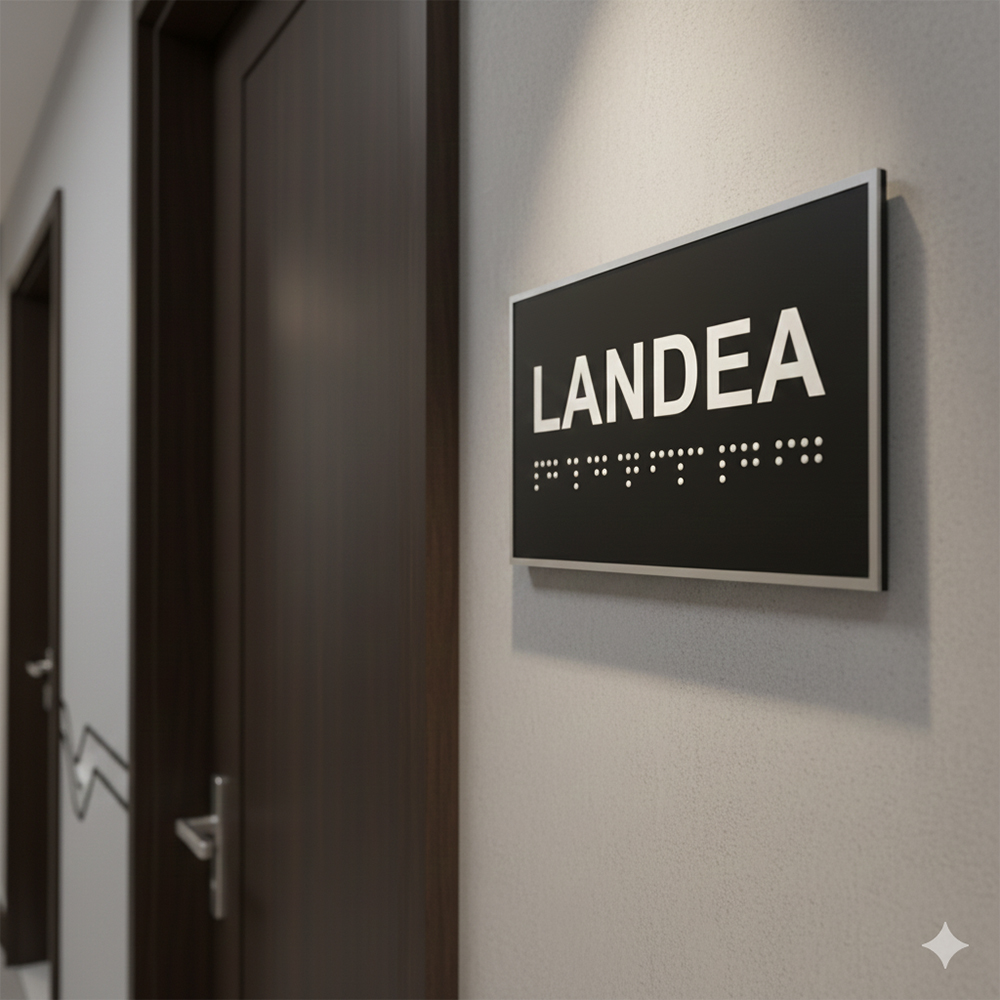
Yes. Compliance depends on the finished design—including contrast, glare, tactile features, and installation—not simply the substrate material.
1. Australian Stainless Steel Development Association, "FAQ 6: Preventing Coastal Corrosion (Tea Staining)." Guidance on grade selection, coastal exposure, drainage, cleaning, and maintenance. [assda.asn]
2. worldstainless, "Understanding Corrosion—Chapter 4: Tea Staining," published February 17, 2026. Explains how grade selection, fabrication, finish, and cleaning affect stainless steel appearance. [worldstainless]
3. The Aluminum Association, "Standards." Reference information on aluminum alloy families and architectural applications, including anodized 5005 sheet and 6xxx-series extrusions. [aluminum]
4. Aluminum Anodizers Council, "What Is Anodizing?" Explains the integrated anodic oxide layer and its role in corrosion resistance and architectural finishes. [anodizing]
5. Aluminum Anodizers Council, "The Right Finish for Architectural Aluminum." Discusses anodic coating characteristics and long-term architectural finish performance. [members.anodizing]
6. U.S. Access Board, "Chapter 7: Signs." Official guidance on applicable sign accessibility provisions, including tactile information, contrast, and non-glare finishes. [access-board]


