From idea to market-ready product, our SIGNS solutions make every stage easier, faster. Discover How We Help

Views: 222 Author: Landea Signs Publish Time: 2026-05-10 Origin: Site


When you invest in professional advertising signage, the last thing you want is a beautiful sign that is poorly mounted, unsafe, or simply not visible enough to convert viewers into customers. After 10+ years working with international brands, wholesalers, and OEM partners on thousands of signage projects, I can confidently say this: the way you mount a sign is just as important as the way you design it. [clevelandsigncompany]
In this guide, I will walk you through the most common and effective sign mounting methods, how to choose the right option for each environment, and what pitfalls to avoid if you are responsible for branded spaces, retail chains, offices, or industrial facilities. The goal is to help you move from "just hanging a sign" to engineering a mounting solution that is safe, durable, and on‑brand. [manufacturing-seo]

This article is written for:
- Brand owners and marketing teams planning multi‑location rollouts. [robertsiegers]
- Distributors and wholesalers sourcing OEM signage from China or other manufacturing hubs. [robertsiegers]
- Facility managers, installers, and contractors responsible for long‑term maintenance. [clevelandsigncompany]
You will learn:
- The core mounting methods for signs and when to use each one. [manufacturing-seo]
- How surface type, environment, and sign weight impact your choice. [clevelandsigncompany]
- Practical step‑by‑step advice and real‑world lessons from factory and onsite projects. [georgeandwilly]
- Where to add visuals, diagrams, and videos to make installation easier for your team or customers. [koanthic]
Before you touch any tape, screw, or stand‑off, pause and evaluate these five critical factors. [georgeandwilly]
1. Substrate / mounting surface
- Drywall, glass, metal, wood, fabric, concrete, and composite panels all behave differently with adhesives and hardware. [manufacturing-seo]
2. Sign size and weight
- Lightweight acrylic nameplates and heavy exterior aluminum composite panels obviously cannot be treated the same way. [georgeandwilly]
3. Environment (indoor vs outdoor)
- Humidity, temperature swings, wind load, and UV exposure affect both adhesives and mechanical fasteners. [clevelandsigncompany]
4. Permanence and flexibility
- Ask whether the sign should be permanent, semi‑permanent, or easily changeable (e.g., offices, tenant directories, seasonal promotions). [manufacturing-seo]
5. Aesthetics and brand experience
- Visible screws can look industrial; stand‑offs or concealed mounts often create a more premium, architectural feel. [clevelandsigncompany]
Having these answers first will help you select a method that balances safety, durability, cost, and visual impact.
The table below gives you a high‑level view of the main options before we dive into each one.
| Mounting method | Best for | Flexibility | Typical surfaces |
|---|---|---|---|
| Double‑sided foam tape | Small indoor wall/door signs | Low | Smooth walls, doors |
| Screw mount | Permanent, heavy, or structural signs | Very low | Drywall, wood, masonry |
| Velcro | Interchangeable office / facility signs | High | Painted walls, doors |
| Clear 3M tape (glass) | Glass doors, windows, acrylic panels | Low to medium | Glass, smooth plastics |
| Magnetic tape + foil | Interchangeable plates and frames | High | Metal or prepared substrates |
| Cubicle fangs / pins | Fabric cubicle panels | Medium | Office partitions |
| Command strips | Damage‑free, rental or corporate walls | Medium | Smooth painted walls |
| Stand‑offs | Premium acrylic/metal wall signs | Very low | Solid walls, masonry |
Double‑sided foam tape is one of the most practical mounting methods for lightweight interior signage such as room numbers, nameplates, and small directional signs. Our own OEM projects for hotels and offices still use this solution extensively when the conditions are right. [clevelandsigncompany]
- Clean, smooth, non‑porous surfaces (painted drywall, metal doors, laminated panels). [manufacturing-seo]
- Small to medium plaques where weight is modest and impact risk is low. [manufacturing-seo]
- Projects that require fast installation across many locations without drilling. [robertsiegers]
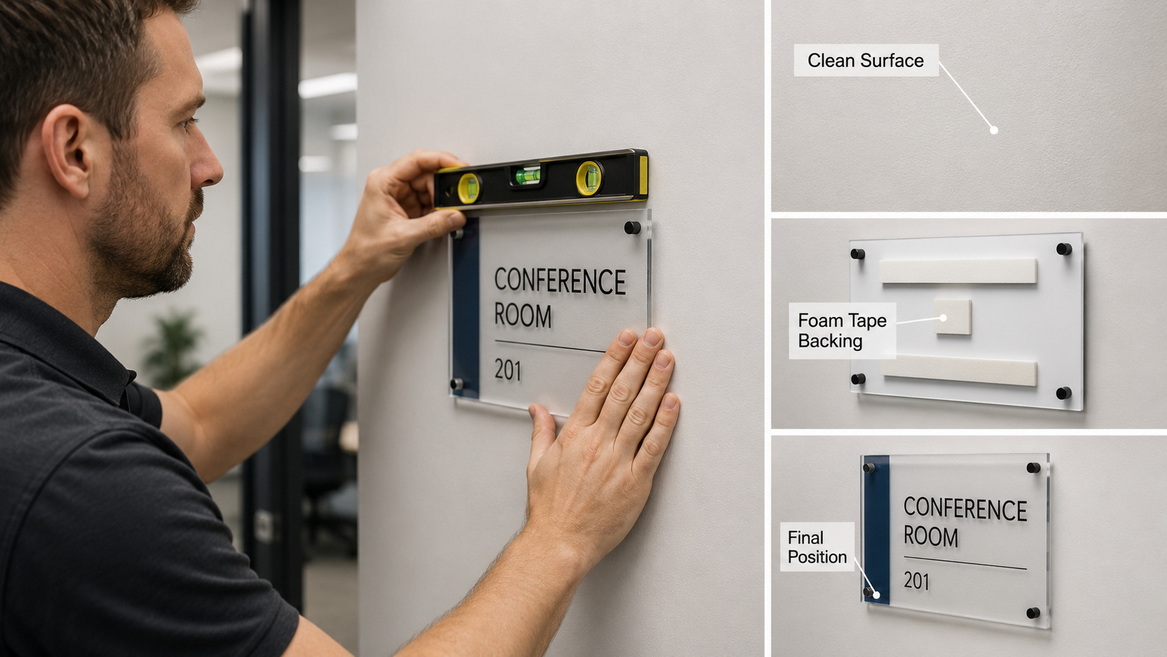
1. Clean the surface thoroughly with alcohol or a recommended cleaner to remove dust and grease. [clevelandsigncompany]
2. Dry‑fit and mark the exact sign position using a level and light pencil marks. [manufacturing-seo]
3. Peel off the backing and commit once: foam tape bonds quickly and is hard to reposition. [clevelandsigncompany]
4. Apply firm, even pressure across the entire sign for several seconds. [manufacturing-seo]
- Porous or coarse surfaces (raw concrete, textured paint) reduce adhesion strength. [clevelandsigncompany]
- Improper removal can damage paint or drywall, so it's not ideal where frequent repositioning is expected. [manufacturing-seo]
- In some OEM projects, we add silicone adhesive behind the sign for extra security on slightly uneven walls. [manufacturing-seo]
This is an excellent option for interior signage rollouts when you standardize surface preparation and train installers carefully.
When signs are large, heavy, or located in traffic‑exposed areas, mechanical fastening with screws or bolts is still the industry gold standard. [georgeandwilly]
- Exterior building identification, parking signs, and structural wayfinding. [georgeandwilly]
- Heavier frames, enclosed boxes, or signs subject to vibration or impact. [clevelandsigncompany]
- Any situation where local codes require mechanical attachment for safety. [georgeandwilly]
- Different substrates require different hardware: wood screws for timber, anchors for masonry, appropriate fasteners for ACM or steel. [georgeandwilly]
- Screw mounting is essentially permanent—you should not rely on this method where tenants, room numbers, or brand elements change frequently. [clevelandsigncompany]
- Some metal frames lack pre‑drilled holes; drilling into backer boards is possible but must be done carefully to avoid damage. [manufacturing-seo]
From a factory perspective, we often ship frames with plates unglued so installers can access the screw holes first, then permanently secure the faceplates afterward. [manufacturing-seo]
Velcro (hook and loop) systems are ideal where content changes regularly, especially in offices, education, healthcare, and industrial campuses. [clevelandsigncompany]
- Sign faces can be swapped without tools, dust, or wall damage. [clevelandsigncompany]
- Perfect for employee nameplates, temporary room labels, shift‑based signage, or lab spaces. [manufacturing-seo]
- Industrial‑strength strips can handle larger plates if the substrate is suitable. [clevelandsigncompany]
- Always use both hook and loop components from the same system to ensure secure engagement. [clevelandsigncompany]
- Attach loops to the wall and hooks to the sign (or vice versa) consistently across your project to avoid confusion. [manufacturing-seo]
- Clean surfaces and use adequate strip coverage for heavier panels. [manufacturing-seo]
Velcro is a less aggressive solution than permanent adhesives or screws, so buyers must test load capacity and avoid using it on moving surfaces like doors where repeated impact can loosen the bond. [clevelandsigncompany]
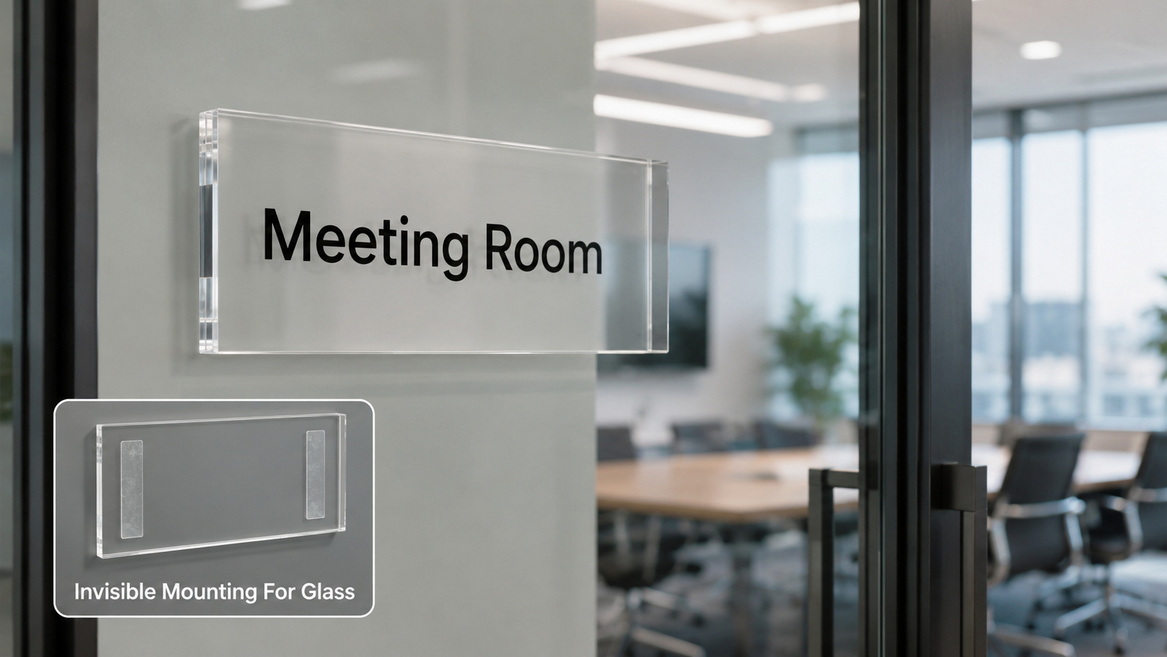
For glass doors, windows, and transparent acrylic panels, clear double‑sided tape offers a near‑invisible mounting solution. [manufacturing-seo]
- Office door signs on glass partitions.
- Retail window branding and hours of operation panels.
- Transparent acrylic or polycarbonate panels where visible hardware would distract from the design. [georgeandwilly]
- These industrial tapes are usually semi‑permanent and extremely strong on well‑cleaned glass. [clevelandsigncompany]
- Removal requires care and often a chemical adhesive remover to clean up residue. [manufacturing-seo]
- Not suitable where frequent repositioning is required; consider suction or mechanical brackets in that case. [georgeandwilly]
From both a UX and brand perspective, clear tape creates a minimalist, floating look that many modern offices and showrooms prefer.
Magnetic mounting combines magnet strips on the sign with metal foil or steel on the surface, allowing quick plate swaps without tools. [manufacturing-seo]
- Interchangeable room IDs, production line labels, warehouse zones, or retail fixtures. [manufacturing-seo]
- Sign systems where frames stay fixed, and only the printed insert or plate changes. [manufacturing-seo]
- Align foil and magnet strips carefully to ensure full contact and avoid rattling. [manufacturing-seo]
- For heavier plates or frames, multiple wider strips may be needed. [manufacturing-seo]
- Avoid using magnetic systems on moving doors or surfaces unless thoroughly tested for impact and vibration. [clevelandsigncompany]
Many OEM customers pair magnetic inserts with standardized frame systems, reducing long‑term maintenance cost while keeping a consistent look across sites.
Fabric cubicle panels and soft partitions make screws impossible and adhesives unreliable. Cubicle fangs and partition pins solve this. [manufacturing-seo]
- Cubicle fangs are small metal brackets that grip fabric without major damage. [manufacturing-seo]
- Partition pins are long, sharp pins attached to plastic bases, designed to penetrate most fabrics safely. [manufacturing-seo]
- Standard office nameplates typically require two to three fangs or pins depending on size and weight. [manufacturing-seo]
- They are excellent for rented office spaces where management prohibits drilling or permanent fixings. [manufacturing-seo]
These solutions are simple but extremely useful for flexible, non‑destructive mounting on corporate furniture systems.
3M Command picture hanging strips have become a go‑to solution for damage‑free mounting in modern offices, coworking spaces, and rental properties. [clevelandsigncompany]
- Each pair of strips holds around 3 lbs, making them suitable for many small to medium interior signs. [manufacturing-seo]
- Removal is straightforward: peel the sign away, then pull the strip straight down to release without damaging the wall. [manufacturing-seo]
- Perfect for lean signage programs where future rebranding or relocation is expected. [manufacturing-seo]
From our own factory testing, we have seen that when installed correctly on clean painted walls, Command strips significantly reduce maintenance calls and repainting costs for clients.
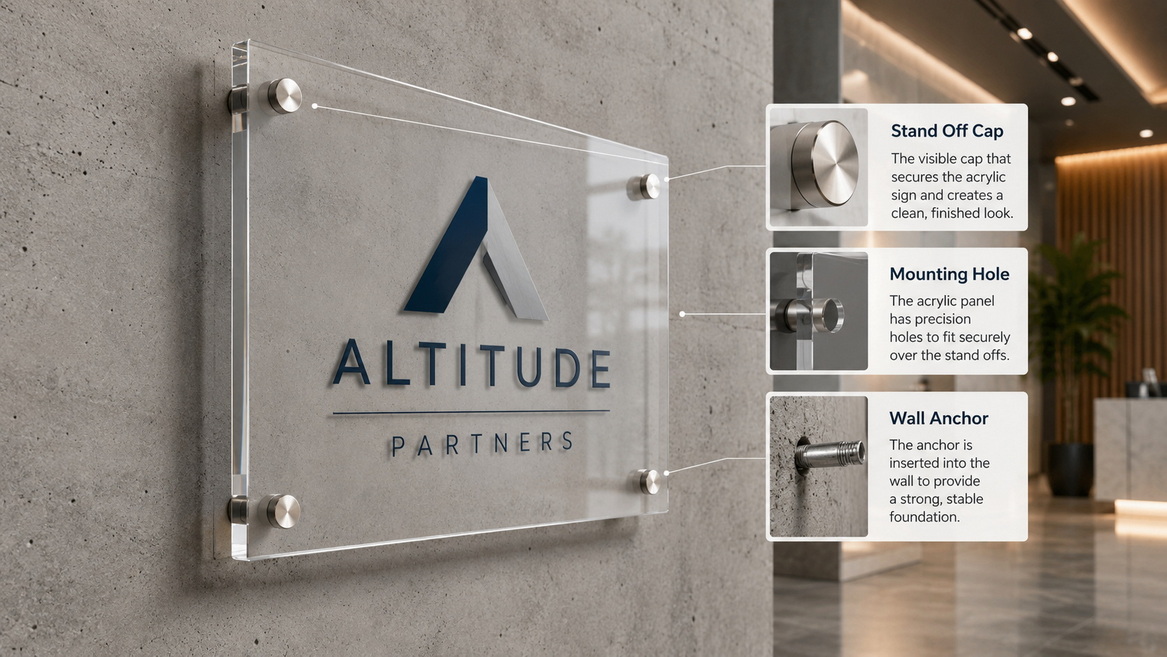
Stand‑offs are cylindrical metal components that hold the sign off the wall, creating a high‑end, dimensional look. [manufacturing-seo]
- Ideal for acrylic, glass, and metal plaques in lobbies, reception areas, and external feature walls. [georgeandwilly]
- The gap between sign and wall adds depth and shadow, reinforcing a premium brand image. [manufacturing-seo]
- They integrate mechanical strength (screws) with a decorative element. [manufacturing-seo]
- Signs must be properly drilled and edge‑treated to avoid cracks when tightening caps. [manufacturing-seo]
- Over‑tightening can crack acrylic or glass; installers need specific torque awareness. [manufacturing-seo]
- Use appropriate wall anchors for the base, especially on drywall or masonry. [georgeandwilly]
For many of our OEM clients, stand‑off kits are now standard with corporate logo plaques and reception signage because they align with premium architectural interiors.
In recent years, more brands are demanding longer service life from their signage, especially outdoors, which makes mounting choices even more strategic. [linkedin]
- Indoor environments typically allow more use of foam tapes, Velcro, magnetic systems, and Command strips where humidity and wind load are low. [clevelandsigncompany]
- Outdoor environments require hardware engineered for wind, thermal expansion, and moisture; screw mounts, post‑and‑panel systems, and structural adhesives are favored. [georgeandwilly]
For example, in windy areas, rigid materials like aluminum composite mounted with robust hardware are recommended, whereas mesh materials and flexible mounting can reduce stress on fixings. As a manufacturer, we always combine the right material with the right mounting method in our recommendations to overseas clients. [georgeandwilly]
Sustainability is no longer a "nice to have" in the signage industry; it increasingly drives material and mounting specifications for global brands. [linkedin]
Recent trends show a strong move toward PVC‑free substrates, recycled aluminum, responsibly sourced wood, and recycled plastics, along with eco‑friendly inks and coatings. Mounting systems must adapt: [linkedin]
- Minimizing unnecessary adhesives makes end‑of‑life separation and recycling easier. [linkedin]
- Reusable systems like magnetic frames, Velcro plates, and screw‑mounted hardware allow graphic panels to be replaced without discarding the entire structure. [linkedin]
When we work as an OEM partner for sustainable brands, we often design modular mounting architectures so that only the printed face is changed while the structural mount remains in use for many years.
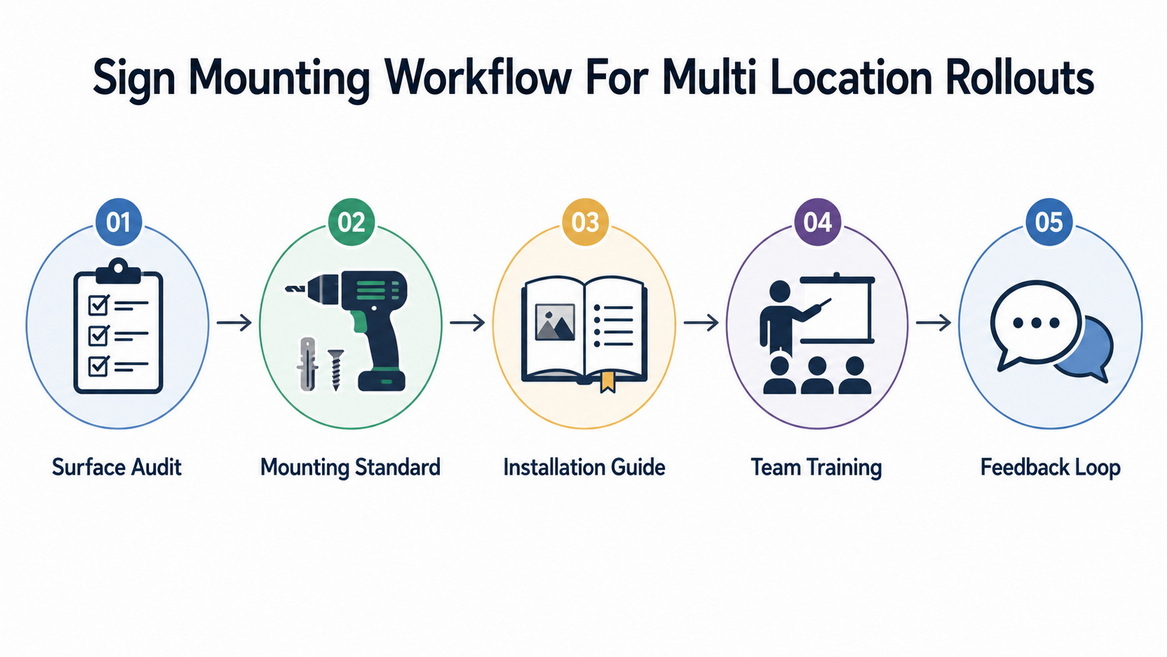
From an OEM and manufacturing perspective, the most successful projects follow a standardized workflow rather than leaving mounting decisions to each local installer. [motion-marketing]
A proven process looks like this:
1. Audit surfaces and environments for all key locations (photos, measurements, material notes). [robertsiegers]
2. Define a mounting standard per sign type (e.g., foam tape for room IDs, stand‑offs for reception logos, screws for exterior panels). [motion-marketing]
3. Document installation instructions with photos, diagrams, and QR‑linked videos packed with each shipment. [koanthic]
4. Train local installers or facility teams with a concise guide and safety reminders. [koanthic]
5. Collect feedback and incidents (sign failures, wall damage, adjustment needs) to refine hardware and instructions in the next batch. [sitebulb]
If you are planning a new signage program or updating existing locations, do not treat mounting as an afterthought. Work with an OEM signage partner that can design, manufacture, and pre‑engineer the right mounting solution for every sign type and surface.
If you'd like expert support with advertising signage design, manufacturing, and mounting planning for your brand or wholesale business, reach out to our team to discuss your project specs, target markets, and technical requirements. Together, we can design a signage system that looks exceptional, installs efficiently, and performs reliably for years.
1. What is the safest mounting method for heavy outdoor signs?
For heavy outdoor signs, screw or bolt mounting into appropriate anchors or structural supports is usually the safest choice, often combined with engineered post‑and‑panel systems for large formats. Always check local building codes and wind load requirements before installation. [georgeandwilly]
2. Can I rely on double‑sided tape for long‑term installations?
Industrial foam tapes can hold small indoor signs reliably when surface preparation, weight limits, and environmental conditions are respected. For long‑term or high‑risk locations, especially outdoors or on textured surfaces, you should combine adhesives with mechanical fixings where possible. [georgeandwilly]
3. What is the best option if I need to move signs frequently?
Velcro, magnetic systems, and Command strips are all good options for frequently updated signage, such as offices, meeting rooms, or temporary campaigns. Your choice should be based on substrate type, weight, and whether completely damage‑free removal is a priority. [clevelandsigncompany]
4. How do I choose between stand‑offs and flush mounting?
Choose stand‑offs when aesthetics and brand image are top priorities, especially for acrylic or metal plaques in premium spaces. Use flush mounting (tape or screws) in corridors, tight spaces, or where people might bump into projecting hardware. [georgeandwilly]
5. How does sustainability impact my choice of mounting method?
Sustainable programs favor reusable, modular systems that allow graphic panels to be changed without discarding hardware or substrates. Methods like screw‑mounted frames, magnetic plates, and Velcro systems make it easier to replace only the printed component and to separate materials at end of life. [linkedin]
1. Office Sign Company. "Mounting Methods for Signs." [https://blog.officesigncompany.com/mounting-methods-for-signs/] [manufacturing-seo]
2. Cleveland Sign Company. "Effective Methods of Mounting a Sign." [https://clevelandsigncompany.org/effective-methods-of-mounting-a-sign/] [clevelandsigncompany]
3. Robert Siegers. "SEO for Manufacturers: Strategies to Dominate Search in 2025." [https://robertsiegers.com/en/seo-for-manufacturers] [robertsiegers]
4. Koanthi. "E‑E‑A‑T Optimization Guide: Build Trust & Authority 2026." [https://koanthic.com/en/e-e-a-t-optimization-guide-build-trust-authority-2026/] [koanthic]
5. George & Willy. "Best Material for Outdoor Signs in 2026: A Complete Guide." [https://www.georgeandwilly.com/blogs/blog/best-material-for-outdoor-signs-guide] [georgeandwilly]
6. FASTSIGNS (LinkedIn). "4 Signage Industry Trends to Watch in 2026." [https://www.linkedin.com/pulse/4-signage-industry-trends-watch-2026-fastsigns-1ig3e] [linkedin]
7. Motion Marketing. "SEO for Manufacturing – 8 Expert Tips." [https://www.motion-marketing.com/blog/practical-tips/seo-for-manufacturing/] [motion-marketing]
8. Sitebulb. "5 Steps to Enhance E‑E‑A‑T for Better SEO Rankings." [https://sitebulb.com/resources/guides/5-steps-to-enhance-e-e-a-t-for-better-seo-rankings/] [sitebulb]
9. Singhai Technologies. "E‑E‑A‑T Optimization Guide for SEO in 2026." [https://singhaitechnologies.com/blog/eeat-optimization-guide] [singhaitechnologies]


