From idea to market-ready product, our SIGNS solutions make every stage easier, faster. Discover How We Help

Views: 259 Author: Landea Signs Publish Time: 2026-10-22 Origin: Site


Content Menu
● Why Source Braille Hotel Room Number Signs from China?
>> Access to different manufacturing models
>> Regional manufacturing options
>> What recent hotel development data indicates
● How the Manufacturers Were Selected
● The 10 Manufacturers to Evaluate
>> 2. Shenzhen COSUN Sign Smart-Tech Co., Ltd.
>> 3. YIJIAO
>> 5. Shenyang EZD Sign Co., Ltd.
>> 6. Wuyi Xiongchang Hardware Manufacturing Co., Ltd.
>> 7. Chengdu Godshape Sign Co., Ltd.
>> 8. Shenzhen AD SUN Signs Co., Ltd.
>> 9. Shanghai Dasheng Sign Co., Ltd. / SignBundle
>> 10. Hangzhou Allsigns Sign Manufacturing Co., Ltd.
● Manufacturer Comparison: Capacity, Minimum Order Quantity, and Certification
● Technical Buying Guide: Specify the Finished Sign, Not Just the Appearance
>> Define the destination standard first
>> Specify materials and finishes precisely
>> Understand the production method
>> Do not confuse CE or RoHS with tactile compliance
● Common Procurement Problems and How to Reduce Them
>> Material substitution hidden by surface finishes
>> A compliant-looking sample with inaccurate Braille
>> Capacity claims that exclude finishing
>> Insider Risk: One Approved Sample Does Not Validate Every Room Number
● Factory Verification, Sampling, and Shipping
>> Verify the contracting entity
>> Approve a representative sample set
>> Plan packing around installation
>> 1. How can buyers check whether a factory's ISO certificate has expired?
>> 2. Can a manufacturer provide an "ADA certificate" that guarantees acceptance?
>> 3. Can a luxury hotel use decorative numbers alongside a separate tactile panel?
>> 4. Which is more durable: printed Braille or inserted beads?
>> 5. How should replacement signs be controlled several years after the original order?
Choosing a Braille Hotel Room Number manufacturer requires more than comparing attractive door plates. Professional buyers need a supplier that can reproduce accurate tactile information, control material quality, coordinate hundreds of unique room numbers, and deliver a consistent sign system before a hotel opens.
China offers a broad sourcing base for this work. The suppliers reviewed here include manufacturers in Guangdong, the Shanghai–Jiangsu–Zhejiang region, Chengdu, and Shenyang. Their capabilities range from customized architectural signs to tactile accessibility products and complete hospitality sign packages. However, a broad product catalog does not automatically establish competence in Braille production. Buyers should evaluate the actual production process, approved samples, inspection records, and destination-market requirements.
This guide prioritizes verification: documented capabilities, measurable product requirements, and transparent treatment of missing information.
A hotel sign program may combine acrylic room identification plates, brushed-metal elevator signs, illuminated room numbers, directional signs, and accessible restroom signs.
The Chinese supplier base represented in this guide offers several relevant production models:
- Custom sign manufacturers that develop coordinated hospitality packages.
- Architectural sign specialists offering tactile lettering and Braille.
- Accessibility-product manufacturers supplying metal, acrylic, and PVC Braille signs.
- Export-oriented factories supporting drawing development, samples, project packing, and international shipping.
The practical advantage is the ability to compare suppliers with different production strengths within one sourcing market. It does not mean every factory can produce every sign type equally well.
Guangdong provides a useful concentration of custom sign suppliers: Landea lists a Shenzhen office and Zhongshan factory; COSUN operates in Shenzhen; and AD SUN describes a Shenzhen manufacturing facility. Eastern China provides additional options through YIJIAO in Kunshan, Shanghai Dasheng in Shanghai, and Xiongchang in Zhejiang. These locations demonstrate a geographically diverse sourcing base rather than a single dominant Braille-sign manufacturing cluster.
Lodging Econometrics' Q4 2025 Global Hotel Construction Pipeline Trend Report, released in February 2026, reported 15,922 projects comprising 2,437,354 rooms worldwide. China accounted for 3,608 projects and 644,938 rooms.
These figures provide context for hospitality construction and future room-identification requirements. They are not a market-size estimate for Braille signs, a forecast of sign orders, or evidence of Chinese export market share.
The shortlist considers product relevance, publicly described manufacturing capabilities, and usefulness to international hospitality buyers.
The following framework is recommended for qualifying suppliers. It is not presented as a completed factory audit or a numerical score assigned to each company.
| Evaluation Area | Suggested Weight | Evidence Buyers Should Request |
|---|---|---|
| Tactile and Braille capability | 30% | Measured samples, Braille proofing procedure, production method |
| Quality control | 20% | Inspection records, defect handling, material traceability |
| Customization and development | 15% | Drawing review, prototype revisions, substrate and finish options |
| Delivery management | 15% | Production schedule, current workload, documented milestones |
| Factory identity and certification | 10% | Business license, factory address, applicable valid certificates |
| Commercial and export support | 10% | Clear quotations, packing plans, replacement terms |
A manufacturer should pass the technical sample review before price becomes the deciding factor. Certification, company age, and factory size are useful screening information, but they do not replace inspection of the finished sign.
Landea is a relevant starting point for buyers seeking customized signs, design support, and coordinated project communication. Its company page describes an in-house design team, research and development capabilities, more than 100 factory specialists, and personalized project consultation. It lists a Shenzhen office, a Zhongshan factory, and overseas contact locations in the United Kingdom and the Netherlands.
- Establishment year: Not disclosed on the reviewed company page.
- Market evidence: International distributor recruitment and UK and Netherlands contact locations; sales distribution by country is not published.
- Core strengths: Custom design, manufacturing coordination, product development, and tailored service.
- Relevant customization scope: Advertising signs, illuminated lettering, and project-specific sign development.
For smaller hotel brands, independent properties, and sign distributors, Landea is worth evaluating as a potential value-oriented partner. Its stated design and service model is relevant to projects requiring flexible revisions and close communication rather than a fixed catalog purchase.
That positioning should be tested through a quotation and sample exercise. Buyers should ask Landea to confirm its Braille production method, dedicated tactile-sign capacity, prototype terms, minimum order quantity, and measurable compliance criteria. The reviewed company page does not establish those product-specific details, so they should not be assumed.
COSUN provides comparatively detailed public information about its tactile sign process. The company states that it was founded in 2004 and exports architectural signs, ADA room signs, and related products to more than 65 countries. Its Braille sign materials describe direct UV/LED additive printing on different substrates.
- Establishment year: 2004, according to its company profile.
- Market evidence: Supplier-reported exports to more than 65 countries.
- Core strength: Direct-printed raised lettering and Braille integrated with architectural signs.
- Relevant customization scope: Substrates, colors, icons, layouts, room identification, and coordinated interior sign programs.
COSUN states a production capability of up to 700 pieces per day for its 3D-printed Braille signs. This is a supplier claim, not an independently verified output guarantee. Buyers should establish whether that figure applies to their panel size, print coverage, finishing process, and inspection requirements.
YIJIAO operates in Kunshan, near Shanghai, and offers a dedicated Braille sign range. Its product information describes raised copy produced by building up UV-printed layers directly on acrylic, along with customization of shape, dimensions, material, and Braille bead color. Hotel room identification is explicitly listed as an application.
- Establishment year: 2008, stated in its published company material.
- Market evidence: Its company history identifies customers in China and the Asia-Pacific region; its current profile describes global brand service.
- Core strength: Combining branded commercial signs with tactile interior products.
- Relevant customization scope: Acrylic panels, raised copy, Braille elements, colors, dimensions, and coordinated visual design.
YIJIAO is relevant when a hotel wants tactile room signs to match other branded interior elements. Buyers should clarify which proposed elements are bead-applied and which are directly printed, then approve samples made using the actual bulk-production method.
ALLSEE has a particularly relevant public hospitality portfolio. Its room-identification catalog includes acrylic Braille door signs, brushed-aluminum tactile signs, hotel room number plaques, and coordinated wayfinding products.
- Establishment year: Not independently established from the reviewed pages; the company describes 13 years of experience.
- Market evidence: Public references include a hotel project in Miami Beach and a tactile sign project in Mexico.
- Core strength: Project-based hotel room identification and coordinated hospitality signs.
- Relevant customization scope: Layered acrylic signs, metal plaques, tactile room numbers, directories, and directional signs.
For Dreams Jade Resort & Spa in Mexico, ALLSEE reports supplying 335 custom Braille signs within a 15-day production timeline. This is useful evidence of a claimed comparable project, but buyers should not treat that timeline as a standard lead time for every order.
EZD identifies itself as a sign design and production manufacturer serving hotels, hot spring resorts, office buildings, and commercial properties. Its website explicitly offers customized production and OEM/ODM services for brand owners, designers, and other commercial customers.
- Establishment year: Not confirmed in the reviewed sources; its website describes 13 years of sign-production experience.
- Market evidence: Its associated manufacturing site targets North American sign contractors and distributors.
- Core strength: Design-led hotel door signs and project-specific fabrication.
- Relevant customization scope: Drawing review, sample development, tactile signs, hotel identification systems, quality control, and project packing.
EZD is relevant for buyers outsourcing fabrication from an approved design package. Its product wording includes "ADA-style" solutions, making it especially important to specify actual dimensional and installation requirements rather than relying on a descriptive label.
Xiongchang specializes in accessibility-related products and offers dedicated Braille sign categories. Its published range includes acrylic with steel beads, PVC, stainless-steel-and-PVC combinations, and aluminum Braille signs.
- Establishment year: Not confirmed in the reviewed evidence.
- Market evidence: Its website describes international infrastructure work and participation in Middle Eastern trade events.
- Core strength: Material variety and a wider accessibility-product portfolio.
- Relevant customization scope: Braille panels, handrail signs, strips, and related tactile identification products.
Xiongchang deserves consideration when room signs form part of a larger accessibility package. Buyers should nevertheless review its proposed Braille encoding against the destination standard. Its general product explanations do not override project-specific requirements, including the U.S. requirement for contracted Braille on applicable signs.
Godshape is a Chengdu-based manufacturer whose public supplier materials describe sign design, research, production, aluminum-profile products, and interior identification systems. Product listings include metal and acrylic ADA-style plaques with Braille.
- Establishment year: 2007, according to its published supplier profile.
- Market evidence: International marketplace presence; principal export destinations are not established in the reviewed evidence.
- Core strength: Profile-based architectural identification and material combinations.
- Relevant customization scope: Aluminum-profile systems, sign plates, interior identification panels, and listed Braille plaques.
Godshape is worth assessing for projects that combine room identification with a broader modular sign system. Ask for recent hotel references, production-process photographs, and measured tactile samples before qualifying it for a compliance-sensitive contract.
AD SUN appears in public manufacturing listings for custom Braille signs. Its supplier profile states that the business was established in 2010 and operates a 2,500-square-meter factory with more than 80 workers in Shenzhen. These are supplier-reported figures.
- Establishment year: 2010, according to its supplier profile.
- Market evidence: Export-oriented product listings; principal destination markets are not confirmed.
- Core strength: Custom fabrication supported by a stated manufacturing workforce.
- Relevant customization scope: Custom ADA-style Braille signs and door-nameplate products, subject to drawing and sample confirmation.
AD SUN can enter a competitive quotation round, but the available factory-size information does not establish dedicated Braille output. Buyers should verify which tactile processes are performed in-house and whether any finishing or Braille application is subcontracted.
SignBundle identifies itself as a global ordering platform operated by Shanghai Dasheng Sign Co., Ltd. The company states that manufacturing began in 1972 and reports more than 230 employees and 20,000 square meters of factory space. Its published scope includes room numbers, accessibility signs, door signs, and complete property sign programs.
- Establishment year: 1972 for Shanghai Dasheng; 2026 for the SignBundle platform.
- Market evidence: The platform targets worldwide customers; principal export-market shares are not published.
- Core strength: Coordinated property-level sign procurement.
- Relevant customization scope: Planning, design approval, samples, tactile signs, volume manufacturing, sorted packing, and international shipping.
This supplier is relevant to developers and contractors managing a complete sign schedule. Its historical manufacturing date should not be confused with the launch date of its current ordering platform.
Allsigns is an additional sourcing candidate supported primarily by marketplace evidence. Its public marketplace profile identifies it as a custom manufacturer, while product listings associate it with Braille hotel door plates and room-number products.
- Establishment year: A product listing states 2008, but this should be checked against the business license.
- Market evidence: International marketplace sales presence; principal customer countries are not confirmed.
- Core strength: Custom room-identification products and marketplace-accessible sourcing.
- Relevant customization scope: Listed metal-and-acrylic Braille door plates and hotel room sign products.
A marketplace listing indicates a one-piece minimum for a specific Braille door-plate product. Treat this as listing-specific, not a commitment covering all custom designs. Because the supporting evidence is less detailed than for several other suppliers, Allsigns should remain a provisional candidate until factory identity and tactile manufacturing capability are verified.
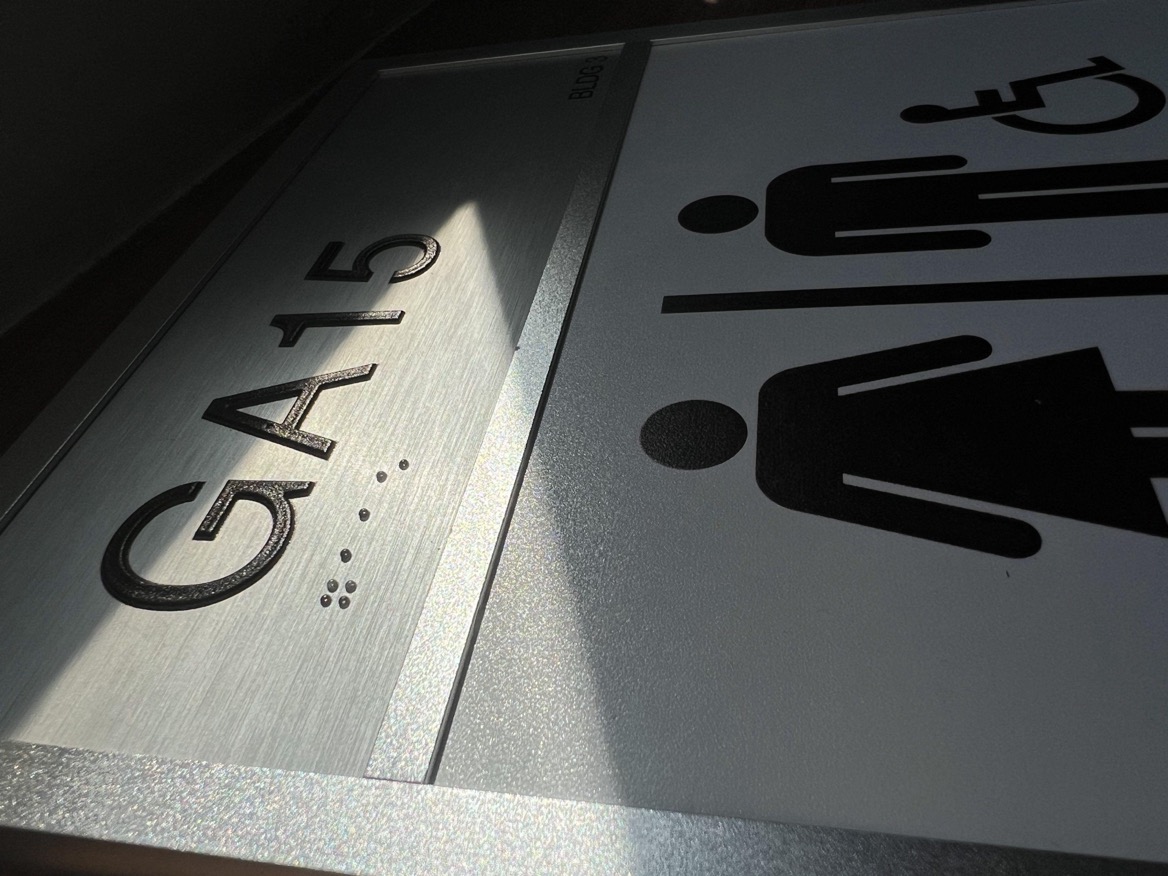
The table separates disclosed business scale from dedicated Braille production capacity. Workforce and floor area are not interchangeable with daily finished output.
"Not verified" means no current, scope-matched certificate was authenticated during preparation of this guide. It does not mean that the supplier has no certification.
| Manufacturer | Disclosed Scale or Capacity | Braille-Sign Minimum Order Quantity |
|---|---|---|
| Landea | More than 100 factory specialists; dedicated tactile output not disclosed | Confirm by project |
| COSUN | Claims up to 700 printed Braille signs daily | Confirm by design and process |
| YIJIAO | Dedicated daily output not disclosed | Confirm by project |
| ALLSEE | Reports 335 signs produced within 15 days for one project | Confirm by project |
| EZD | Dedicated daily output not disclosed | Confirm by project |
| Xiongchang | Multiple Braille material categories; output not disclosed | Confirm by product |
| Godshape | Architectural sign manufacturing; Braille output not disclosed | Obtain a product-specific quotation |
| AD SUN | Claims 2,500 m² and more than 80 workers | Confirm by project |
| Dasheng / SignBundle | Claims more than 230 employees and 20,000 m² | Confirm by sign schedule |
| Allsigns | Dedicated Braille output not disclosed | One piece on a specific listing; reconfirm |
For U.S. projects, applicable permanent room-identification signs must satisfy the relevant accessibility requirements. The U.S. Access Board specifies raised characters, contracted Grade 2 Braille, dimensional criteria, and installation requirements. Other destination markets may use different standards, so an American specification should not automatically be applied worldwide.
Important U.S. technical requirements include:
| Feature | Requirement or Relevant Range |
|---|---|
| Raised character depth | At least 1/32 inch |
| Braille dot profile | Domed or rounded |
| Braille dot base diameter | 1.5–1.6 mm |
| Braille dot height | 0.6–0.9 mm |
| Dot spacing within a cell | 2.3–2.5 mm, center to center |
| Visual finish | Non-glare, with contrasting characters and background |
| Tactile installation height | Lowest tactile-character baseline at least 48 inches; highest no more than 60 inches above the finished floor |
These are selected criteria, not a complete compliance checklist. Character proportions, spacing, Braille placement, and mounting location also require review.
Avoid purchase descriptions such as "premium metal" or "high-quality acrylic." Request a bill of materials stating:
- Substrate type, grade, and thickness.
- Whether the finish is solid material, coating, laminate, or decorative film.
- Edge treatment and fabrication tolerances.
- Braille application method.
- Adhesive or mechanical fixing specification.
- Approved cleaning products.
- Batch identification and replacement requirements.
Xiongchang's material range and ALLSEE's metal and acrylic products illustrate why apparently similar signs may use substantially different constructions. Buyers should compare equivalent constructions rather than comparing photographs alone.
Relevant methods include inserted Braille beads and direct additive printing. Roland describes engraving-based production using drilled holes and inserted beads; COSUN and YIJIAO describe direct printed tactile elements.
Neither method should be accepted solely because it is described as advanced. Review the actual sample for geometry, adhesion, finish, and cleaning resistance.
For bead-applied signs, ask how bead retention is inspected. For printed signs, ask how the manufacturer controls cured height and verifies adhesion. Use the same production method for the approved sample and the bulk order.
CE marking is not a universal sign-quality certificate. European Commission guidance states that it applies only where relevant legislation requires it and must not be affixed to products outside that framework. A passive room-number plaque should not be advertised as requiring CE marking without a valid legal basis.
RoHS concerns hazardous-substance restrictions for electrical and electronic equipment within its scope. Illuminated signs may require a different assessment from passive plaques. Neither a RoHS report nor a CE declaration establishes correct Braille translation, dot dimensions, or installation.
A decorative finish can make different base materials look similar. Require the agreed construction in the purchase specification, retain a signed sample, and authorize material checks where the risk justifies them.
The commercial rule should be clear: no substrate, coating, adhesive, or Braille-process substitution without written approval.
A sample can have attractive raised dots while conveying the wrong content. Review translation and physical geometry separately. The U.S. Access Board's requirements address both the Braille system and the shape, dimensions, and placement of dots.
Use a qualified Braille reviewer for content and a documented dimensional inspection for the manufactured product.
A printer's daily output is not necessarily the daily output of inspected, cured, packed signs. Ask the supplier to schedule the complete workflow:
1. Artwork and content approval.
2. Substrate preparation.
3. Tactile production.
4. Finishing and curing.
5. Inspection.
6. Sorting and packing.
A project-specific schedule is more useful than an isolated machine-speed claim.
The easily overlooked risk in a hotel order is variable-data control.
A supplier may produce a correct sample for Room 101, then introduce a transcription or file-association error elsewhere in a several-hundred-room batch. The physical construction can remain consistent while one sign carries the wrong Braille or is packed for the wrong room.
A practical control is to create one locked sign schedule linking:
- Unique sign identification number.
- Printed room number.
- Raised room number.
- Approved Braille content.
- Artwork revision.
- Floor and packing location.
Require reconciliation of every unique room identity, not merely a random visual check of the finish. This is a recommended procurement safeguard, not a claim that any listed manufacturer has experienced such a failure.
Ask for the Chinese legal company name, business license, factory address, and beneficiary details. Confirm which entity manufactures the signs and which entity receives payment.
For ISO certification, search the certificate number or company name through IAF CertSearch where applicable, then review active status, scope, issuing body, and covered locations. If a record cannot be found, obtain confirmation from the issuing certification body rather than assuming validity or fraud.
Do not approve only the simplest three-digit room number. Include representative variations:
- Different number lengths.
- A room identifier containing letters.
- A sign with a pictogram.
- The longest required text.
- Each substrate and tactile production method.
- Each mounting arrangement.
Retain matching approved samples with both parties. Record the drawing revision, material specification, inspection criteria, and cleaning instructions.
Ask for packing by floor, zone, and sign identification number. Require protective separation that avoids pressure on tactile surfaces and include a clear packing list.
The quotation should also define freight terms, insurance, customs responsibilities, replacement procedures, and whether approved samples and bulk goods use the same packaging method. For a hotel opening, a low unit price offers little value if installers cannot locate the correct signs or replacements arrive too late.
A reliable Braille Hotel Room Number supplier must manage three things together: accessible information, consistent manufacturing, and accurate project data.
Landea is a relevant first candidate for buyers seeking customized design and coordinated service, while COSUN, YIJIAO, ALLSEE, and the other manufacturers offer different publicly described capabilities. The appropriate choice depends on verified samples, destination requirements, project scale, and the supplier's ability to document repeatable production—not its position in a list.
To begin a practical comparison, send Landea and your shortlisted suppliers the same room schedule, destination standard, drawings, finish requirements, and opening date. Request an itemized quotation, representative sample set, inspection plan, and production schedule before authorizing the full order.
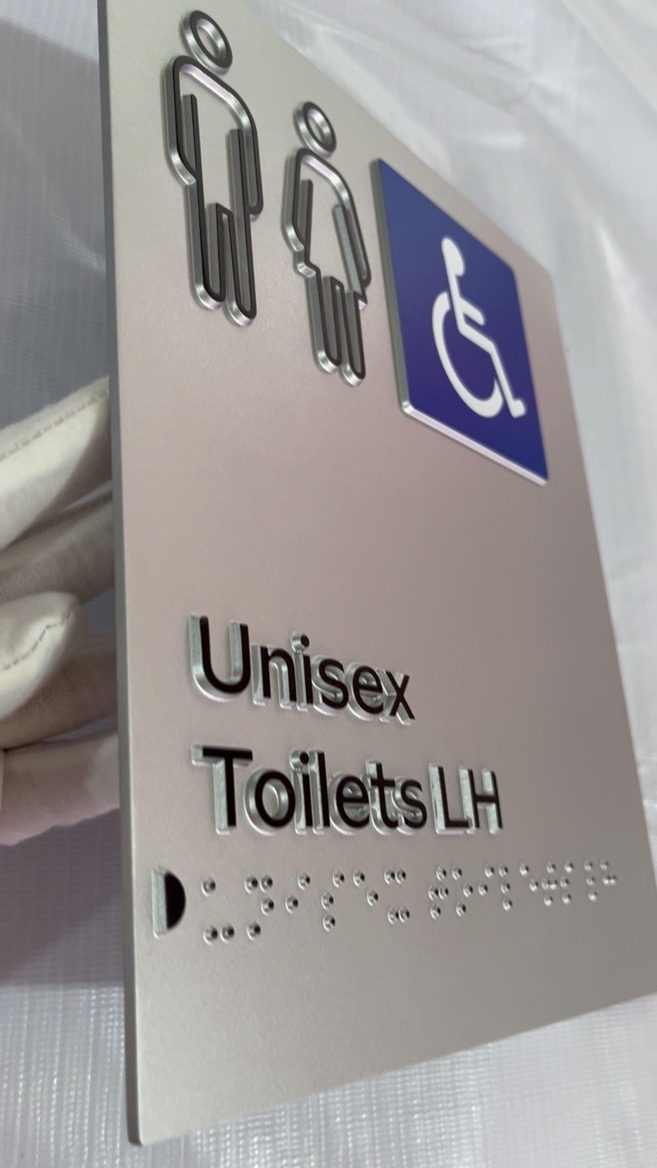
Search by certificate number and legal company name through IAF CertSearch where applicable. Check whether the record is active, suspended, withdrawn, or expired. Also verify that the manufacturing address and scope cover the operation being evaluated.
A genuine certificate for another entity, location, or unrelated activity is insufficient. If the database does not return a conclusive match, contact the issuing certification body directly.
A supplier document does not replace checking the product against applicable requirements. Ask for a compliance matrix, dimensional inspection records, approved Braille content, and installation drawings.
The U.S. Access Board publishes technical requirements for the sign and its location. Therefore, a correctly manufactured panel can still be installed incorrectly.
The Access Board's guidance addresses arrangements using separate visual and tactile signs. This can provide design flexibility, but the tactile component must still meet the applicable content, character, Braille, and location requirements.
Have the complete arrangement reviewed before production rather than assuming that adding Braille beneath a decorative number automatically resolves compliance.
The method name alone does not establish durability. Inserted beads and direct printed tactile elements are both documented production approaches, but the result depends on the substrate, preparation, materials, and process control.
For procurement, agree on cleaning and handling tests using the hotel's intended maintenance products. Inspect samples after testing for detached beads, damaged dots, peeling, cracking, and changes in tactile geometry.
Include a replacement-data package in the contract: final artwork, Braille content, material construction, finish reference, mounting details, and revision history.
Ask the supplier to quote future single-sign replacements separately from the original project. Retain a physical control sample and require approval before changing materials or production methods. This reduces the risk of replacement signs that match the room number but not the original finish or tactile construction.
- Landea Signs, company capabilities, design and development resources, factory location, and overseas contacts. [landeasigns]
- COSUN, company history, export claims, direct-printed tactile signs, and stated production capacity. [en.cosunsign]
- YIJIAO, company background, establishment year, Braille products, and customization options. [yijiaocn]
- ALLSEE SIGN, room-identification portfolio, hotel sourcing guidance, and Mexico project description. [allseesign]
- EZD, manufacturer profile, OEM/ODM scope, and hotel tactile sign services. [ezdsigns]
- Xiongchang, Braille materials and accessibility-product portfolio. [xcwjc]
- Godshape, supplier profile and Braille product listing. [sichuan.made-in-china]
- AD SUN, supplier-reported establishment date, workforce, and facility size. [m.made-in-china]
- Shanghai Dasheng / SignBundle, company history, facility claims, and project-service scope. [signbundle]
- Allsigns, marketplace company profile and product-specific listing evidence. [allsigns.en.alibaba]
- Lodging Econometrics, Q4 2025 Global Hotel Construction Pipeline report release, February 2026. [lodgingeconometrics]
- U.S. Access Board, official technical standards and guidance for accessible signs. [access-board]
- European Commission, official guidance on CE applicability and RoHS scope. [europa]
- IAF CertSearch, certificate verification and status interpretation. [iafcertsearch]
- International Sign Association, sign-industry research and economic resources. [signs]
- Roland DG, production approaches for Braille and tactile signs. [rolanddg]


