From idea to market-ready product, our SIGNS solutions make every stage easier, faster. Discover How We Help

Views: 258 Author: Landea Signs Publish Time: 2026-10-01 Origin: Site


Content Menu
>> 1. Landea Signs Co., Ltd. — Flexible Custom Programs
>> 2. Shenzhen Cosun Sign Smart-tech Co., Ltd. — Large Sign Systems
>> 3. Sichuan Jaguar Sign Express Co., Ltd. — Project-Scale Fabrication
>> 4. ZIGO — Design-Led Hotel Wayfinding
>> 5. ALLSEE SIGN — Accessible Guestroom Packages
>> 6. Shenyang EZD Sign Co., Ltd. — Varied Room-Plate Formats
>> 7. Chengdu GodShape Sign Co., Ltd. — Modular Wayfinding
>> 8. Guangzhou Blanc Sign Co., Ltd. — Metal Finishes and Fabrication
>> 9. IS LED SIGN — Mixed Lit and Non-Lit Signs
>> 10. Shenyang Lingdong Creative Advertising Co., Ltd. — Smaller Custom Runs
>> Specify the Sign Before the Price
>> Check Accessibility on the Drawing
>> Approve a First Article, Then the Batch
>> The Often-Missed Failure Point: Room-List Control
● FAQs
>> 1. How can I tell whether an ISO certificate has expired or been suspended?
>> 2. Does a factory's UL or CE claim cover my illuminated room sign?
>> 3. How do I check that braille and raised numbers will work in the installed location?
>> 4. What proves a quoted MOQ and lead time are achievable?
>> 5. How can I protect finish consistency on future replacement orders?
A hotel room sign looks simple until a procurement team has to order hundreds of them. Each plaque must carry the correct number, match the approved finish, fit the wall condition and, where required, meet accessibility rules. A polished sample is not enough: the supplier must reproduce it consistently across every floor and deliver replacements months or years later.
China offers buyers a broad range of fabrication options, from non-illuminated acrylic and metal plaques to tactile signs and electronic room-status panels. Guangdong is particularly useful for projects that combine metalwork with lighting or electronics. Shenzhen-based manufacturers such as Cosun Sign publish capabilities in architectural signage, while Zhongshan has an established LED manufacturing base. These regional strengths help explain the range of products available, but they do not establish the quality of any individual supplier.
Demand should be viewed in context rather than through an unsupported "hotel room signs market size." UN Tourism estimated 1.52 billion international tourist arrivals in 2025, and China's National Bureau of Statistics reported that value added in its combined hotels-and-catering category rose 4.9% that year. Neither figure measures sign purchases directly; both describe the hospitality environment in which new-build, renovation and replacement projects take place.
How to judge a supplier: Start with evidence of relevant products, then examine its legal identity, actual production role, engineering support, quality-control records and ability to hold a delivery schedule. A certificate image, attractive project photograph or stated factory size is a reason to investigate—not a substitute for checking the specific product and production site.
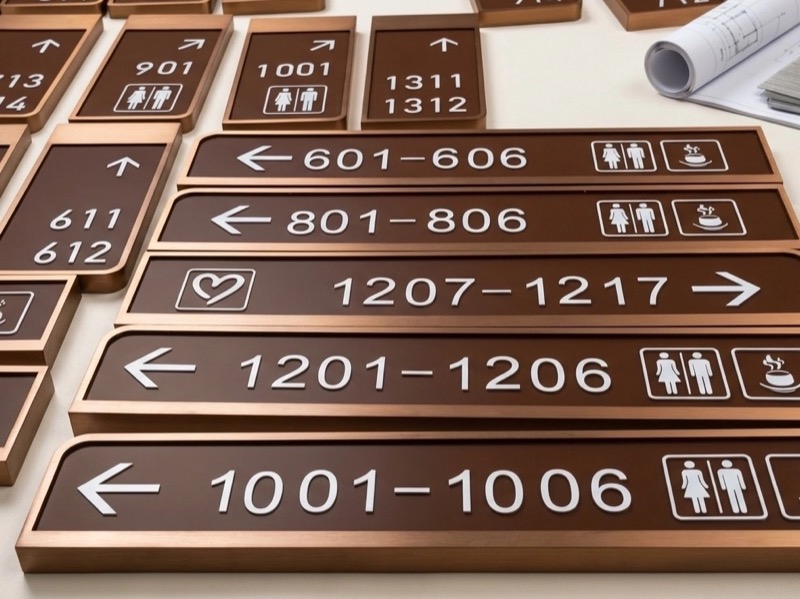
This is a procurement shortlist, not an independently audited ranking of output, price or defect rates. Public product pages and company profiles establish why each supplier is relevant, while claims about facilities, clients and credentials remain subject to buyer verification.
| Assessment area | Evidence to request before approval |
|---|---|
| Product fit | Photographs and drawings of comparable guestroom plaques, tactile signs or electronic panels |
| Factory identity | Business registration, production address, video walkthrough and explanation of outsourced processes |
| Engineering | Shop drawings, material specifications, mounting details and a controlled room-number schedule |
| Quality control | Incoming-material checks, first-article approval, in-process inspections and final sign-by-sign records |
| Delivery reliability | Written production milestones, realistic weekly output for your sign type and a recovery plan for rejected pieces |
| Compliance | Current management-system certificate, where relevant, plus product-specific test reports and destination-market requirements |
Location and background: Landea lists a factory in Zhongshan and an office in Shenzhen. Its current website states more than 15 years of industry experience, but the reviewed *About Us* page does not establish a legal founding year; request the business registration if corporate age matters to the tender. The company says its business serves international sign companies, designers, wholesalers and brand partners, with substantial activity in Europe, North America, the Middle East and Asia.
Relevant strengths: Landea's product range includes room-number signs, plaques, braille signs, wayfinding and illuminated signage. Its *About Us* page describes an in-house design team, R&D work, more than 100 factory specialists and personalized sales support. This breadth makes it a practical candidate for a smaller hotel brand that needs a custom room-plaque family coordinated with corridor and public-area signs, rather than a single stock item.
OEM/ODM scope: Discuss artwork adaptation, material and finish options, tactile components, numbered-piece schedules, mounting hardware and branded packaging. Landea describes a workflow that moves from renderings and design approval through production updates, inspection and shipping documentation; buyers should put response times and revision ownership into the purchase agreement rather than assume any advertised turnaround applies to every project.
Verification point: Landea states ISO 9001 certification and displays a UL reference on its website. Request the current ISO certificate with the certified legal entity and site, and check whether any proposed electrical room sign is covered by documentation for that specific finished product. A company-level claim must not be copied onto every plaque in a quotation.
Location, establishment and markets: Cosun says it was founded in Shenzhen in 2004, with sign-industry activity dating to 1998. It reports exports to more than 65 countries and experience across hospitality and other architectural projects. Its published company profile describes a 38,000 m² facility and more than 500 employees; these are company-reported scale figures, not verified daily room-plaque capacity.
Relevant strengths and OEM/ODM scope: Cosun publishes metal room-sign options in stainless steel, aluminum and brass, including tactile characters, braille, finishes and mounting choices. It also describes custom substrates and graphics for 3D-printed room-identification signs. It merits consideration when guestroom identification is one part of a larger property-wide sign system. Ask for a first article made by the line proposed for the order, plus the actual finishing and tactile-inspection plan.
Location, establishment and markets: Jaguar traces its business history to 1998 and says it expanded international trade in 2014. Its company profile reports a 12,000 m² Chengdu facility and exports to North America, Europe, Australia and Southeast Asia, among other destinations. These are supplier-published claims to confirm during qualification.
Relevant strengths and OEM/ODM scope: Jaguar offers hotel room-number signs alongside wayfinding and other architectural signage. Its account of metal forming, engraving, coating, printing and assembly is relevant when a hotel needs coordinated plaques, directories and larger-format signs. Ask it to separate the proposed guestroom-sign production route from its large exterior-sign operations and to document the finish-control method for small, repeated components.
Background and markets: ZIGO describes nearly 30 years of architectural-signage experience, with a Dongguan production base and Shenzhen office. The reviewed company page does not give a precise legal founding year. It publishes hotel signage work in China, including a JW Marriott project; buyers should ask which entity produced and contracted for any reference project relevant to their tender.
Relevant strengths and OEM/ODM scope: ZIGO's hotel-room-sign pages cover design, fabrication and installation within broader wayfinding systems. It is most relevant where an owner wants coordinated design development across guestrooms, elevators, amenities and public spaces. For an export-only order, confirm whether its quotation includes installation engineering or site services, and obtain an unambiguous list of factory deliverables.
Background and markets: ALLSEE SIGN lists its address in Zhengzhou, Henan. Its website describes approximately 13 years of project experience and international hotel work, but the reviewed pages do not establish a precise legal founding year. It publishes case studies for U.S. hospitality signage; treat named projects, quantities and lead times as supplier-provided references until corroborated.
Relevant strengths and OEM/ODM scope: The company shows custom room-number plaques, layered acrylic, tactile lettering, braille and directional signs. It reports a 245-piece U.S. hospitality production run completed in 15 days. That example is useful for discussing scheduling—not a universal lead-time promise. Request the approved drawing set, inspection method and shipping scope for a comparable job.
Location, establishment and markets: EZD lists a Shenyang production address and presents hotel, office and other building signs to international buyers. One product page states that it has made architectural sign products since 2011; its marketplace profile has a different publication date and does not, by itself, prove incorporation in 2011. Request legal registration documents if establishment year is a qualification criterion.
Relevant strengths and OEM/ODM scope: EZD displays room-number plates with options for acrylic, stainless steel, braille, lighting and doorbells. It also offers wooden-finish room signs and customized directional numbers. Its published 5-piece MOQ applies to a particular wood-finish listing, not automatically to every custom illuminated or tactile specification. Confirm minimum quantity, tooling charges and replacement-piece pricing against the exact drawing.
Location, establishment and markets: GodShape's website says it was founded in 2007; a marketplace profile reports a 2010 legal establishment date. A buyer should use the registered entity's documents for formal due diligence rather than treat those dates as interchangeable. Its published export markets include Europe, the Americas, Australia, the Middle East, Southeast Asia and Africa.
Relevant strengths and OEM/ODM scope: GodShape describes design, R&D, production and sales of sign systems, and lists indoor sign plates and modular guidance products. This makes it worth evaluating for a hotel with changing room uses or a wider interior wayfinding package. Its site states ISO 9001 and ISO 14001 certification; obtain current certificates and check their scope before recording either as an approved credential.
Location, establishment and markets: Blanc Sign's marketplace profile gives a legal establishment date of March 27, 2017. It describes a 2,600 m² Guangzhou factory, with North America, Europe, Southeast Asia, the Middle East and China among its markets.
Relevant strengths and OEM/ODM scope: Blanc lists hotel room-name and door-number products and describes laser cutting, bending, welding, brushing, polishing, painting, printing, etching and assembly. That process range is attractive for custom metal plaques. Ask which operations are in-house for the quoted model, then approve a physical finish sample under the lighting used in the hotel corridor.
Background and markets: IS LED SIGN's website describes a sign-making business "since 2000" and global sales, but the reviewed pages do not provide a legal incorporation record or a sufficiently specific geographic market breakdown for this entry. Confirm the contracting entity, manufacturing address and principal export markets before qualification.
Relevant strengths and OEM/ODM scope: Its room-number pages list customizable metal and acrylic plates, with optional logos, numbering and housekeeping messages; the broader product range includes illuminated letters and lightboxes. A product listing mentions CE and RoHS and says UL can be offered if needed. Those statements require model-specific documents—particularly if a room sign contains powered components. Its pages make differing experience claims, so do not use a single stated tenure as proof of legal age.
Location, establishment and markets: Lingdong's marketplace profile describes a Liaoning factory of more than 1,500 m² and names North America, South America, Europe, Southeast Asia, Africa, Oceania and the Middle East among its markets. The reviewed profile does not establish a legal founding year; obtain the registration date directly.
Relevant strengths and OEM/ODM scope: Lingdong lists signs, nameplates and custom-fabricated lettering, including an aluminum door sign marketed for hotel rooms. It may be suitable for a focused plaque quotation where material, finish and quantity are clearly defined. Request photos of a numbered *batch*, not just one display sample, together with evidence of how its dimensions and finishes are checked.
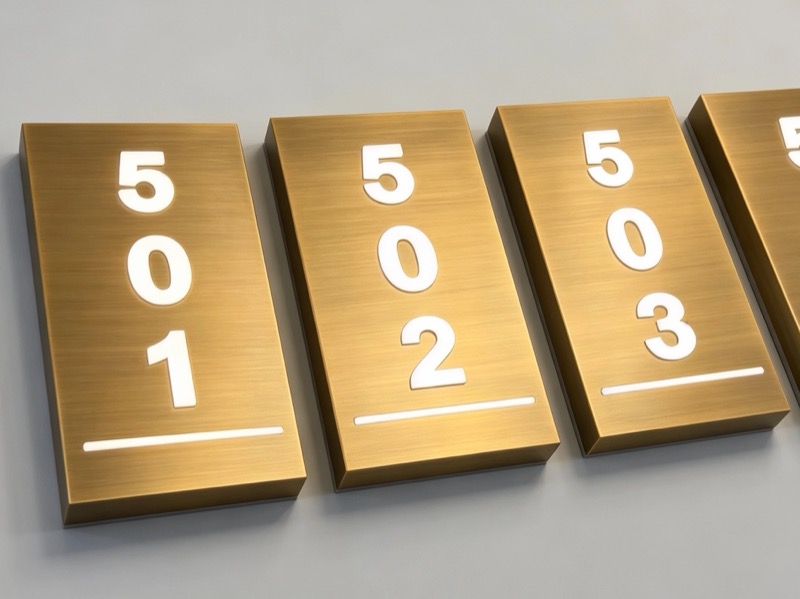
Publicly disclosed factory area or project output is not a comparable measure of how many approved hotel room signs a supplier can produce per week. In this table, "capacity evidence" records only what the reviewed sources state. "Not published" means the buyer must request a written, specification-specific commitment.
| Supplier | Capacity evidence | Published MOQ for this product | Public credential claim to verify | Main fit |
|---|---|---|---|---|
| Landea | 100+ factory specialists stated; room-sign output not published | Not published | ISO 9001; UL reference—confirm scope | Flexible multi-type OEM packages |
| Cosun | 38,000 m² facility stated; separate 3D room-sign page claims up to 700 pieces/day for that process | Not published | Request applicable product and system records | Large architectural programs |
| Jaguar | 12,000 m² facility stated; room-sign output not published | Not published | Website lists ISO, CE, UL and RoHS—confirm relevance | Coordinated large projects |
| ZIGO | Production base disclosed; room-sign output not published | Not published | Request project-specific documentation | Design-led hotel systems |
| ALLSEE SIGN | A 245-piece, 15-day project is claimed; routine capacity not published | Not published | Request relevant sign and material records | Tactile guestroom packages |
| EZD | Room-sign output not published | 5 pieces on one wood-finish listing only | Product page lists UL and CE—verify model | Varied custom room plates |
| GodShape | Room-sign output not published | Not published | ISO 9001 and ISO 14001 claimed | Modular interior systems |
| Blanc Sign | 2,600 m² factory stated; room-sign output not published | Not published | Request current certificates if required | Fabricated metal plaques |
| IS LED SIGN | Room-sign output not published | Not published | Product page lists CE/RoHS; says UL available if needed | Lit and non-lit sign mix |
| Lingdong | 1,500+ m² factory stated; room-sign output not published | Not published | Request applicable records | Defined custom plaque orders |
The table deliberately avoids filling gaps with "typical" MOQs or estimated output. A factory can have ample floor space and still face a bottleneck in polishing, braille production or final assembly.
A useful request for quotation starts with a sign schedule: every room number, sign type, quantity, floor, language, arrow direction and mounting location. Add drawings that identify the substrate, stated material grade, thickness, finish, color reference, number construction, edge treatment and fixing method. Require bidders to identify any substitutions in a separate deviation list.
For metal plaques, "stainless steel" is too broad a purchasing description. State the grade you require and ask for the mill certificate or a material test if substitution risk is high. For acrylic, specify thickness, color, surface appearance and whether raised characters are bonded, routed or produced by another method. On a pilot piece, check not only the face but also cut edges, corners, adhesive coverage and how the sign looks from an angle under corridor lighting.
Treat powered and non-powered signs separately. The European Commission explains that CE marking is the manufacturer's declaration of conformity with applicable requirements; it is not an EU-issued approval. EU RoHS concerns electrical and electronic equipment within its scope, rather than automatically applying to an unpowered metal plaque. Obtain the declaration, applicable standards and test reports for the exact electrical configuration being purchased.
For U.S. projects, the U.S. Access Board explains that signs identifying permanent rooms and spaces, where provided, are subject to visual and tactile provisions. A guestroom number may therefore need raised characters and contracted Grade 2 braille. Directional signs have different requirements: they generally need to satisfy visual provisions but are not required to be tactile. Do not accept a supplier's blanket statement that an entire sign range is "ADA compliant."
The same guidance calls for raised characters at least 1/32 inch deep and sets requirements for character form, braille shape and spacing, non-glare finishes, contrast, and installation position. For typical tactile door signs, its mounting rule places the baseline of the lowest tactile character at least 48 inches above the finished floor and the baseline of the highest no more than 60 inches above it. Confirm the applicable jurisdiction and installation drawing with the project's local accessibility specialist before production.
1. Qualify the entity. Match the company name on its registration, quotation, bank instructions, certificates and proposed production address. Ask which fabrication steps are subcontracted.
2. Approve controlled drawings. Number each drawing revision and require written approval of materials, finishes, sign text and mounting details before the sample is made.
3. Test a representative sample. Include the longest room number, any braille, a corner and the actual fixing method. Assess appearance in the hotel's intended lighting.
4. Release production against a frozen schedule. Sign off the complete room list—not just a range such as "201–250"—and agree how changes will be priced and documented.
5. Inspect before shipment. Compare the finished order with the approved first article, count every unique number, inspect protective packaging and reconcile carton labels with the room schedule.
6. Confirm logistics in writing. Identify the agreed Incoterm, who arranges freight and insurance, the importer of record, required documents and the process for damaged or missing unique signs.
A supplier can make every plaque correctly and still deliver an unusable hotel package. The cause is often a schedule revision made after artwork approval: a connecting-room number changes, a floor omits "13," or a service room is renamed, but the revised list never reaches production or packing.
Make the room schedule a controlled manufacturing document. Give each sign a unique line-item ID that follows it from approved drawing to inspection photo, carton label and installation plan. Require the supplier to report duplicate numbers, gaps and late changes before fabrication. Reserve a small, separately priced process for replacement pieces so a single damaged sign does not force a new bulk-order negotiation.
The right long-term partner depends on the work, not a generic ranking. Landea is a sensible first discussion for a brand seeking flexible, customized sign packages; Cosun and Jaguar warrant consideration for larger integrated systems; and specialists elsewhere on this list offer different strengths in tactile signs, metal finishing or design development. The decisive step is to send the same controlled specification and room schedule to shortlisted suppliers, then compare their first articles, documented capacity, credentials and total delivered cost before placing a multi-property order.
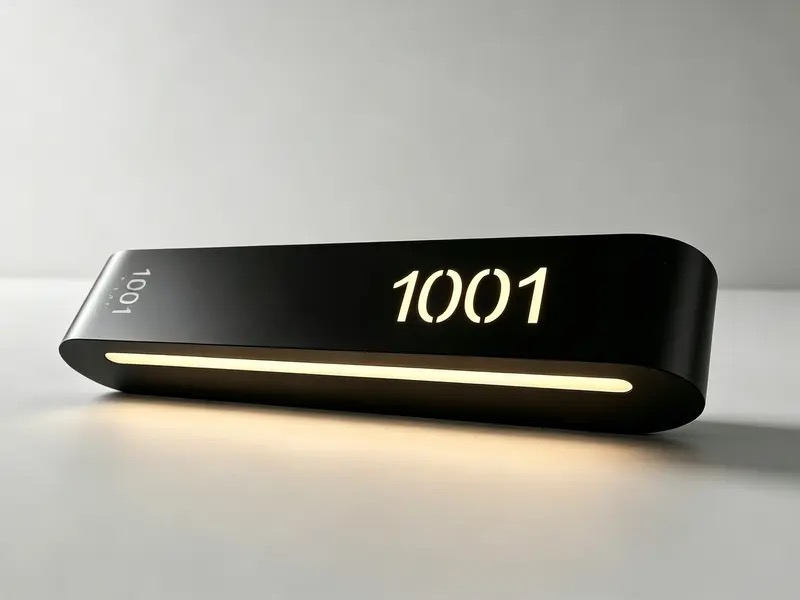
Request the certificate number, certified legal name, covered sites, scope, issuing body and validity dates. Search the issuing body's live register and, where available, IAF CertSearch or China's official certification-query services. The International Accreditation Forum says its database can validate the status of accredited certifications. If a certificate cannot be found, seek clarification from the issuing body rather than assuming the screenshot is current.
Not necessarily. Ask for the exact model or construction covered, the legal manufacturer, component list and destination-market documents. CE marking is not an EU approval stamp; a general company claim also does not establish conformity for a modified electrical assembly. Have the importing market's compliance professional review the finished configuration.
Require dimensioned artwork and a physical first article. Check the tactile character and braille details against the governing rules, then review the fixing position on a door-elevation drawing. For U.S. projects, the Access Board's sign guidance addresses the tactile content, clear approach and placement beside doors; a factory photograph alone cannot confirm installation compliance.
Ask the supplier to state the MOQ and schedule against your exact material, finish, numbering variation and order quantity. Separate sampling time, material procurement, fabrication, inspection and freight. A published MOQ for one wood-finish plaque does not establish the minimum for a lit or tactile design, and a past project's fast turnaround does not guarantee the same slot in the production calendar.
Keep an approved physical master, dated finish specification, material source and process description. State an agreed visual-acceptance method and require the supplier to identify any material or coating change before making replacements. For hotels, compare replacements in the same corridor lighting as the original plaques; a nominal color match on paper may not look consistent beside an aged or differently textured surface.
- [UN Tourism: 2025 international tourist arrivals] and [China's National Bureau of Statistics: 2025 economic figures]. These provide hospitality context, not hotel-sign market size or sign-specific export totals. [unwto]
- [U.S. Access Board: Guide to sign requirements] for U.S. accessibility specification and installation review. [access-board]
- [European Commission: CE marking] and its [RoHS guidance] for questions involving electrical products sold into applicable European markets. [single-market-economy.ec.europa]
- [IAF CertSearch] and [China's certification-query services] for certificate checks. [iaf]
- [International Sign Association] for sign-industry resources. No verified, sign-specific Chinese export figure was established from the sources reviewed, so none is presented as evidence of supplier performance. [signs]


