From idea to market-ready product, our SIGNS solutions make every stage easier, faster. Discover How We Help

Views: 222 Author: Landea Signs Publish Time: 2026-05-07 Origin: Site


When I audit sign programs for international brands, the same pattern appears: outdoor vinyl signs fail not because "vinyl is bad," but because the wrong vinyl and finishing are chosen for the environment. An outdoor vinyl sign is any graphic produced on flexible PVC or PVC‑free film that's engineered to withstand UV, moisture, and temperature swings without peeling, cracking, or fading prematurely. [safetydecals]
Well‑specified outdoor vinyl should:
- Resist prolonged UV exposure without rapid color shift. [ejetvinyl]
- Stay flexible in both summer heat and winter cold. [safetydecals]
- Adhere reliably to the target surface (metal, glass, painted wall, vehicle panels, sign substrates). [georgeandwilly]
- Release cleanly at end of life, especially on vehicles and glass. [georgeandwilly]
From a UX and brand perspective, outdoor vinyl is often the first touchpoint a customer has with your business in a parking lot, at the store entrance, or on a vehicle fleet—so durability is not just a technical decision, it's a brand decision. [landeasigns]

The original article correctly highlights cast and calendered vinyl as the two primary choices, but it doesn't fully explain when to choose each, especially for professional OEM projects. Here's how I guide sign buyers, wholesalers, and brand managers. [safetydecals]
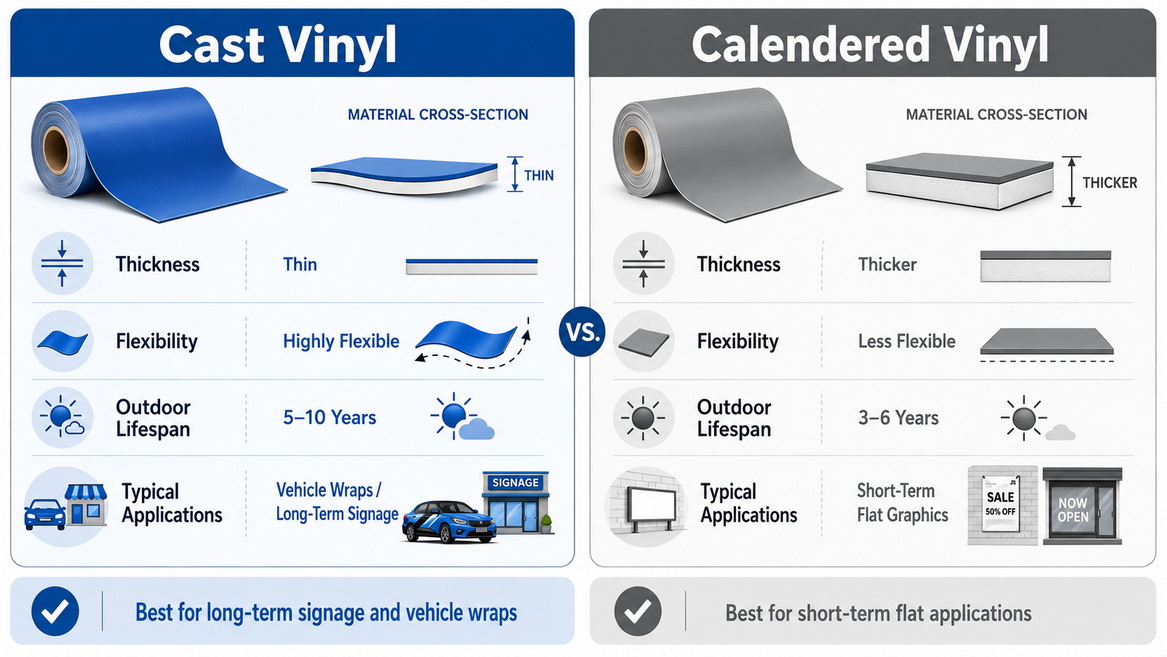
- Cast vinyl is made by casting a liquid mixture into a thin film and curing it without stretching. Because it is not mechanically pulled, it maintains dimensional stability and conforms easily to curves, rivets, and complex shapes. [georgeandwilly]
- Calendered vinyl is produced by squeezing and stretching PVC through heavy rollers, which introduces internal stress into the film. This is cost‑efficient but makes the film more likely to shrink and pull back over time, especially outdoors. [safetydecals]
For long‑term outdoor signs, cast vinyl is the benchmark:
- Typical outdoor lifespan: around 8–10 years for high‑grade cast films in moderate climates, assuming correct lamination and installation. [ejetvinyl]
- Calendered vinyl usually delivers about 3–5 years outdoors before noticeable shrinking, cracking, or color loss, depending on quality and exposure. [foamcoreprint]
If you manage retail networks, car dealerships, or quick‑service restaurants, that difference translates into fewer service calls, fewer replacements, and more consistent brand color across locations. [signartgraphix]
- Cast vinyl offers a broader palette of opaque, translucent, and specialty colors that stay vibrant longer under UV. [georgeandwilly]
- Calendered films have improved over the years, but they still tend to fade faster and are more often used for short‑term promotions. [ejetvinyl]
For backlit signs, channel letters, or halo‑lit logos, consistent color accuracy across batches is critical—this is where cast vinyl combined with professional color management protects your brand equity. [signartgraphix]
The original article touches on cost but stops at "calendered is cheaper." In real‑world projects: [georgeandwilly]
- Calendered vinyl usually has a lower unit price, which makes it attractive for campaigns under 24–36 months. [safetydecals]
- Cast vinyl reduces labor and maintenance costs over time because it is easier to remove cleanly and requires fewer replacements. [foamcoreprint]
When factoring in lift rental, vehicle downtime, and reprint runs, cast vinyl often has a lower total cost of ownership on projects where signs are expected to last 5–7 years or more. [landeasigns]
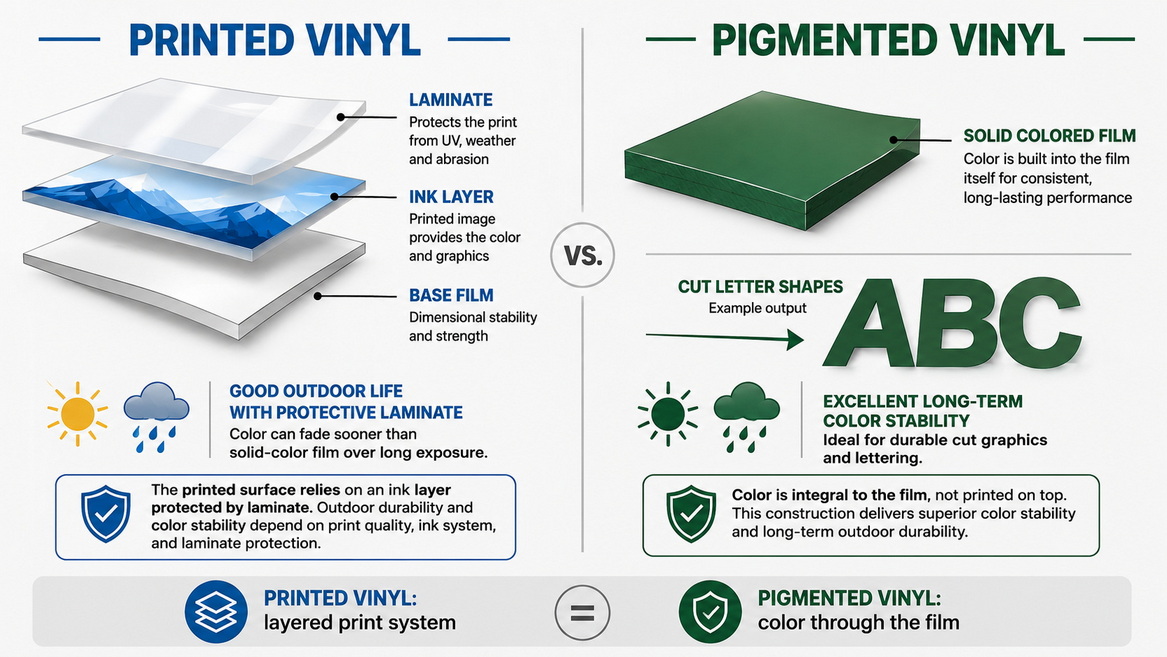
Beyond film type, the article briefly notes printed and pigmented films, but doesn't clarify the practical trade‑offs for sign buyers. As a manufacturer, we look at these choices from both a production and maintenance perspective. [georgeandwilly]
- Printed vinyl starts as a white or clear film; graphics are digitally printed with eco‑solvent, UV, or latex inks and often laminated. This is ideal for complex branding, gradients, photos, and multi‑language layouts. [ejetvinyl]
- Pigmented (pre‑colored) vinyl has color integrated into the film itself and is cut into letters or shapes. It excels at solid logos, simple wayfinding, and long‑life applications where absolute color stability is key. [safetydecals]
For outdoor ADA‑related signs, combining pigmented vinyl for key symbols and typography with printed backgrounds and iconography is a proven way to balance readability, durability, and design freedom. [landeasigns]
The original content lists generic use cases like "banners," "car decals," and "wall décor" but doesn't translate them into clear material decisions. Below is a more actionable, UX‑oriented guide. [georgeandwilly]
| Outdoor application | Recommended vinyl type | Typical lifespan | Notes for OEM/wholesale users |
|---|---|---|---|
| Long‑term building identification signs | Cast, pigmented or printed with laminate safetydecals | 7–10 years | Prioritize color accuracy and clean removability. |
| Channel letters and illuminated fascias | Cast translucent films with matched systems signartgraphix | 7–10 years | Ensure even light diffusion and consistent brand colors. |
| Window graphics (promos 3–12 months) | Polymeric calendered printable vinyl safetydecals | 1–3 years | Removable adhesive to avoid residue on glass. |
| Vehicle graphics and wraps | Premium cast wrap films + cast laminate safetydecals | 5–8 years | High conformability over curves and rivets is critical. |
| Construction and safety signs | Cast or high‑grade calendered with UV inks safetydecals | 3–7 years | Consider reflectivity and regulatory legibility. |
| Event banners and temporary signage | Banner‑grade calendered or mesh vinyl georgeandwilly | Weeks–18 months | Focus on wind resistance and fast turnaround. |
This type of mapping helps distributors and brand managers standardize materials across markets while still respecting local climates and regulations. [landeasigns]
Google's E‑E‑A‑T framework rewards content grounded in first‑hand experience, and in our case that means more than 15 years producing illuminated and advertising signage for brands in over 120 countries. Several patterns show up repeatedly in outdoor vinyl projects. [linkedin]
- In hot, high‑UV regions, lower‑grade calendered films can visibly fade and shrink in under three years, even if advertised otherwise. [ejetvinyl]
- Coastal environments accelerate adhesive breakdown and can promote edge lifting if films and laminates are not specified for moisture and salt spray. [foamcoreprint]
We routinely adjust material specs for clients in the Middle East versus Northern Europe, even when the design is identical. [landeasigns]
Even the best vinyl fails on a poorly prepared surface:
- Dust, silicone contamination, or chalking paint drastically reduce adhesion and can cause bubbles or peeling. [foamcoreprint]
- New paint must off‑gas fully before application to prevent blistering under the vinyl. [foamcoreprint]
Professional installers know that half of a successful outdoor vinyl job is preparation, not just printing. [signartgraphix]
For long‑term programs, we treat vinyl, laminate, ink set, and substrate as a single system tested to work together:
- Matched cast film + cast laminate combinations improve UV resistance and reduce edge curl. [signartgraphix]
- Using one color system across rigid panels, lightboxes, and vehicles ensures the blue in your logo does not shift between applications. [signartgraphix]
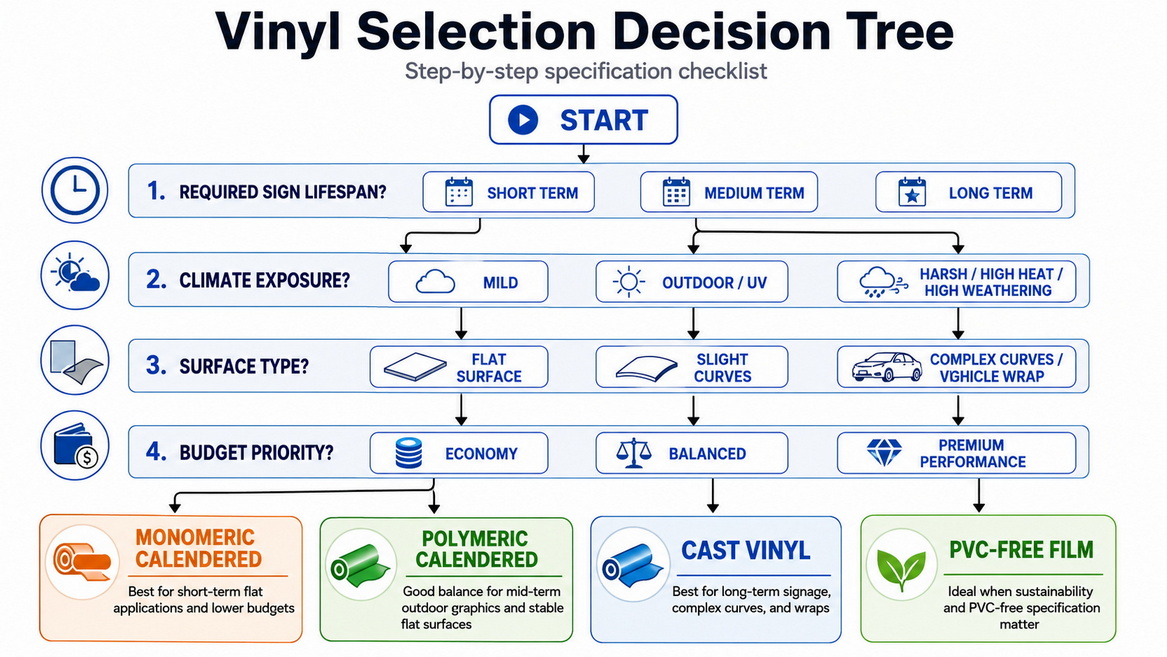
The original article explains what vinyl is but doesn't provide a clear decision process for buyers. Here is a practical, expert‑level checklist we use with international clients. [georgeandwilly]
1. Define the sign's job and lifespan.
Decide whether the sign is short‑term (campaign), medium‑term (1–3 years), or long‑term (5+ years), and whether it is brand‑critical (logo, main fascia) or secondary (temporary directional). [foamcoreprint]
2. Audit location and environment.
Note sun exposure hours, temperature range, humidity, wind load, and risk of vandalism; high‑UV or coastal sites generally require cast films and higher‑performance laminates. [signartgraphix]
3. Choose film family (cast vs calendered).
- Cast for long‑term, high‑value branding, complex shapes, and vehicles.
- Quality calendered films for flat surfaces and campaigns under 3 years. [safetydecals]
4. Select printed vs pigmented approach.
- Printed vinyl for photographic, gradient, or multi‑language designs.
- Pigmented vinyl for solid logos, arrows, ADA symbols, and wayfinding icons needing maximum clarity. [safetydecals]
5. Specify laminate and finishing.
Use outdoor‑rated laminates compatible with your ink system; choose matte or satin finishes where glare might affect readability. [signartgraphix]
6. Plan for maintenance and removal.
For leased properties and fleets, prioritize clean‑removable adhesives and set realistic lifecycles in your maintenance plan. [foamcoreprint]
By following this process, OEM buyers, sign shops, and wholesalers can specify outdoor vinyl that truly matches business goals instead of relying on generic "outdoor safe" labels. [landeasigns]
Recent industry data show a clear shift toward more sustainable and higher‑performance materials in outdoor signage. If you are planning a multi‑year program, these trends should influence your vinyl choices. [fastsigns]
- PVC‑free and low‑VOC films: More brands and municipalities now prefer PVC‑free films or recyclable substrates, especially in Europe and North America. [fastsigns]
- All‑weather performance: Newer films are engineered to handle prolonged UV, extreme temperatures, and moisture while maintaining flexibility and adhesion. [ejetvinyl]
- Better maintenance and safety requirements: As regulators focus more aggressively on worker safety and heat exposure outdoors, durable materials that require fewer replacements can indirectly reduce maintenance risks. [osha]
Signage companies that keep up with these trends are better positioned to support global brands seeking consistent, future‑proof solutions across markets. [geminimade]
The original article ends with a simple product plug, but for international buyers the real question is: who can deliver consistent, compliant outdoor signage at scale? That is where specialized OEM partners matter. [georgeandwilly]
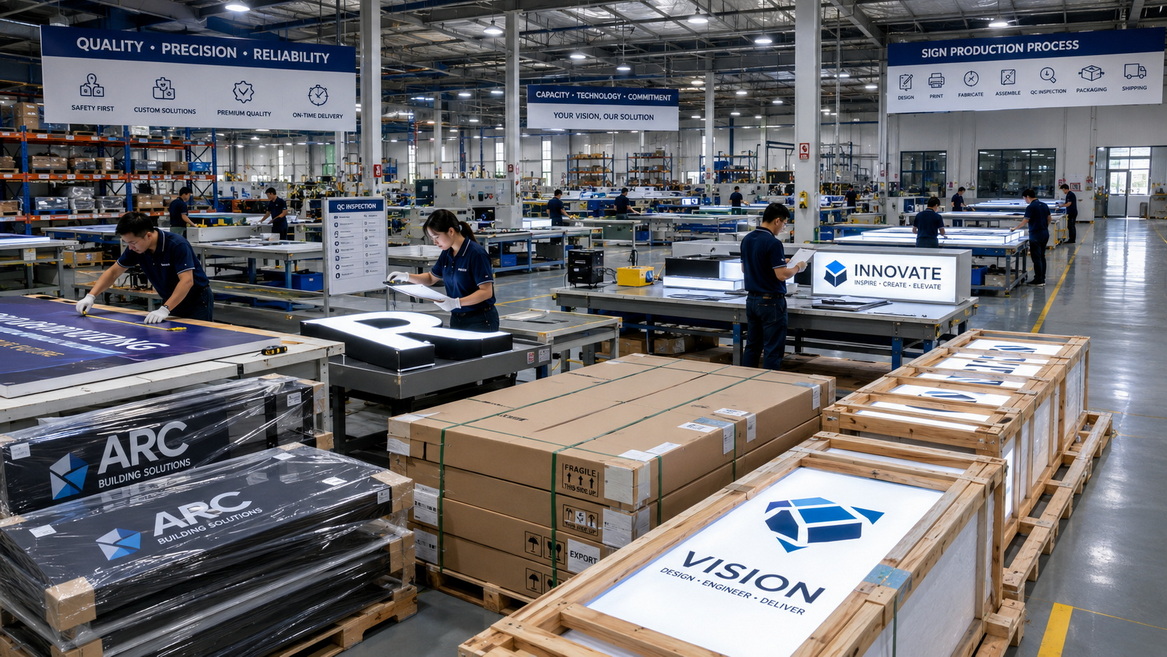
Landea Signs is a China‑based manufacturer focused on advertising signage and illuminated lettering, with ISO 9001 quality certification and UL‑tested products for demanding markets. With more than 15 years of experience and customers in over 120 countries, we support sign companies, brand agencies, and wholesalers with end‑to‑end manufacturing from design review to packaging. [landeasigns]
For outdoor vinyl projects, this means:
- Guidance on choosing cast, calendered, or specialty films matched to your climate and budget.
- Integration of vinyl graphics into channel letters, lightboxes, ADA signs, and custom structures.
- Stable lead times, documented quality control, and packaging optimized for international shipping. [landeasigns]
If you are planning a new outdoor signage program—or upgrading aging signs that are already peeling or fading—the most effective next step is to audit your current material specifications and align them with the right vinyl systems. Our team at Landea Signs can review your designs, expected lifespans, and climate conditions, then recommend a clear material package that balances performance, sustainability, and cost for your brand. [landeasigns]
1. How long will a vinyl outdoor sign actually last?
With quality cast vinyl, proper lamination, and professional installation, many exterior signs stay serviceable for 7–10 years in moderate climates; high‑grade calendered films usually last 3–5 years. [ejetvinyl]
2. Is cast vinyl always better than calendered vinyl?
Cast vinyl is generally superior for long‑term, high‑value branding and curved surfaces, but calendered vinyl is still an excellent, cost‑effective choice for flat, short‑term applications like seasonal window graphics. [foamcoreprint]
3. Do I really need lamination for outdoor vinyl prints?
For most outdoor applications, yes—lamination protects against UV, abrasion, and cleaning chemicals, which significantly extends both color life and film integrity. [signartgraphix]
4. What is the best vinyl for vehicle wraps?
Premium cast wrap films with matching cast laminates are the industry standard because they conform to complex shapes and withstand weather and washing cycles better than calendered films. [safetydecals]
5. Can outdoor vinyl signs be made with eco‑friendly materials?
Yes, many manufacturers now offer PVC‑free films and recyclable substrates designed for outdoor durability, aligning with the broader move toward more sustainable signage systems. [fastsigns]
- ADA Central. "Best Vinyl for Outdoor Signs." [webpage]. [georgeandwilly]
- Safety Decals. "Best Vinyl for Outdoor Signs: Compare Top Types & Lifespans." [webpage]. [safetydecals]
- Ejet Vinyl. "Self‑Adhesive Vinyl Trends 2026: Future of Large‑Format Print Materials." [webpage]. [ejetvinyl]
- George & Willy. "Best Material for Outdoor Signs in 2026: A Complete Guide." [webpage]. [georgeandwilly]
- Foam Core Print. "What Are the Best Outdoor Signs for Advertising." [webpage]. [foamcoreprint]
- FASTSIGNS. "4 Signage Industry Trends to Watch in 2026." [webpage]. [fastsigns]
- SignArt Graphix. "Top Signage Trends for 2026." [webpage]. [signartgraphix]
- Landea Signs Co., Ltd. Official Website. "Illuminated Signs, ADA Signs, Lightbox Signs Manufacturing Company in China." [webpage]. [landeasigns]
- Landea Signs Co., Ltd. "About Us." [webpage]. [landeasigns]
- OSHA. "Heat Injury and Illness Prevention in Outdoor and Indoor Work Settings." [PDF]. [osha]


