From idea to market-ready product, our SIGNS solutions make every stage easier, faster. Discover How We Help

Views: 248 Author: Landea Signs Publish Time: 2026-07-23 Origin: Site


Content Menu
>> 1. They shape the first impression
>> 2. They help people find the property
>> 3. They reinforce brand value
● Common problems with outdated signs
● What modern apartment signage should do
● The business case for updating signs
● Accessibility and compliance
>> Sustainable signage choices
● FAQs
>> 1. Why should apartment signs be updated regularly?
>> 2. What types of apartment signs usually need replacing first?
>> 3. Can better signage improve leasing results?
>> 4. What makes apartment signage effective in 2026?
>> 5. How do apartment signs support compliance?
Updated apartment signs do more than improve appearance. They help residents and visitors find their way, strengthen the property's image, and support a more professional experience from the street to the front door.
For apartment communities, signage is often one of the first things people notice. A faded, damaged, or outdated sign can quietly weaken trust before a prospect even steps inside. A clear, modern, and well-placed sign system can do the opposite: it can make the property feel organized, welcoming, and well managed.

Apartment signs have three essential roles: identification, navigation, and branding. When these three functions work together, they help the property feel cohesive and easy to understand.
When they do not, the property can feel confusing or neglected. Visitors may struggle to find entrances, residents may miss directions, and the overall impression can become less polished than the community deserves.
A sign is often the first physical brand touchpoint people see when arriving on-site. If the sign is cracked, faded, or difficult to read, the property may seem older or less cared for than it actually is.
That first impression matters because it influences how people feel about the entire community. Even small sign problems can affect how prospects judge the quality of the property.
Good signage makes arrival easier. It helps prospective residents, delivery drivers, vendors, emergency responders, and new tenants find the correct entrance or building without confusion.
This reduces frustration and improves the overall experience. When a property is simple to navigate, it feels more professional and more welcoming.
Signage is not only functional. It also communicates the property's identity.
A consistent sign system helps tie together the architecture, landscaping, leasing message, and resident experience. This creates a stronger sense of order and quality across the property.
Many apartment communities delay sign updates because the existing signs still "work." But functional is not the same as effective.
Over time, sun exposure, rain, wind, dirt, and everyday wear can reduce performance. The property may still have signs, but they may no longer support visibility or presentation.
- Faded colors reduce readability.
- Missing letters or damaged panels signal deferred maintenance.
- Outdated typography can make the property feel old-fashioned.
- Poor lighting makes signs hard to see at night.
- Inconsistent design creates a fragmented look.
These issues can be especially harmful when a property is being repositioned or trying to attract new tenants. In those cases, signage should support the upgrade, not distract from it.
Modern apartment signage should be clear, durable, and easy to understand. It should also match the property's brand and work well in real-life conditions, including day, night, rain, and high-traffic areas.
The best sign systems are not just attractive. They are useful.
| Sign type | Main purpose | User benefit | Business value |
|---|---|---|---|
| Monument sign | Identifies the property | Easy to spot from the road | Stronger curb appeal |
| Wayfinding sign | Directs people around the site | Less confusion | Better navigation |
| Building ID sign | Labels buildings or units | Faster orientation | More professional appearance |
| Directory sign | Lists locations or tenants | Easier searching | Better visitor flow |
| ADA-related sign | Supports accessibility | Inclusive access | Lower compliance risk |
A complete system works best when every sign looks like part of the same family. That consistency creates a more polished and trustworthy experience.
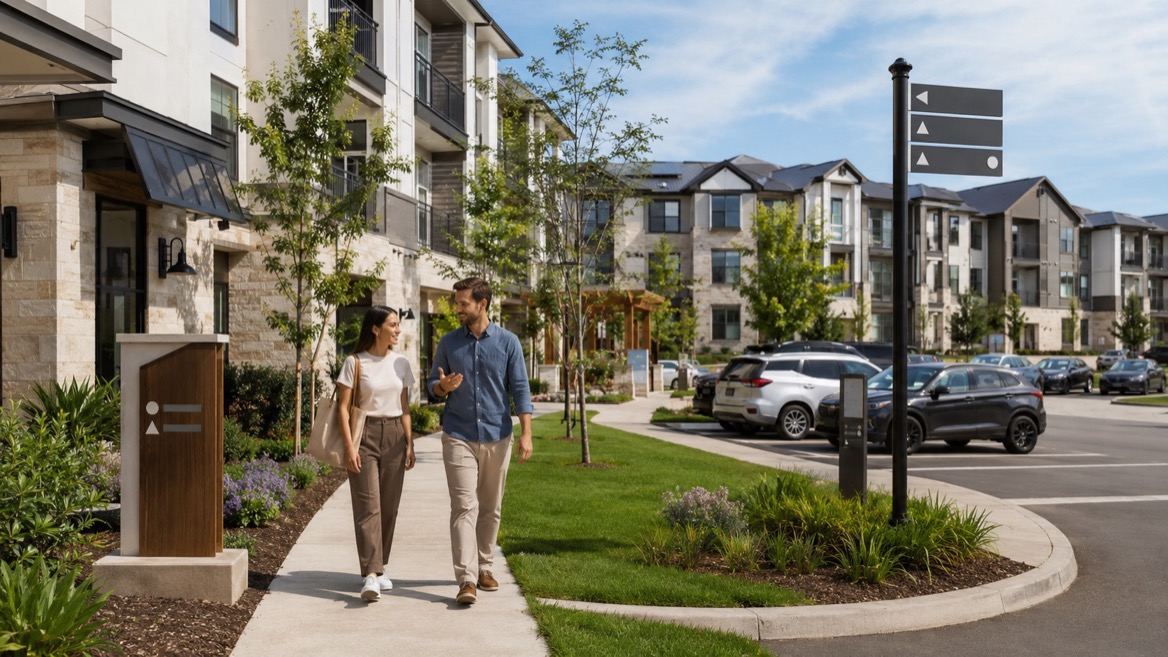
Signage is a relatively small investment compared with major renovations, yet it can have a big impact on how the property is perceived.
A better sign system can help support leasing, improve curb appeal, and make a property easier to understand during tours. For apartment owners and property managers, this means signage can play a real role in day-to-day performance.
Practical benefits often include:
- Stronger first impressions.
- Easier wayfinding for residents and guests.
- Better support for leasing tours.
- Improved property branding.
- A more finished look during repositioning.
In other words, updated signs are not just decoration. They are part of the property's overall presentation strategy.
A strong apartment sign program balances beauty with clarity. If a sign looks impressive but is hard to read, it fails. If it is readable but generic, it does not support the brand.
The strongest designs usually follow a few principles:
1. Use high-contrast colors for readability.
2. Keep the message short and direct.
3. Prioritize the property name and key directions.
4. Choose materials that can handle weather exposure.
5. Place signs where people naturally look first.
Simple design usually performs better than crowded design. People often read signs while driving, walking, or carrying items, so the message must be understood quickly.
Apartment signage also needs to support accessibility. That means careful attention to readability, placement, and formatting.
In many properties, signs that identify rooms, directions, or facilities must follow specific accessibility expectations. Local building rules and fire-related requirements may also apply.
Important considerations include:
- Clear visual contrast.
- Proper mounting height.
- Readable type sizes.
- Tactile or Braille elements where required.
- Correct placement for visibility and use.
Compliance should be addressed before fabrication and installation, not after. This protects both the property and the people who use it.
Many properties know their signs need work but do not have a clear update process. A structured review makes the job easier and more effective.
Here is a simple method:
1. Review every sign on the property.
2. Identify signs that are faded, broken, inconsistent, or outdated.
3. Map how residents and visitors move from the street to each destination.
4. Decide which signs should be repaired, replaced, or redesigned.
5. Match colors, typography, and finishes across the system.
6. Confirm accessibility and local requirements.
7. Install the new system and document the standards for future use.
This approach helps the property move from reactive maintenance to planned improvement.
Many older articles about apartment signs focus only on replacement. That is not enough for today's property market.
Modern signage can also support repositioning, sustainability, and future flexibility. This is especially useful for properties that want to stay competitive without rebuilding their identity every few years.
Large apartment communities often need more than one directional sign. They need a system that helps people move through the site with minimal friction.
That usually means:
- Fewer words.
- Clear arrows.
- Better placement at decision points.
- Consistent naming across the property.
When wayfinding is simple, people make fewer mistakes and feel more confident moving around the site.
Many property teams now look for signage materials and systems that reduce waste over time. Durable construction, modular parts, and energy-efficient lighting can all help.
Sustainable choices also make future updates easier. Instead of replacing an entire system, a property may only need to refresh selected components.
When a property is being improved or repositioned, signage should reflect the new direction. If the apartments are being updated but the signs still look old, the message becomes mixed.
A refreshed sign system helps show that the property is moving forward. It creates a visible signal that the community is being cared for and upgraded.
For apartment communities, the best signage partner is one that can combine design, durability, and customization in one solution.
Landea Signs Co., Ltd. can support apartment projects with tailored sign systems built around the property's architecture, traffic flow, and brand style. That can include monument signs, building ID signs, wayfinding systems, directory signs, and other custom indoor and outdoor solutions.
The goal is not just to make signs look good. The goal is to make the whole property easier to understand, easier to navigate, and more memorable.
Updating apartment signs is one of the most efficient ways to improve curb appeal, strengthen brand trust, and make a property easier to navigate.
A well-designed sign system helps residents, visitors, and staff move through the property with less confusion and more confidence. For property owners and managers, that makes signage a practical investment with everyday value.
The smartest next step is to review the current sign system and identify anything that no longer reflects the property you want people to see.
If your apartment community still uses faded, outdated, or inconsistent signs, now is the right time to plan an upgrade. A modern sign system can improve visibility, support leasing, and create a stronger first impression from the moment people arrive.
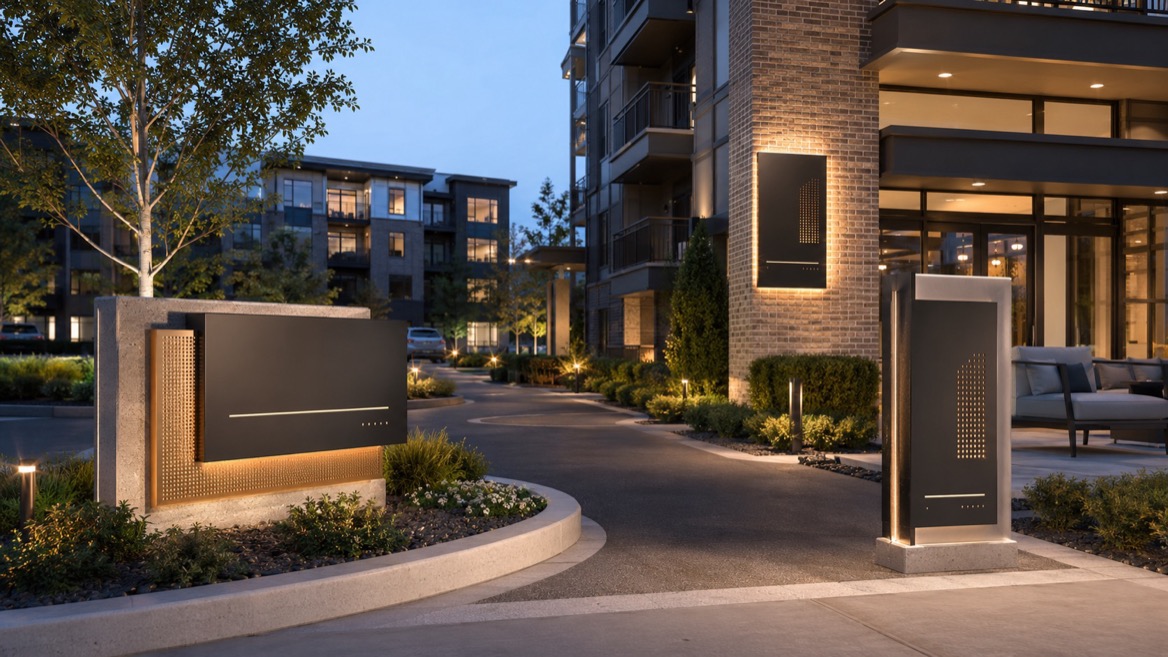
Apartment signs should be updated regularly because weather, aging, and design changes can reduce readability and weaken the property's image. Fresh signage keeps the community looking maintained and easy to find.
The most urgent replacements are usually faded monument signs, damaged wayfinding signs, broken building identifiers, and any sign that no longer supports accessibility. These signs affect both presentation and navigation.
Yes. Stronger signage helps people locate the property more easily and creates a more professional experience during tours. That can support leasing performance by reducing friction and improving first impressions.
Effective apartment signage in 2026 is clear, concise, durable, accessible, and consistent across the entire property. Modular and easy-to-update systems are also becoming more valuable.
Apartment signs support compliance by improving readability, using proper placement, and meeting relevant accessibility and local requirements. Compliance should be planned before installation.
- Dave's Signs. "Here's Why You Should Update Your Apartment Signs."
[https://www.davessigns.com/heres-why-you-should-update-your-apartment-signs/]
- The Signage Foundation. "The Economic Value of On-Premise Signage."
[https://www.thesignagefoundation.org/Portals/0/EVOSFINALAugust2012.pdf]
- Sunrise Signs. "Top 10 Multifamily Housing Signage Trends for 2026."
[https://www.sunrisesigns.com/our-blog/multifamily-housing-signage-trends]
- Sunrise Signs. "Wayfinding Signage Made Easy: Clear Navigation for Multifamily Housing."
[https://www.sunrisesigns.com/our-blog/wayfinding-signage-for-multifamily-housing]
- Sunrise Signs. "The ROI of Investing in High-Quality Multifamily Signage."
[https://www.sunrisesigns.com/our-blog/roi-of-investing-in-high-quality-multifamily-signage]
- U.S. Access Board. "Chapter 7: Signs."
[https://www.access-board.gov/ada/guides/chapter-7-signs/]
- ADA.gov. "ADA Standards for Accessible Design."
[https://www.ada.gov/law-and-regs/design-standards/]
- Custom Signs Today. "Essentials for Apartment Signage: A Property Manager's Guide."
[https://customsignstoday.us/essentials-for-apartment-signage-a-property-managers-guide/]


